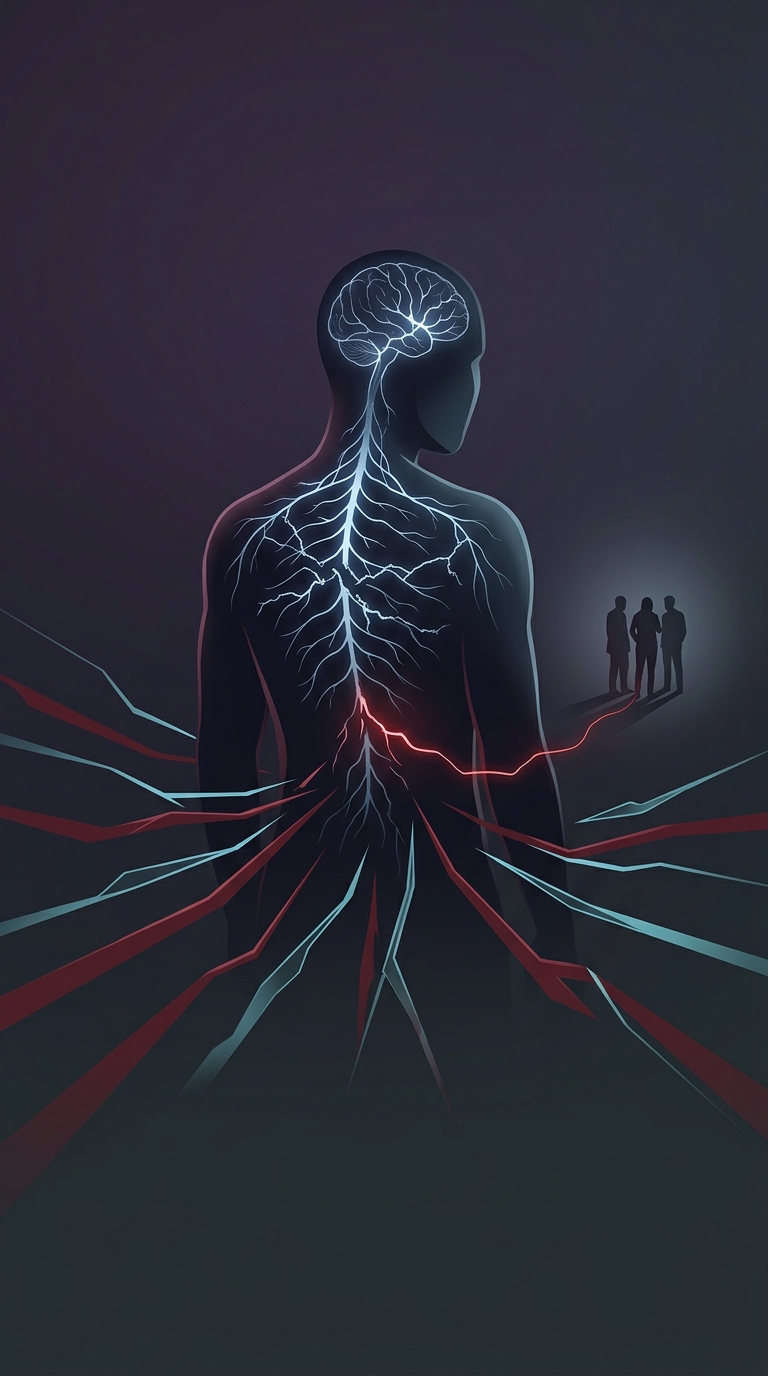
Why a small setback can feel like a verdict
After a poor night’s sleep, an ordinary disappointment can take on outsized meaning. An unanswered message may seem like proof that someone is rejecting you; a minor mistake may feel like evidence that you are incapable. The event has not changed, but the mental process used to interpret it has.
Sleep loss can weaken emotion regulation—the ability to keep an emotional reaction in proportion and recover from it. When that control is less steady, distress can linger, making it harder to pause and consider more neutral explanations. The mind may keep returning to the most painful interpretation instead.
From one incident to a judgment about yourself
Negative thoughts become especially potent when they shift from describing what happened to defining who you are. “I made an awkward comment” is about one moment; “I’m fundamentally unlikeable” turns that moment into a verdict on personal worth. Tiredness can make that leap feel convincing, even when the evidence is thin.
This does not mean every worry after a bad night is false, or that sleep alone explains someone’s feelings. It means a tired mind may have more difficulty separating a real problem from the harsh story built around it. An unanswered text still has many possible explanations; exhaustion can make rejection feel like the only one.
Why timing matters
Recognizing the effect can create a little distance: a painful conclusion reached while exhausted need not be treated as a final assessment of yourself. The practical consequence is modest but useful—when a routine event suddenly seems to prove your entire worth, the intensity of that judgment may reflect how tired you are as well as what happened.