A Leg Became a Public Symbol in Santa Anna’s Mexico
In 1838, during fighting with French forces near Veracruz, a cannonball badly wounded Mexican general and president Antonio López de Santa Anna. Doctors amputated his leg. The injury could have remained a private reminder of battle; Santa Anna instead turned it into a public ceremony, giving the removed limb the honors usually associated with a military figure.
From Burial to Procession
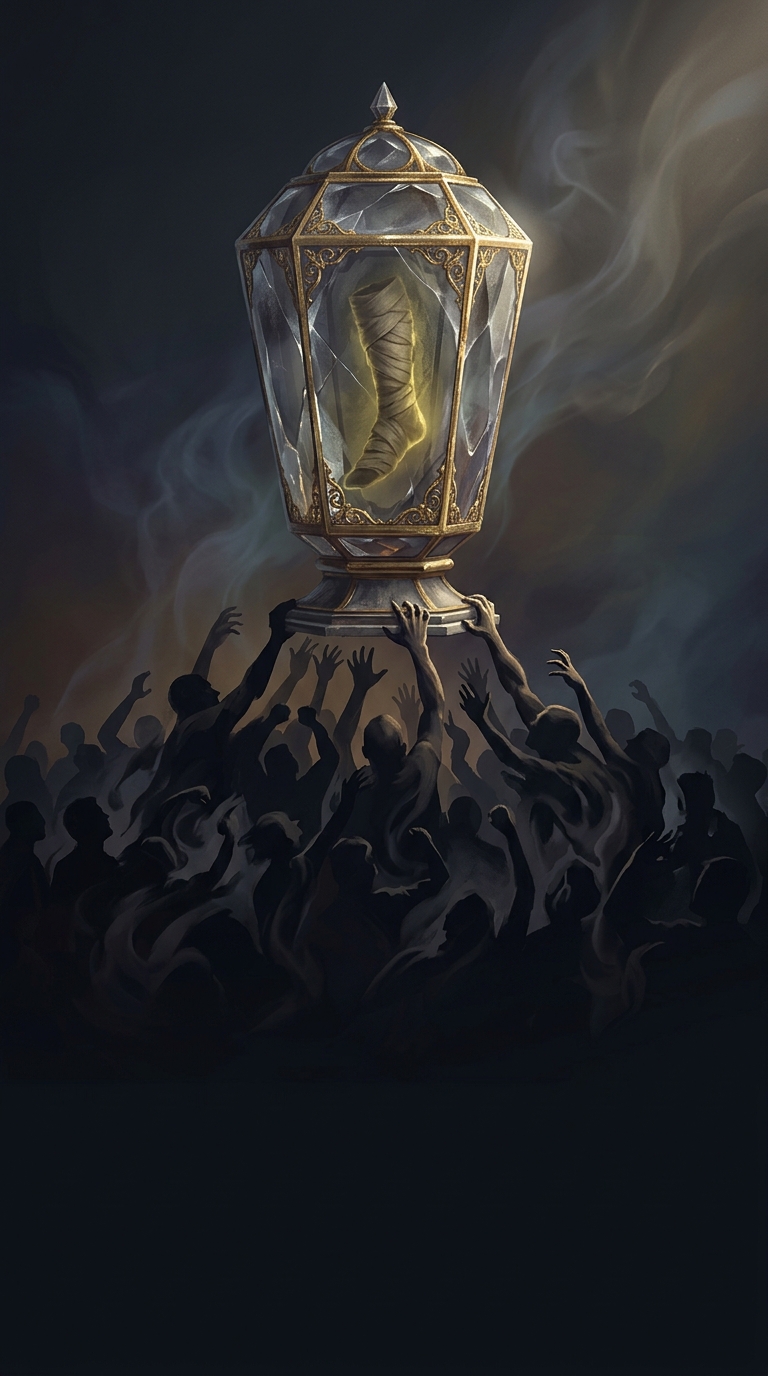
The leg was buried with military rites. Years later, Santa Anna ordered it exhumed and placed in an elaborate crystal vase. It was then carried in a formal procession through Mexico City, with soldiers and ceremony lending the remains the appearance of a state relic.
That transformation mattered because Santa Anna’s authority rested not only on holding office but on being seen as a defender of the nation. A procession made his wound visible: the general had personally suffered in combat with France. The leg could therefore stand for sacrifice and military service, even as its lavish treatment invited ridicule.
Ceremony as Political Theater
Public honors for a body part may seem absurd, but political ceremonies often make abstract claims tangible. Here, the object at the center of the display was unmistakably connected to Santa Anna’s injury—and the spectacle put him, rather than the battle’s many other consequences, at the center of public attention.
The leg’s ceremonial return also shows how closely military reputation and political image were intertwined in nineteenth-century Mexico. Santa Anna did not simply preserve a relic of his injury; he staged its reappearance as a demonstration of his own importance.