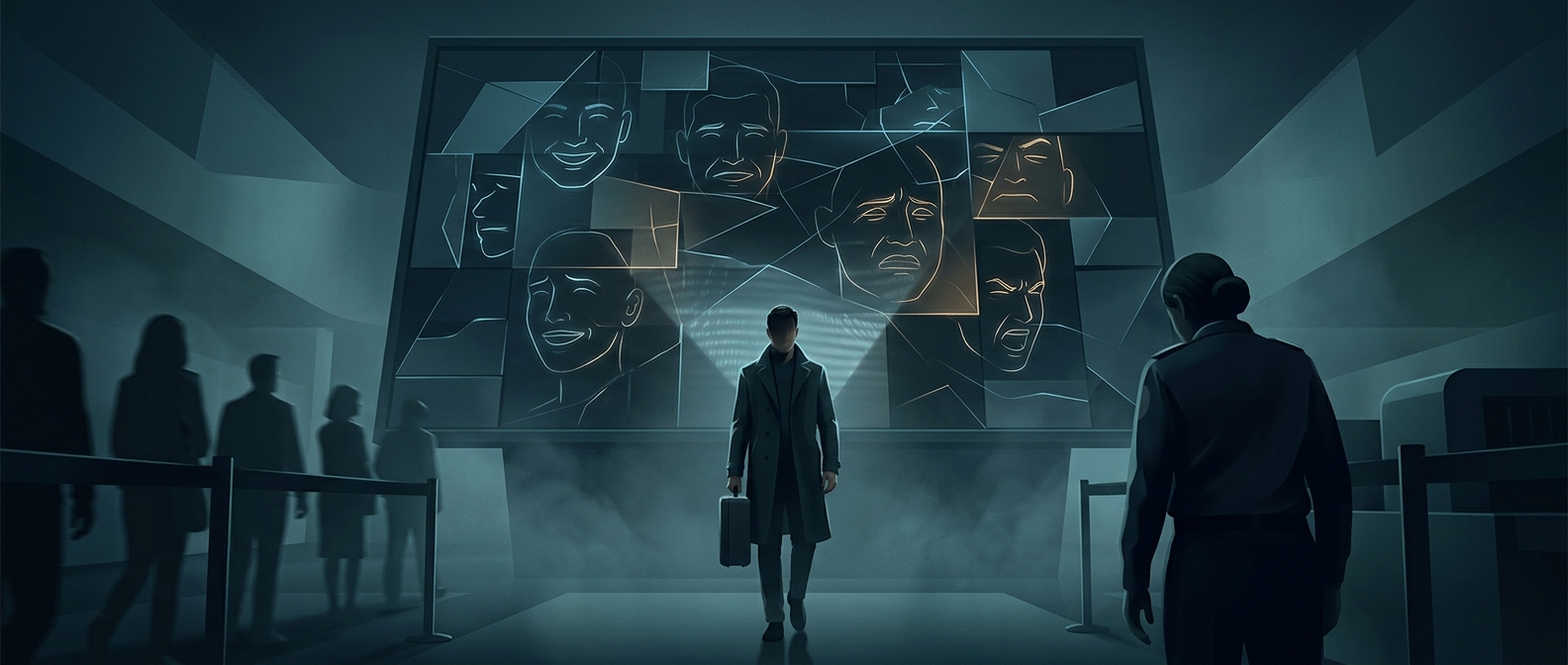
A face is not a transcript
A microexpression is a brief facial movement that may appear when someone’s visible expression does not match what they feel—or when an emotion changes quickly. But a movement does not identify its cause. A tightened mouth, for example, could accompany anger, concentration, discomfort, or an effort to stay composed. The face offers clues about expression, not a reliable translation of a person’s thoughts.
Pressure changes both sides of the exchange
Stress can affect the person being watched: attention narrows, muscles tense, and expressions may become more controlled or less typical. At the same time, pressure affects the observer. Someone trying to detect a lie may focus intensely on small movements and treat an ambiguous twitch as confirmation. This is a form of expectation bias: the expectation helps shape what a person thinks they see.
That combination makes the setting especially poor for confident judgments. A fleeting movement is hard to interpret even under calm conditions; stress adds more possible explanations while encouraging the observer to settle on one.
A signal needs context
Facial behavior is more useful when considered alongside what was said, the situation, and a person’s usual manner—not as a standalone test. Even then, an expression can suggest a question to explore, not prove deception. The more an observer treats a split-second twitch as a confession, the more likely ambiguity is to become mistaken certainty.