A crystal, not ordinary glass
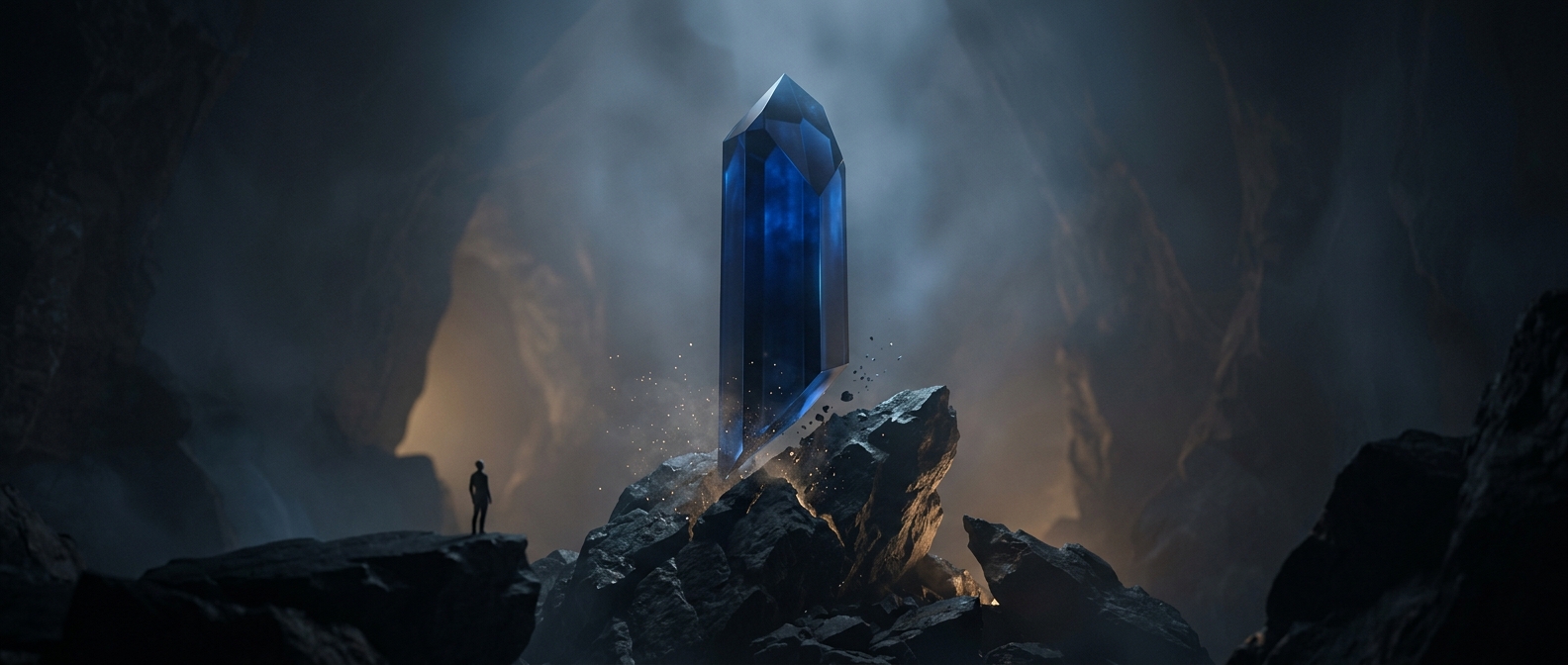
A watch “sapphire crystal” is usually a transparent, lab-grown form of corundum—the mineral that, when colored by trace elements, is called sapphire or ruby. Unlike window glass, which has a disordered atomic structure, corundum’s atoms are arranged in a repeating crystal lattice. That tightly bonded structure makes its surface exceptionally difficult to scratch.
Manufacturers grow large crystals from aluminum oxide, then cut and polish them into thin watch covers. The crystal-growth step matters: the goal is a clear, uniform piece with few flaws, not simply a sheet of melted material. Because the finished surface is so hard, shaping and polishing it also require specialized tools.
Hardness is not toughness
Hardness describes resistance to scratching, not resistance to breaking. A sapphire watch crystal can stay clear through years of contact with keys or other everyday objects yet still chip or crack if struck hard enough. The same rigid structure that resists a scratch does not make the crystal immune to impact.
Diamond can scratch sapphire because it is harder. In practice, the result depends on contact: a diamond edge pressed or dragged across the crystal can cut into its surface, while merely carrying diamond jewelry nearby does not. Sapphire’s advantage is durability against routine abrasion—not invulnerability.