Smallpox turned prevention into a public-health project
Smallpox is the clearest historical answer: its repeated outbreaks helped make vaccination a tool governments and health organizations could deploy across populations, rather than a remedy used only by individual doctors. The disease was highly contagious and often fatal, and survivors could be left with deep scars or blindness. Because infection could spread through travel and trade, containing it required more than treating patients after they became ill.
From risky protection to vaccination
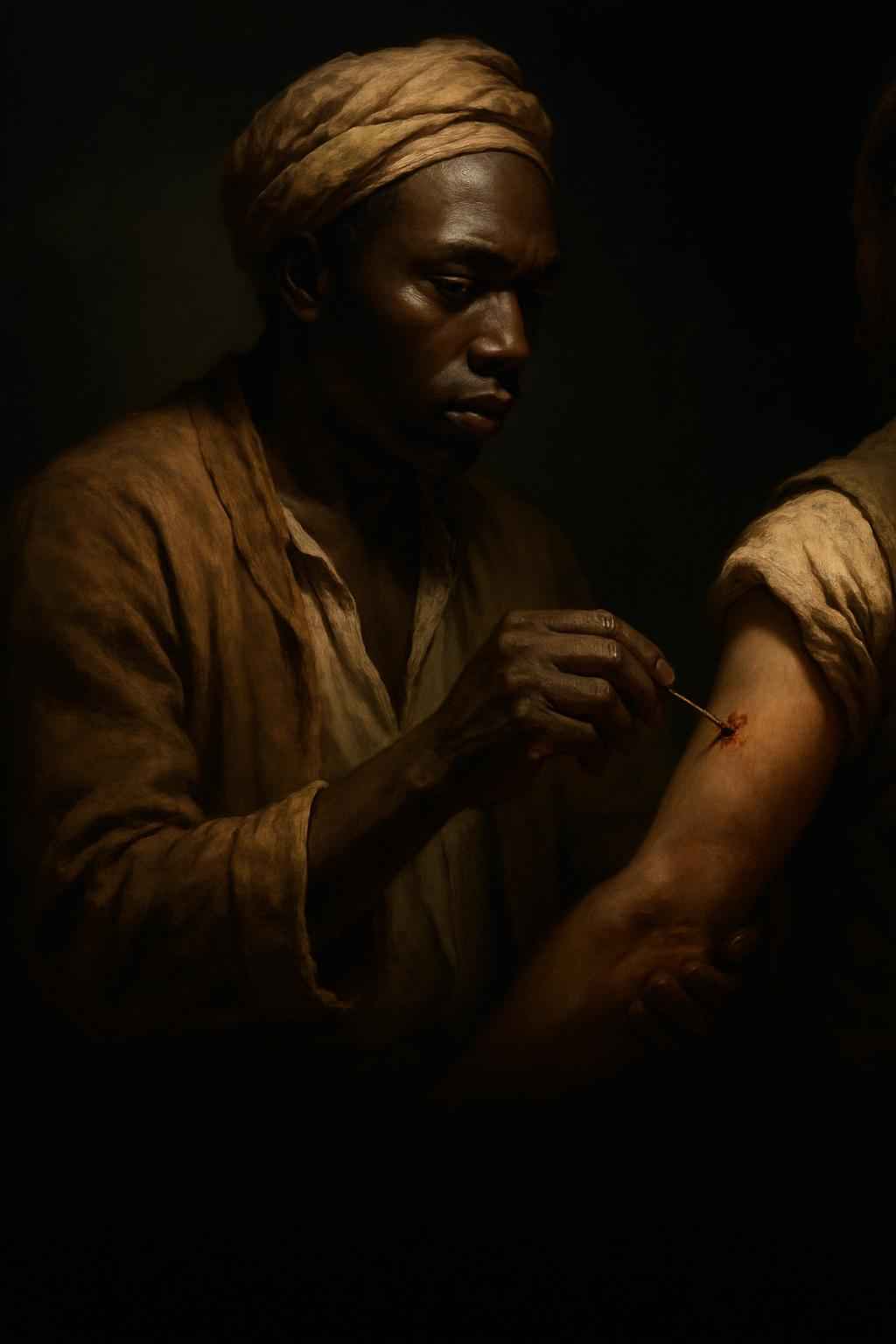
Before vaccination, some communities practiced variolation: deliberately exposing a person to material from a smallpox sore in hopes of causing a milder infection and later protection. It could prevent severe disease, but it could also cause smallpox and spread it to others.
In 1796, English physician Edward Jenner tested a safer approach based on a related infection, cowpox. He found that exposure to cowpox could protect against smallpox without giving the person smallpox itself. The method became known as vaccination, from vacca, the Latin word for cow. It offered public authorities a way to protect people before an outbreak reached them.
A campaign that crossed borders
Vaccination did not immediately eliminate the disease. It took organized programs to reach large populations, track outbreaks, and carry vaccine to places where cases appeared. In 1967, the World Health Organization intensified its global smallpox eradication campaign, combining vaccination with efforts to find and contain cases. The last naturally occurring case was recorded in 1977; in 1980, the WHO declared smallpox eradicated.
That achievement showed what coordinated prevention could accomplish: a disease that had repeatedly crossed borders was removed from ordinary human transmission. Smallpox vaccination helped establish the model—and the practical ambition—behind modern mass vaccination campaigns.