Reading colonial reports against their grain
British officials often described Indian peasant uprisings as disorderly eruptions: crowds supposedly acted from anger or rumor, without a political program. Historian Ranajit Guha questioned that framing. In police and administrative reports, he looked not only at what officials said rebels meant, but at the actions those officials had to document.
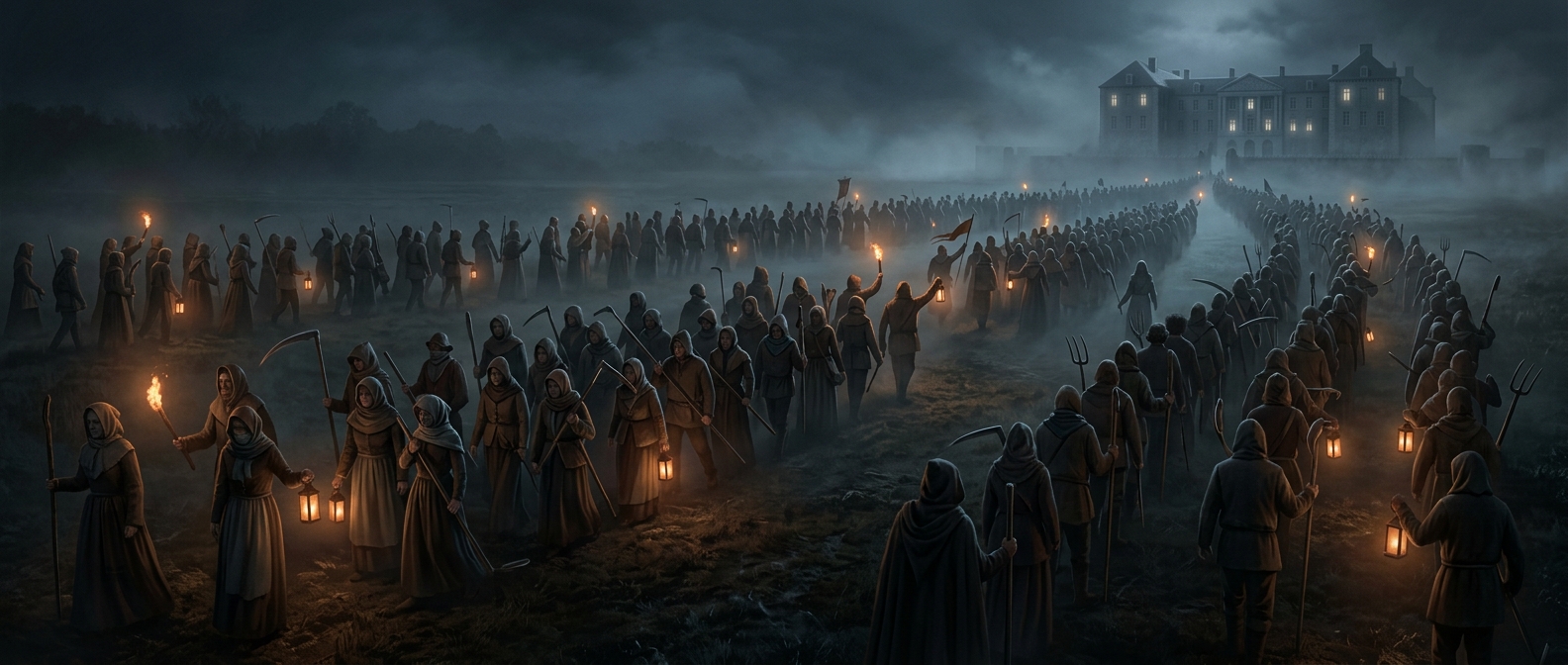
A report might condemn an uprising while still recording where people gathered, which local authorities or property they confronted, and how events unfolded across a district. Read together, such details could show that participants were making choices: coordinating action, identifying targets associated with power, and acting collectively rather than merely lashing out.
Organization did not require a command center
Guha’s point was not that every revolt had a single leader or a written plan. Peasant politics could be organized through local relationships and shared understandings, without the formal institutions officials expected to recognize as political. A crowd’s capacity to assemble and pursue a common course could itself be evidence of political action.
That distinction changes how the records read. The same report that calls people “irrational” may preserve clues that contradict the label. Officials were trying to classify and control unrest; their paperwork was not a neutral account. But its descriptions of what people did could still be used to recover the logic that its authors overlooked or dismissed.
The archive becomes evidence of agency
Guha’s method helped shift attention from colonial authorities to people whose actions were often recorded only when they threatened order. It also cautions against treating the word “riot” as an explanation. Behind a label of chaos, the sequence of choices can reveal a struggle over power—and a political intelligence the official report was not prepared to acknowledge.