A person turned into a public spectacle
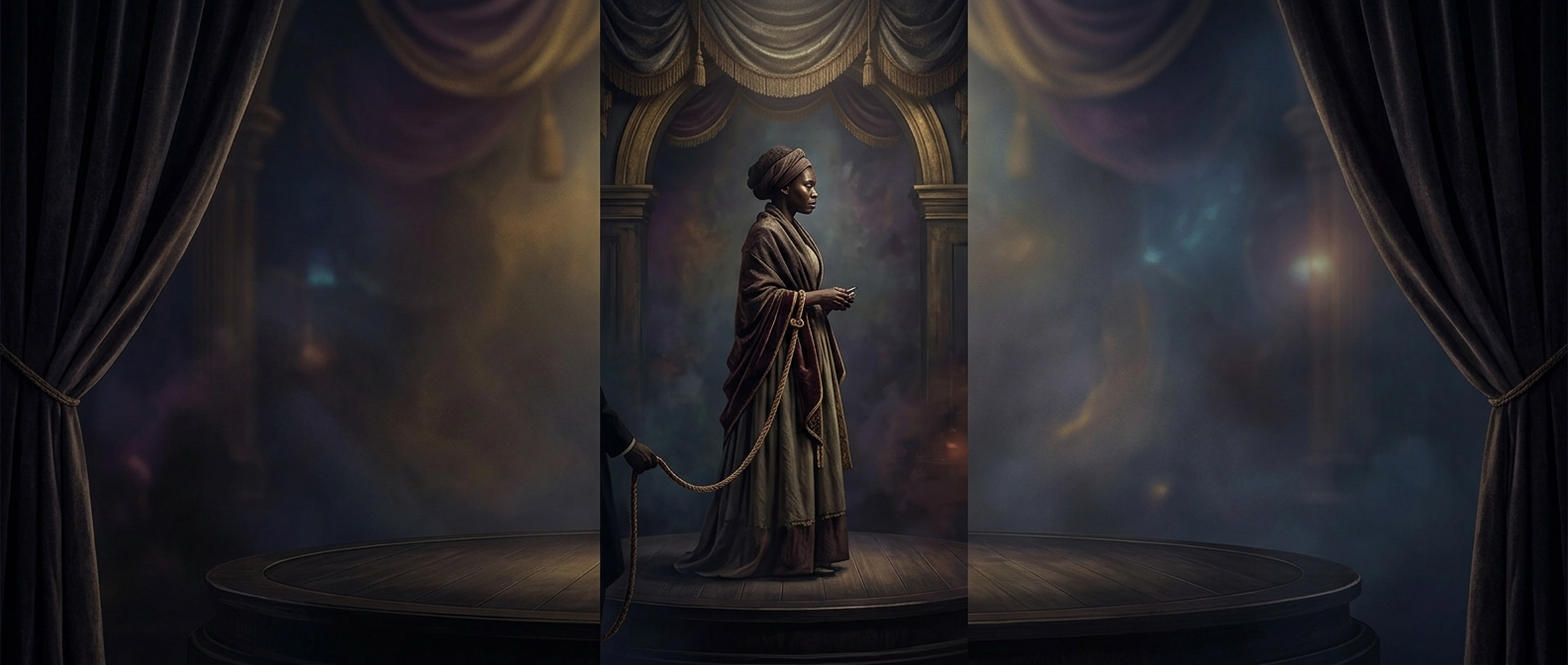
Sarah Baartman’s exhibition in Europe was not simply entertainment. Promoters presented her body as an object of curiosity, inviting paying audiences to stare at her while stripping away the ordinary privacy and dignity owed to a person. The arrangement depended on an unequal balance of power: Baartman had been brought from South Africa under false pretenses, while European exhibitors controlled the venues, publicity, and terms on which she was shown.
The spectacle also drew on racial ideas that cast African people as fundamentally different from Europeans. Audiences were encouraged to treat Baartman’s body as evidence for those prejudices, rather than recognize that the display itself had been constructed to provoke attention and reinforce existing beliefs. The show made exploitation look like observation.
From sideshow to museum display
After Baartman died, the treatment of her body continued the same pattern in a different setting. Dissection and museum display placed her remains before viewers as material to inspect, extending the public claim over her body beyond her life. A museum’s authority could make that display seem like neutral study, even though it preserved the unequal gaze that had made her a spectacle in the first place.
Her remains stayed on view in a Paris museum until 1974. That long afterlife shows how institutions can inherit and legitimize older forms of exploitation: the venue changes, but a person may still be treated as an object rather than as someone whose dignity and consent matter.