Why a cereal flake could pass for snow
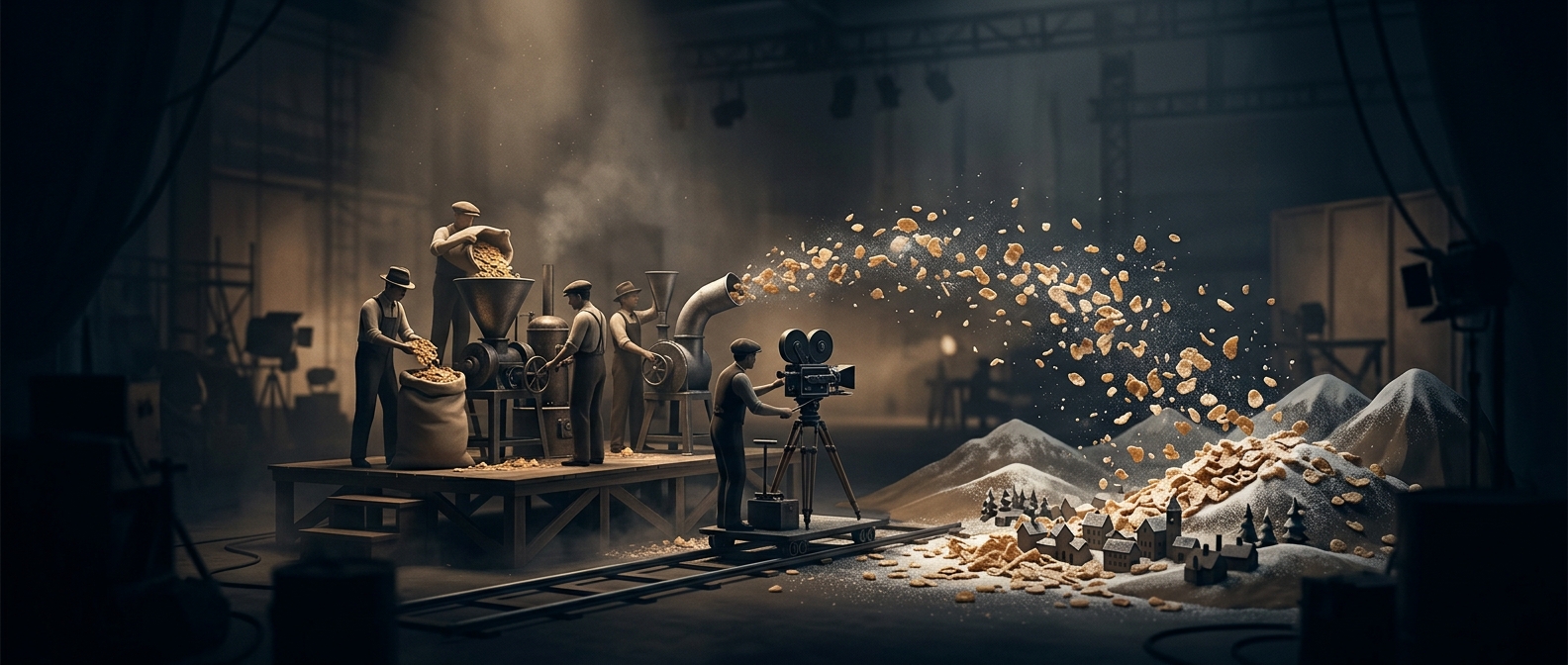
Before visual effects could create convincing winter scenes digitally, film crews needed materials that looked pale and scattered across a set. Painted cornflakes offered a lightweight, easy-to-spread stand-in: from the camera’s viewpoint, flakes on the ground could suggest a snowy surface. The trick depended on what the audience saw, not on how the material behaved under a boot.
The sound problem on a talkie set
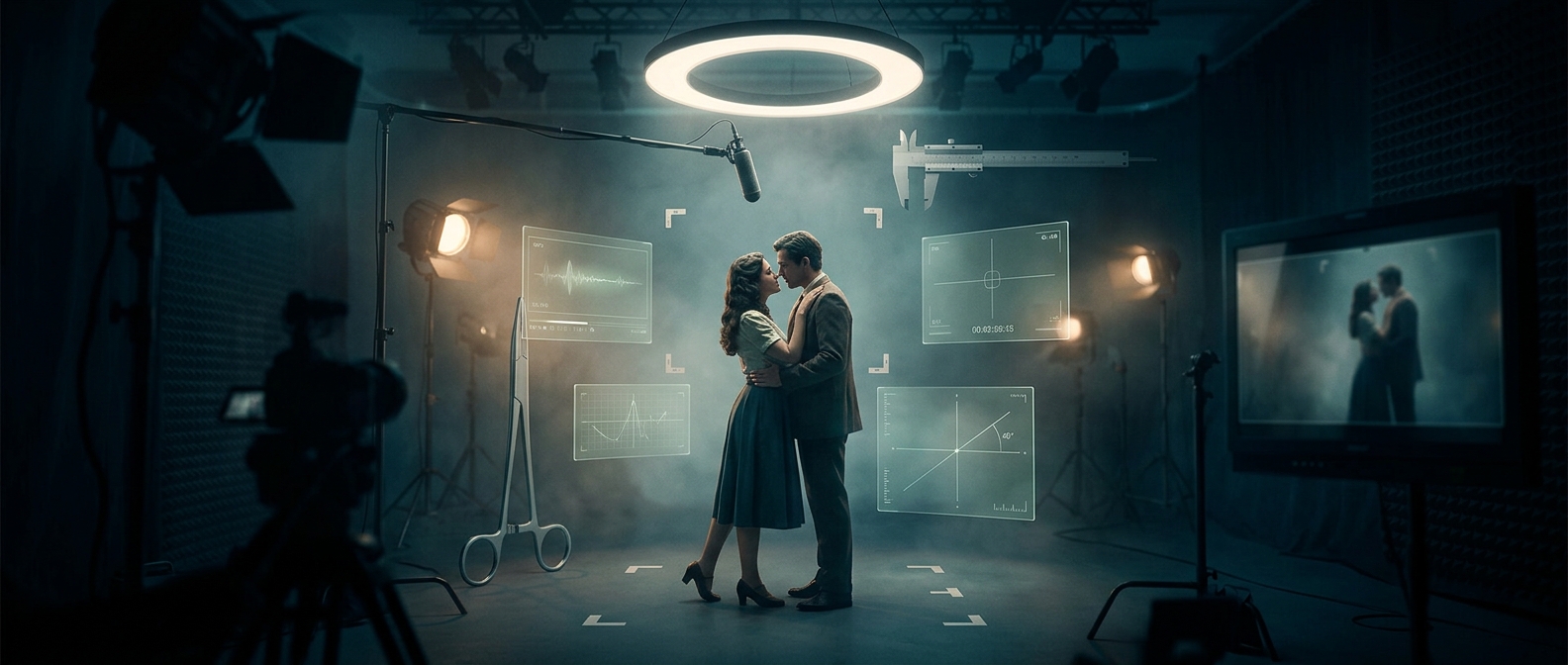
Once films recorded dialogue on set, a quiet image was no longer enough. Microphones picked up noises actors made while moving, and brittle flakes crackling underfoot could compete with their lines. The solution was to record the scene visually and replace the spoken dialogue later in a studio—a process called overdubbing. Actors watched the filmed performance and spoke their lines again so the new recording could be synchronized with their mouths.
That workaround shows how one practical-effects choice could shape the entire production. A material that looked right in a wide shot could make usable on-set sound impossible, turning a fake snowfall into a second recording session.