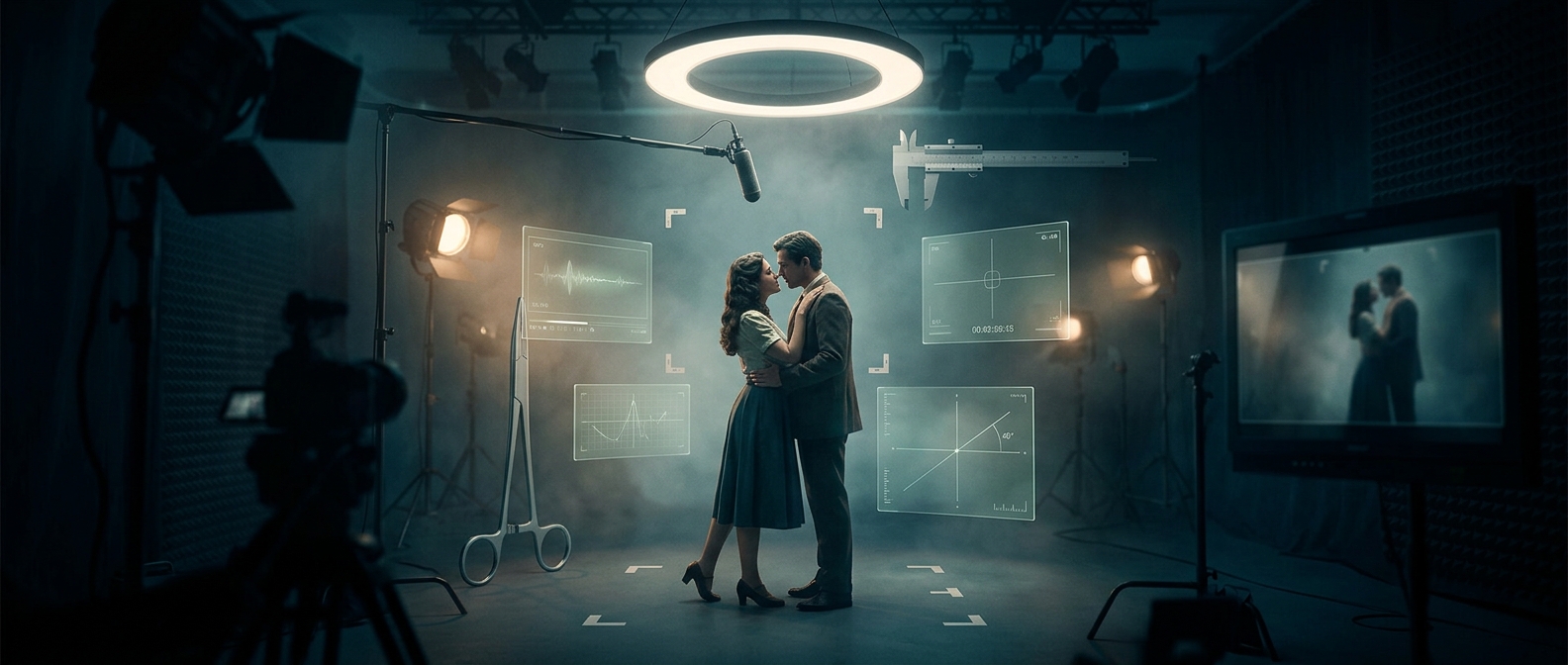
How a Screen Kiss Is Built for the Camera
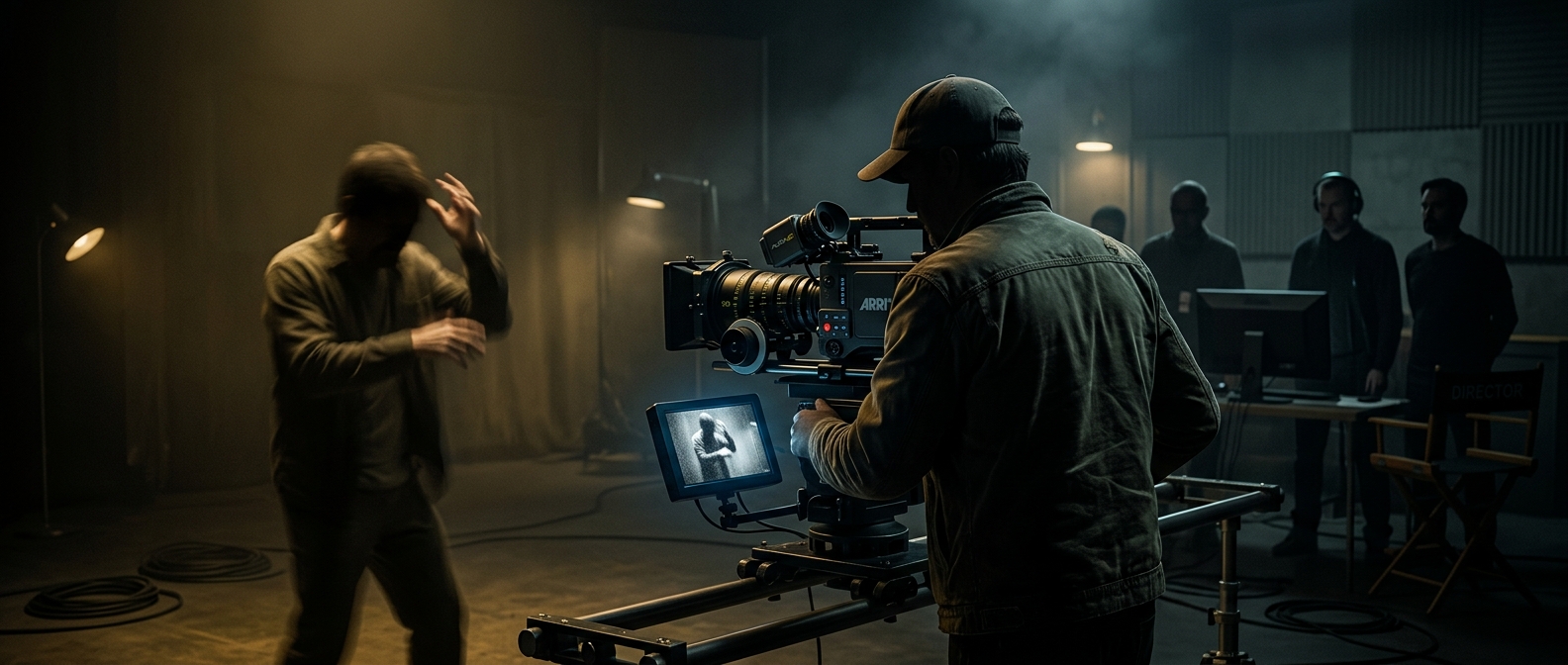
A kiss in a film has to work from a particular viewpoint. The camera may need to see both faces, keep the actors in focus, and leave room for a light or microphone just outside the frame. That can mean turning heads farther than feels natural, pausing at a precise moment, or repeating the movement so the editor has usable footage from several angles.
The apparent spontaneity is an effect assembled from small decisions. Actors may agree on where hands go, how close they get, and when the kiss begins and ends. Those choices help performers know what to expect, while giving the director and cinematographer a repeatable action to frame and light. An intimacy coordinator may help plan such scenes, especially when physical contact or nudity is involved; the exact process varies by production.
Why the Same Moment Gets Repeated
A scene is often filmed in pieces: a wide view, then close-ups, then perhaps a shot over one actor’s shoulder. To make those cuts feel like one continuous kiss, performers must reproduce key positions and timing. Even a small change in head angle can hide a face, cast an unwanted shadow, or make the edit jump.
So the camera does not simply capture romance—it helps manufacture its appearance. The finished scene can feel effortless precisely because the actors and crew have made its movements controlled enough to repeat.