Why runners swing their arms
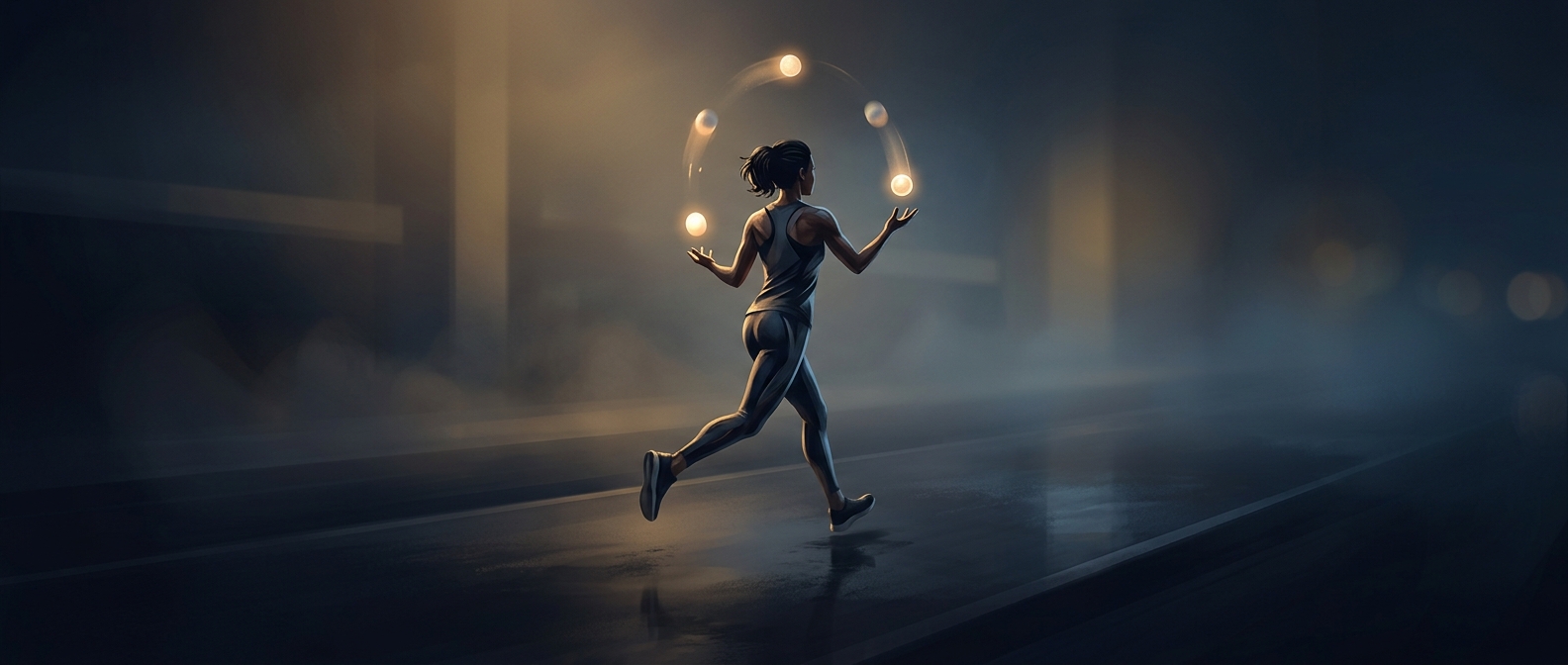
Each stride twists the body slightly: as one leg swings forward, the opposite side of the pelvis and torso tend to rotate with it. The arms swing in the other direction, helping counter that rotation. This counterbalance keeps the upper body steadier, so the runner spends less effort correcting unwanted twisting with the trunk and hips.
The arms do not propel a runner like a motor. Their value is coordination: they help balance the motion of the legs and make a repeated stride easier to control. That matters especially as pace rises, when each stride produces stronger rotational forces.
What changes when the arms stay back
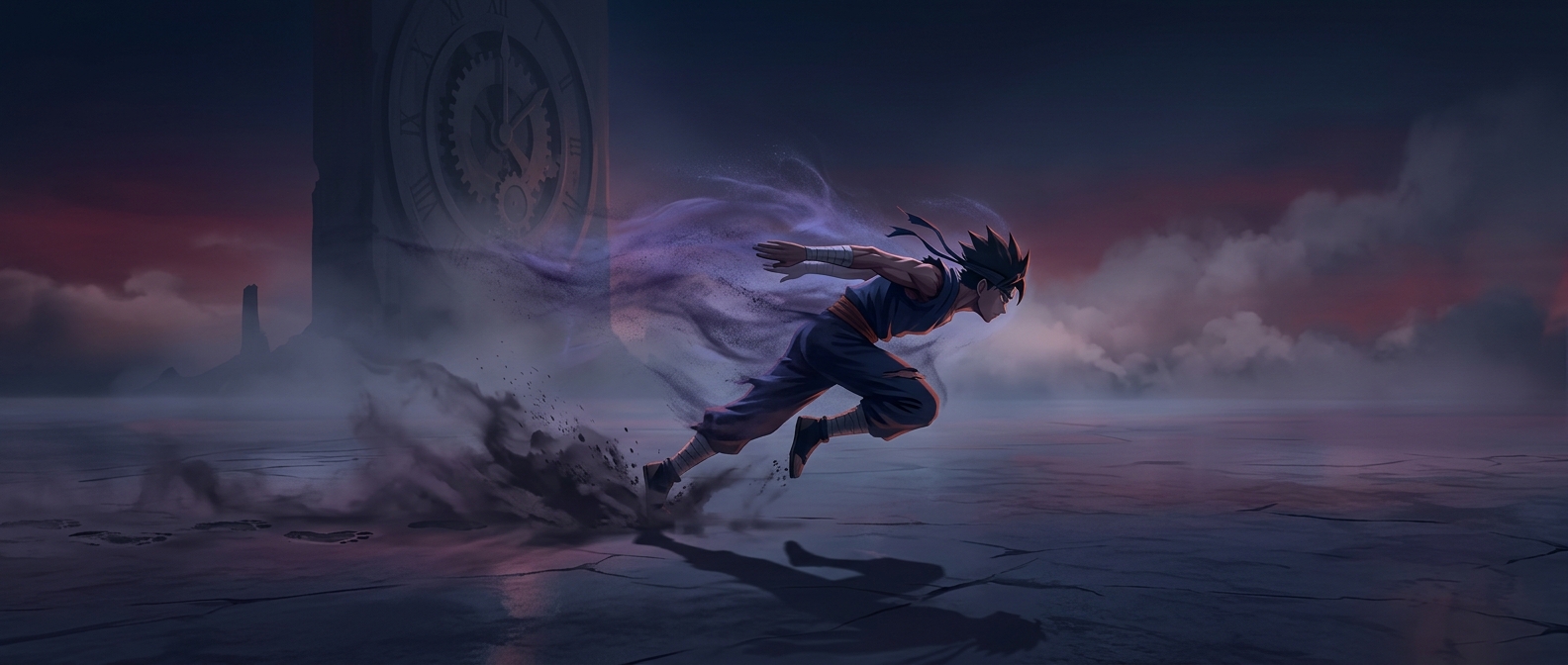
With both arms held behind the body, the usual counter-swing disappears. The runner can still move the legs, but the torso has to manage more of the resulting rotation on its own. Keeping that pose also makes it harder to use the arms naturally to balance small shifts from one step to the next.
The pose may look aerodynamic, but reducing drag is not the same as improving speed. At ordinary running speeds, the practical cost of losing a useful balancing motion can outweigh any small benefit from holding the arms close to the body. The familiar anime sprint is therefore less a shortcut than a trade: a dramatic silhouette in exchange for a less coordinated stride.