A failed decorating idea found a job in shipping
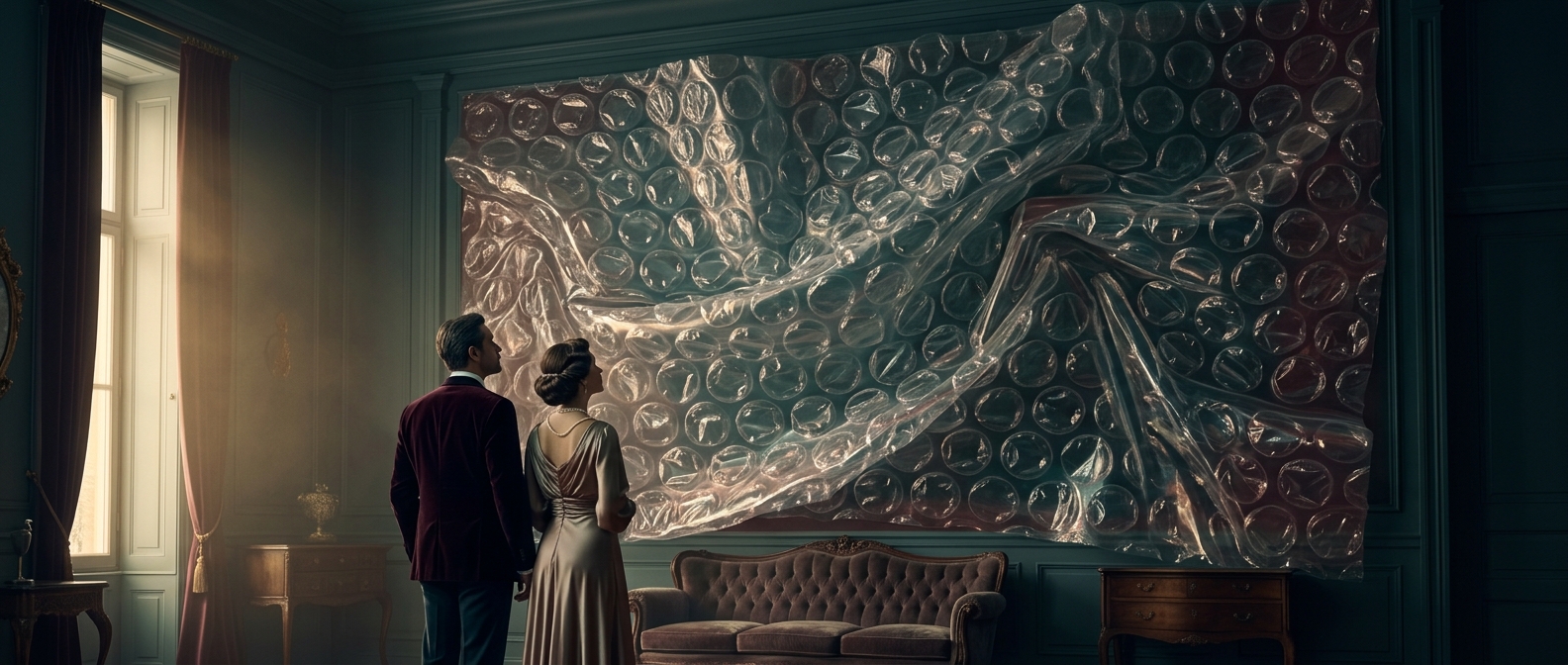
The first bubble-wrap sheets were made by sealing two plastic curtains together so the trapped air formed a pattern of raised pockets. The inventors imagined the texture as a striking wall covering. But a product can be ingenious and still miss its market: homeowners had little reason to choose bumpy plastic over familiar wallpaper, and the bubbles did not solve a pressing decorating problem.
A packaging company saw a different possibility. Instead of asking people to put the material on their walls, it could sell protection to businesses that needed to move fragile goods.
Why air pockets made sense for computers
Bubble wrap works by giving an impact somewhere to go. When a wrapped package is jolted, the air-filled cells compress and deform before the shock reaches the object. The plastic also creates a cushioning layer that helps keep the item from hitting the outside of its box directly. It is not magic armor—the package still needs suitable wrapping and a sturdy outer container—but the bubbles turn a thin sheet into a lightweight shock absorber.
That mattered to IBM, which needed to ship computers. Equipment that was costly and vulnerable in transit presented a practical business problem: how to protect it without relying only on bulky, heavy packing materials. Bubble wrap offered a simple material that could be wrapped around products and incorporated into shipping.
The market was hiding in the material
The shift was more than a change in advertising. As wallpaper, the bubbles were an odd surface looking for a customer. As packaging, the same bubbles performed a useful task at the moment a product was most at risk: during handling and transport. IBM’s interest gave the material a clear commercial purpose, and the failed wall covering became a shipping product.
The memorable twist is that the bubbles did not need to change. What changed was the problem customers were willing to pay to solve.