How an “Empty” Hat Holds the Audience’s Attention
A magic trick does not need to make every movement invisible. It needs to make the crucial movement go unnoticed. The performer may direct attention with a glance, a gesture, a pause, or a line of patter—a practiced sequence of speech and action. While spectators follow the apparent business, they are less likely to inspect the hat, the performer’s hands, or the moment when the secret work happens.
This is called misdirection: shaping what people notice, rather than simply hiding something in darkness or moving impossibly fast. Attention is selective. When a magician gives the audience a clear reason to look somewhere, a small action elsewhere can slip past without registering as important.
Timing Makes the Reveal Feel Impossible
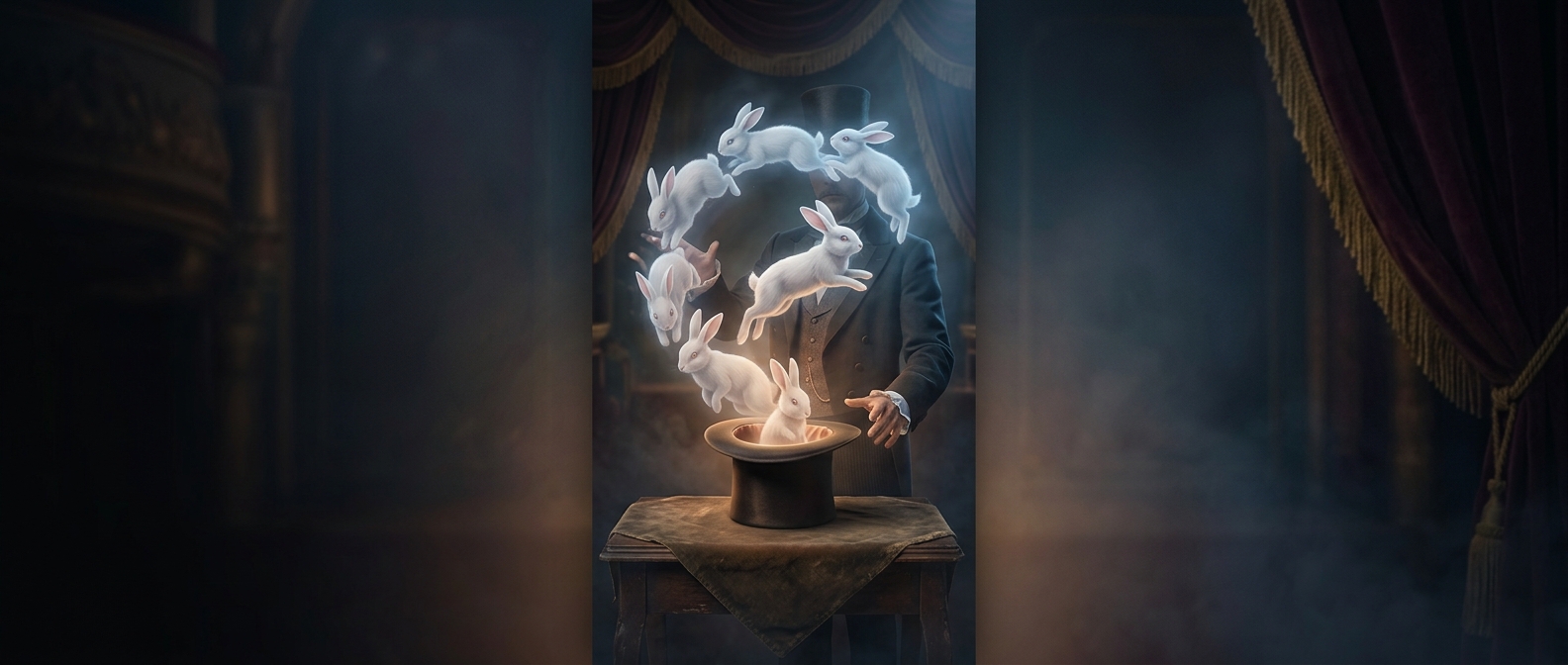
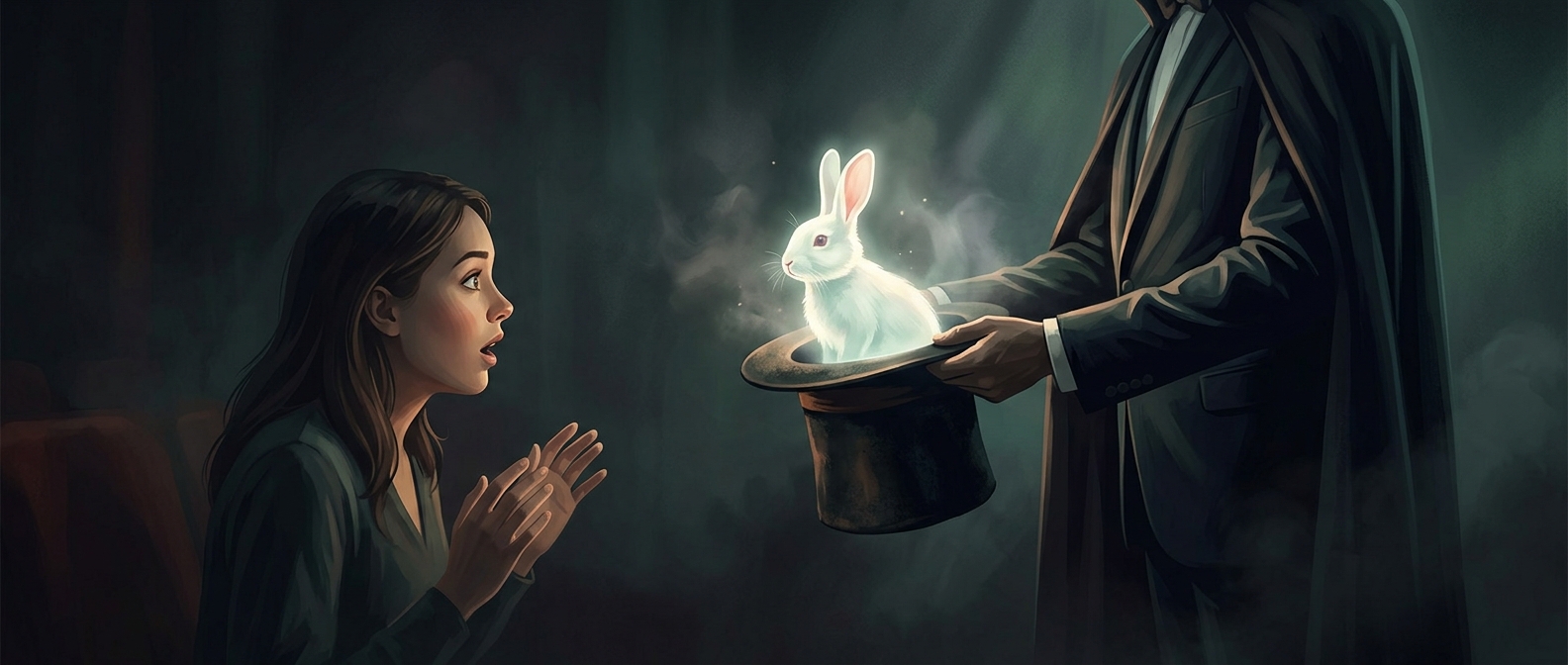
The secret action and the visible action are choreographed together. A flourish can draw the eye; a beat of silence can focus anticipation; then the rabbit appears at the moment the audience expects a result. Because spectators remember the striking reveal more vividly than the ordinary movements around it, the sequence can seem to jump directly from an empty hat to a living animal.
That feeling depends on the audience being able to see enough to believe the hat was empty, but not scrutinize every angle and instant. The illusion is therefore a balance: show the conditions that make the surprise satisfying, while controlling when and where close attention falls. The rabbit seems to come from nowhere not because the audience saw nothing, but because it watched exactly what the performance invited it to watch.