The face was captured, not simply animated
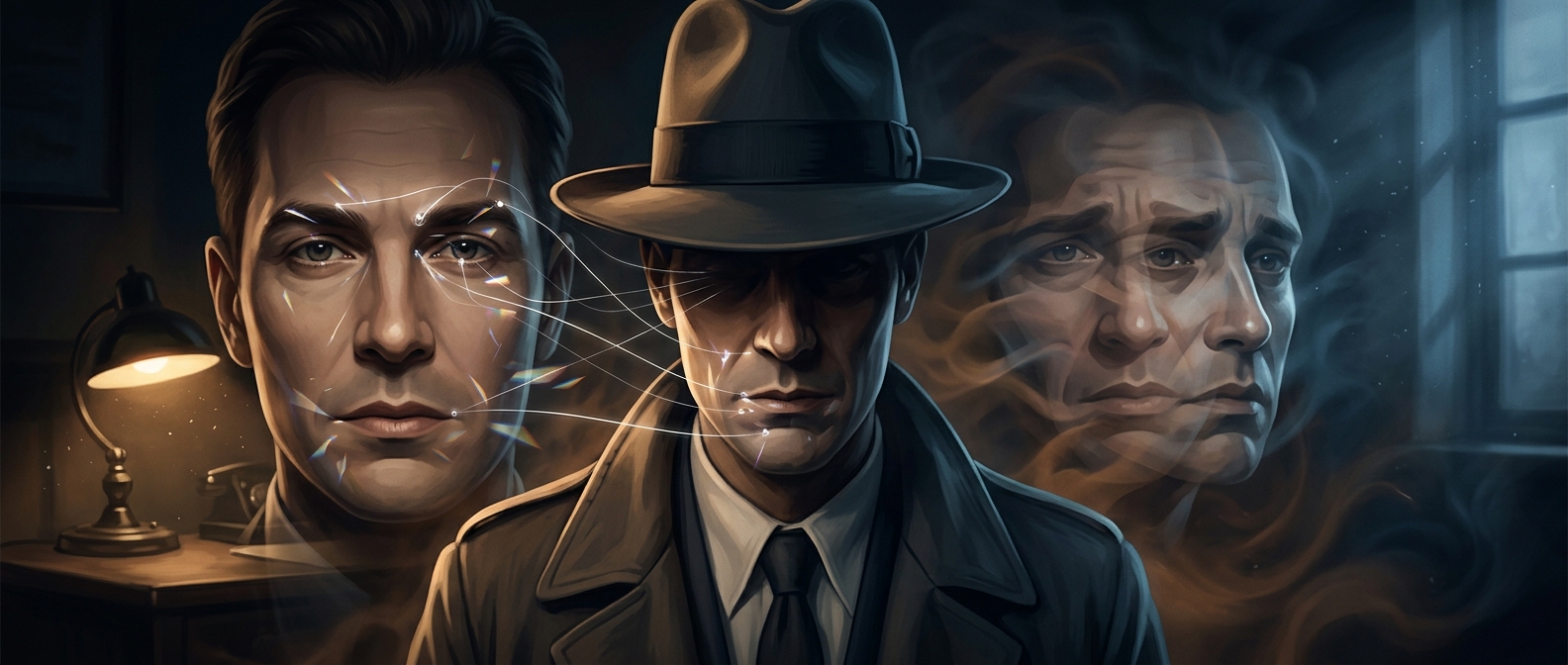
To make an interrogation feel like watching a person rather than a game character, L.A. Noire used MotionScan, a system that recorded actors’ faces with many cameras at once. The resulting performances preserved small movements—a tightening mouth, a shifting gaze, a blink—that conventional hand-built animation might smooth away. Those recordings were then used to bring the actors’ expressions into the game.
That realism creates a peculiar challenge: a face can look revealing without clearly revealing anything. A twitch may suggest discomfort, but discomfort is not proof of a lie. The game makes the player decide what a reaction means instead of giving every expression a reliable label.
Suspicion is not evidence
During questioning, players choose whether to accept an answer, press the suspect, or accuse them of lying. An accusation is strongest when the player can point to a piece of evidence that contradicts the statement. Without that support, a suspicious-looking expression alone may lead to the wrong call.
This distinction turns interrogation into more than spotting a “tell.” Players must connect what a suspect says to what they have discovered elsewhere in the case, then judge whether the face fits that account. The expression supplies atmosphere and a reason to pay attention; the investigation supplies the grounds for a conclusion.
The cost of making a face readable
The same detail that makes the performances compelling also makes them ambiguous. Real people blink, hesitate, and look away for many reasons, and the game’s lifelike faces invite players to read those movements as clues even when they are not conclusive. That tension is part of the design: a convincing face can pull a detective toward a theory, while the evidence determines whether that theory holds up.