A flush turns the bowl into a brief spray source
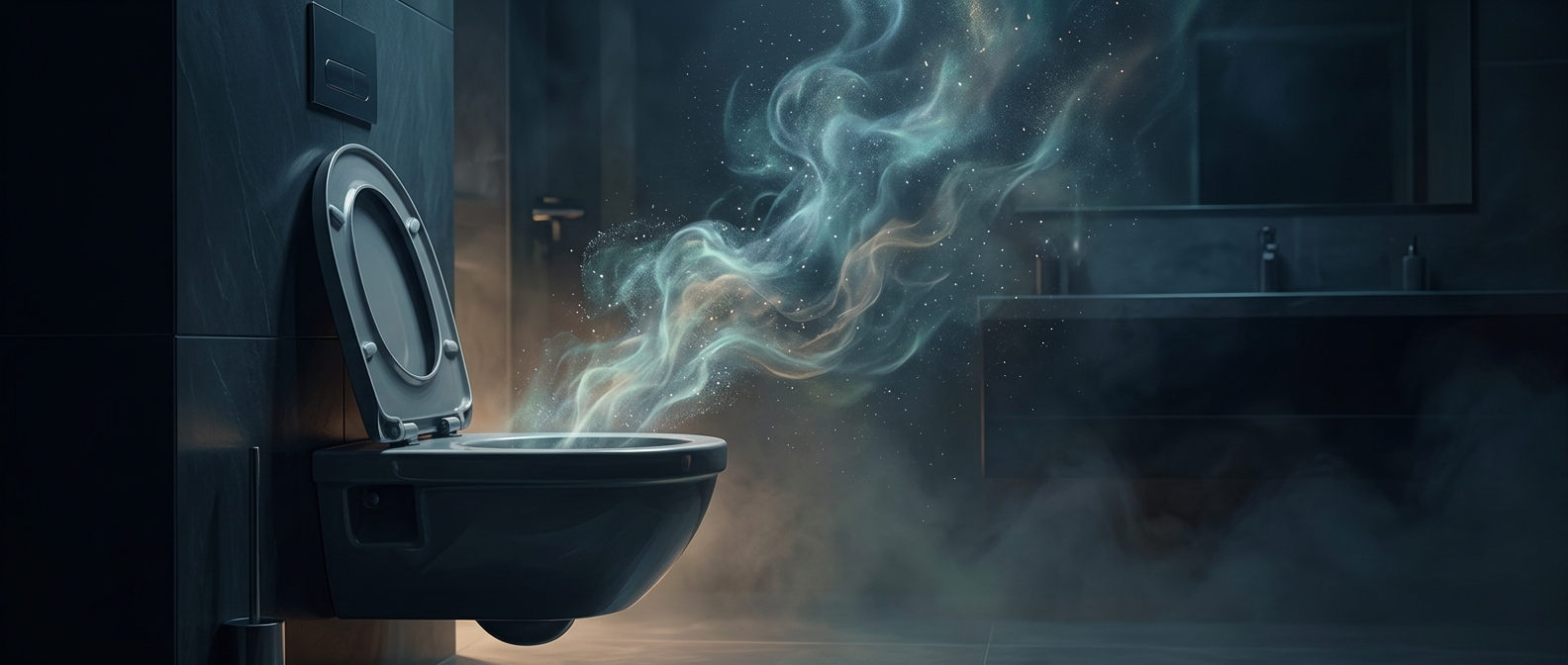
As water rushes through the bowl, it collides with the water already there and with the porcelain. Those impacts break some liquid into droplets. The turbulent air above the bowl can carry the smallest droplets upward and outward before they settle; larger drops tend to fall closer to the toilet. This airborne mix is often called a toilet plume.
Where the droplets go depends on their size
A droplet’s journey is shaped by gravity, airflow, and nearby surfaces. Larger droplets may land on the seat, floor, or counter. Smaller ones can stay suspended longer and drift with air currents, then settle on objects in the room. A toothbrush left uncovered nearby is one possible landing place—not because every flush sends visible spray directly onto it, but because tiny droplets are hard to see.
The droplets can contain material from the bowl. Whether that material poses a health risk depends on what is present and whether it reaches a person in a sufficient amount; finding droplets on a surface does not by itself mean someone will become ill.
A lid helps, but it is not an airtight barrier
Closing the lid before flushing puts a physical barrier between the bowl and the room, reducing the route droplets can take. It does not seal the toilet, so it cannot guarantee that none escape. Keeping toothbrushes in a cabinet or away from the bowl adds another practical barrier—and makes the invisible part of a flush less likely to reach something used directly in the mouth.