How a bacterial protein can start ice forming
Cloud droplets do not freeze as soon as they fall below 0°C. In clean, tiny droplets, water can remain liquid well below that point because forming ice requires the molecules to arrange themselves into an initial crystal—a difficult first step called nucleation.
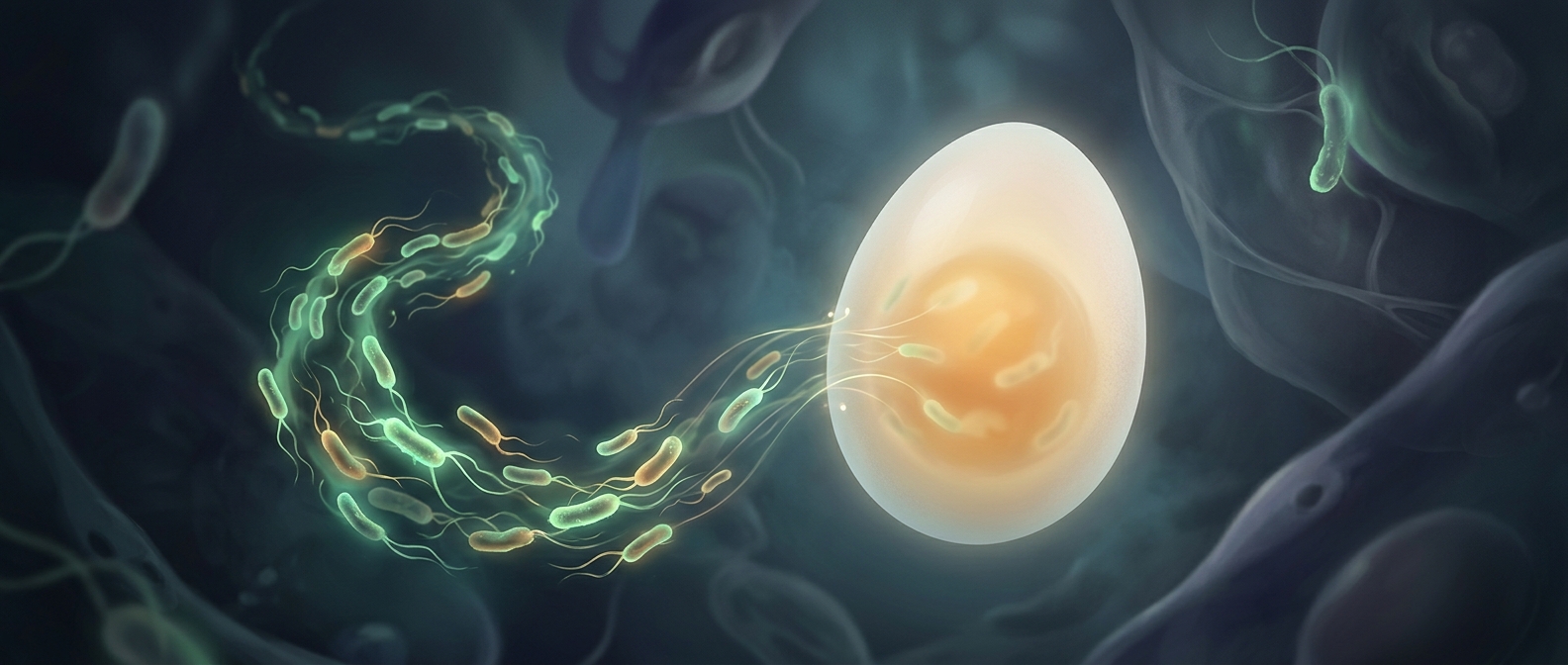
Some bacteria carry proteins on their outer surfaces that make that step easier. The protein’s structure can line up nearby water molecules in a pattern resembling ice. That arrangement gives a crystal a place to begin growing, rather than leaving molecules to organize themselves by chance.
From a microscopic crystal to precipitation
Once an ice crystal forms, it can grow as water vapor joins it or as it encounters supercooled droplets—liquid water colder than 0°C. As the crystal grows, it may become heavy enough to fall. Depending on the air it passes through, it can reach the ground as snow or melt into rain.
The bacteria do not create clouds or supply the water. Their role is narrower: under the right conditions, they can help a cloud’s liquid water freeze sooner. Whether that contributes to precipitation depends on the cloud’s temperature, moisture, and movement, so the protein is a possible starting point in a much larger process—not a switch that makes rain fall.
Why the small scale matters
A cloud’s behavior can hinge on how readily its droplets begin to freeze. By providing a surface that helps water molecules take the first step toward ice, a microscopic bacterial protein can influence what happens inside a cloud—and, in some circumstances, whether ice particles grow and fall.