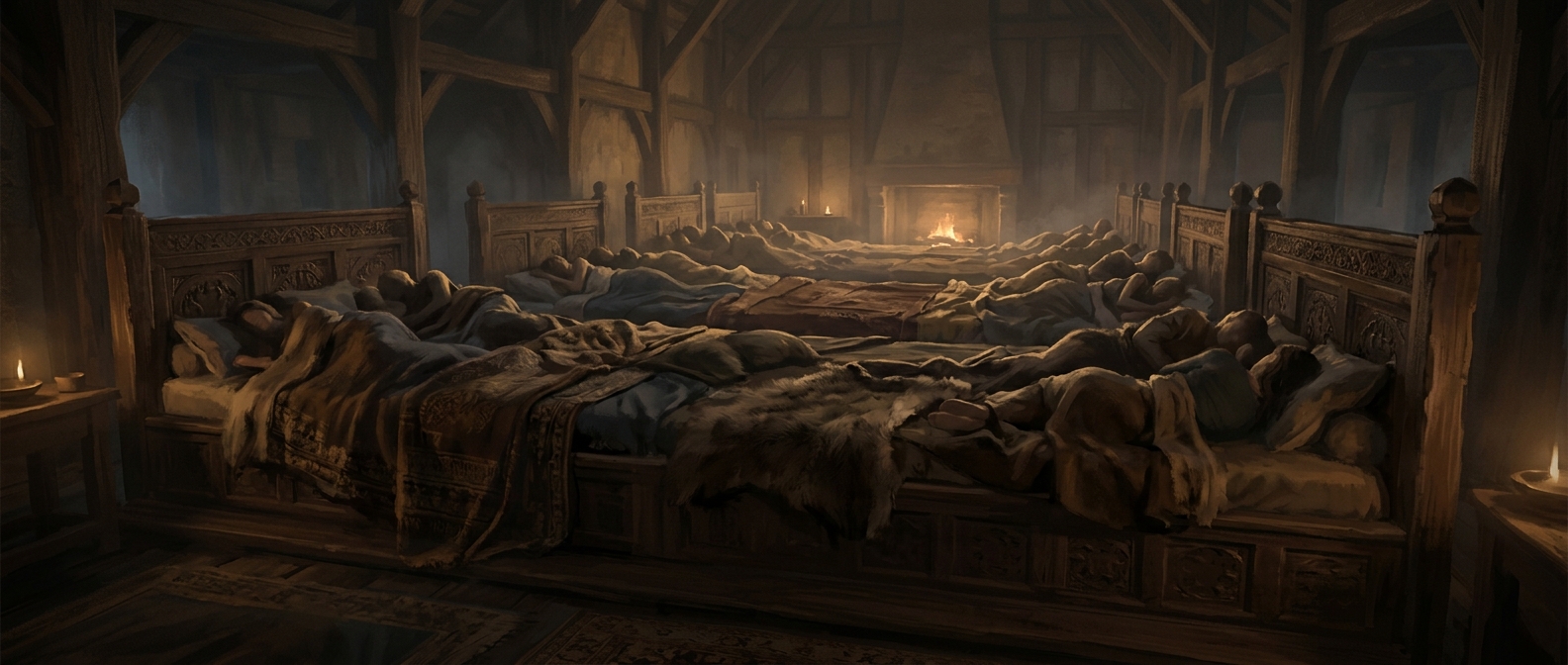
A Bed Had to Serve More Than One Sleeper
When a household owned only one substantial bed, it was valuable furniture, not a private zone assigned to one person. Sharing let a family make use of that investment night after night—and fit more sleepers into a home without requiring a separate bed for each person. Depending on the household, the same sleeping place could also accommodate a visitor for the night.
Hospitality Came With a Tradeoff
Taking in a traveler did not necessarily mean setting up a dedicated guest room. The family could make room in the bed it already used, turning an ordinary household arrangement into a form of overnight hospitality. The practical benefit was clear: a scarce piece of furniture served both residents and guests. The cost was equally immediate—less room to stretch out and little separation between sleepers.
A bed’s usefulness, then, was measured not just by comfort but by how many people it could shelter when space and furnishings were limited.