A sky image made from metal and gold
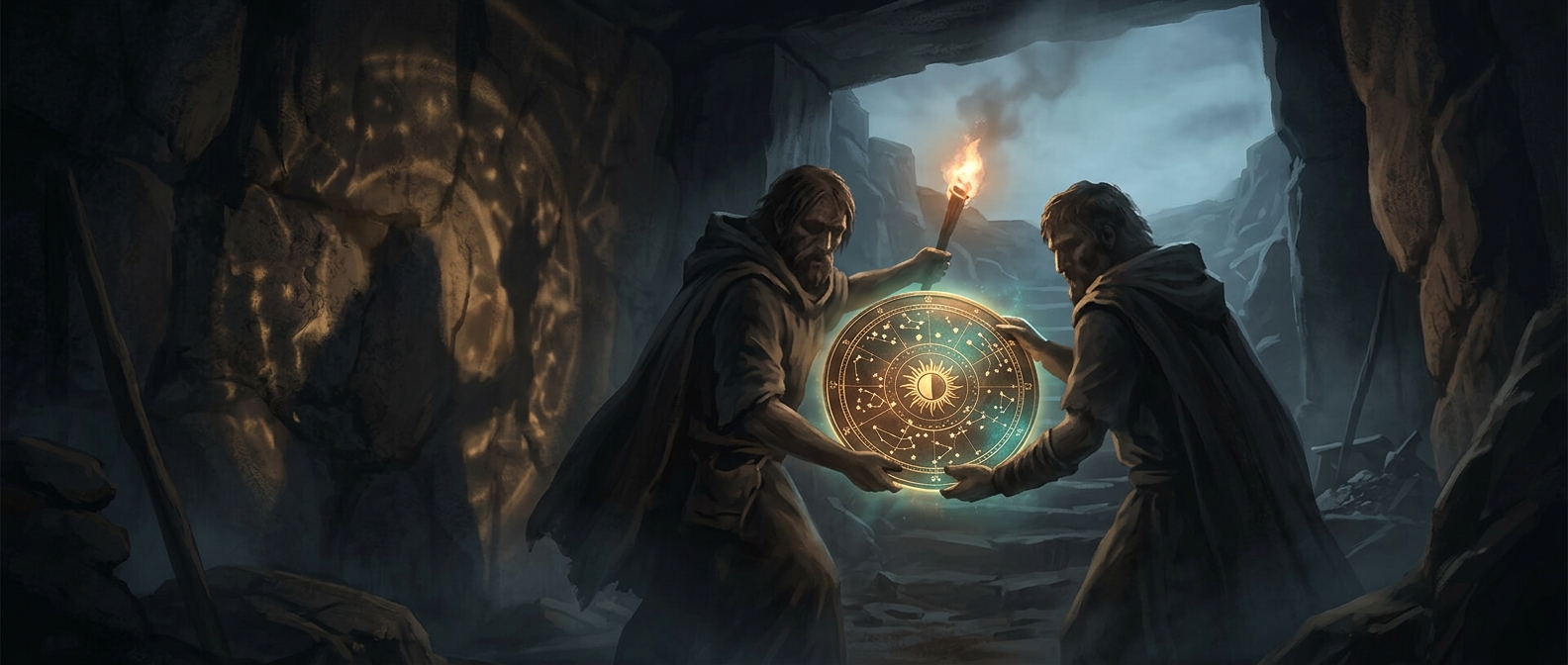
The Nebra Sky Disc is a bronze plate decorated with gold shapes: a large circle, a crescent, a cluster of small dots and curved bands added at a later stage. The arrangement is widely understood as a representation of the sun, moon and stars. It offers a striking glimpse of how Bronze Age people observed the sky, though the disc cannot tell us exactly what they believed or how they used it.
The celestial pattern may have helped people relate the moon’s phases to the changing seasons. That would have mattered in a world where the timing of planting, harvesting and ceremonies depended on the year’s rhythms. The disc is not simply a picture of the night sky; its changing design suggests that people were recording and interpreting what they saw.
Why the recovery mattered
The men who found the disc with metal detectors removed it from its archaeological setting and tried to sell it illegally. That made the attempted sale more than a dispute over ownership: once an object is dug up without careful records, clues about where it lay and what surrounded it can be lost. Those details help archaeologists establish how an artifact was made, used and buried.
The police operation in a Swiss bar brought the disc back into official hands. Its survival preserved not only an unusually vivid image of the prehistoric sky, but also an object whose material and design could be studied rather than hidden in a private sale. The near-loss is part of the disc’s story—and a reminder that an artifact’s place in the ground can be as valuable as the object itself.