A Room Built for Withdrawal
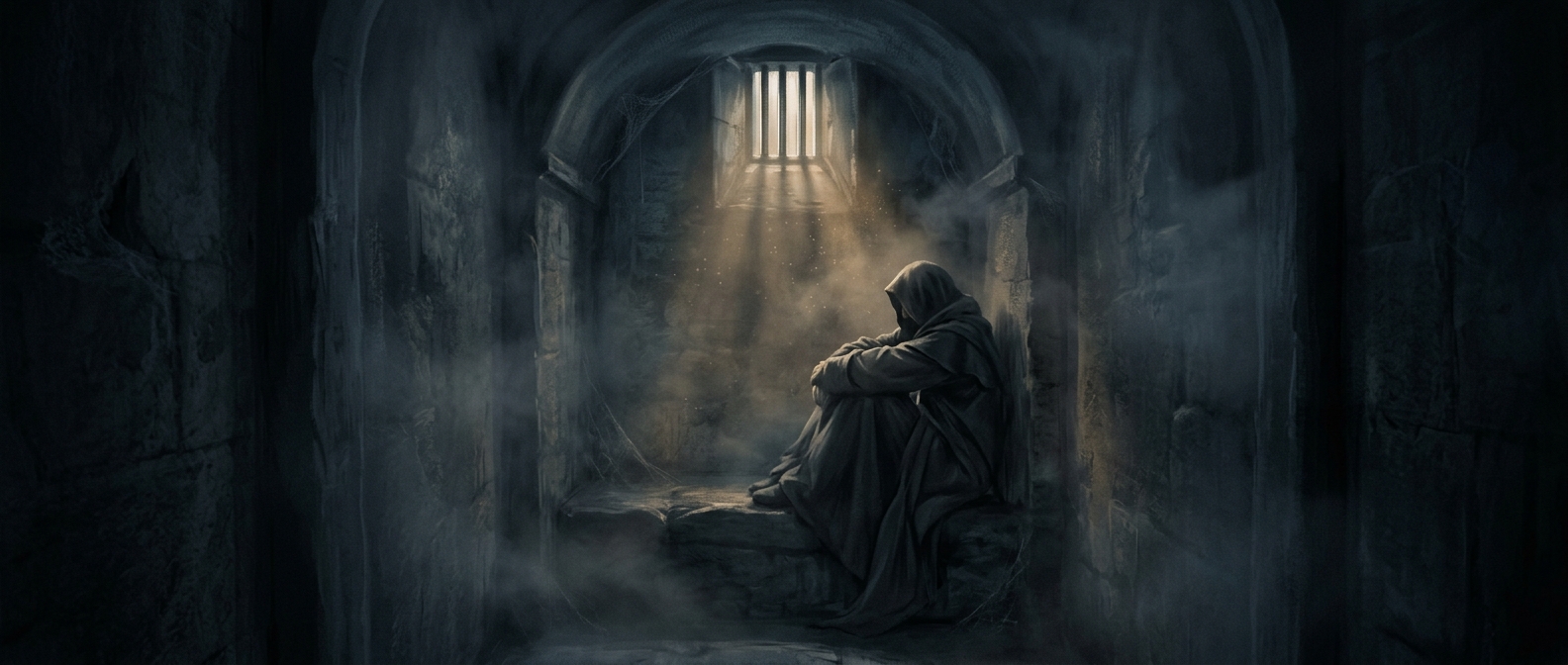
Drogo’s tiny room was not simply a place to hide. In medieval Christian life, some religious people chose enclosure: remaining in a small cell beside a church and limiting contact with the outside world. The arrangement made solitude part of a daily spiritual discipline, while keeping the recluse physically close to a place of worship.
For Drogo, the choice followed an affliction that disfigured him. Rather than continue living among other people, he shut himself into the church room. The cell’s cramped scale turned withdrawal into a permanent condition: ordinary movement, company, and access to food all depended on the narrow opening in its wall.
Solitude With a Lifeline
That hole mattered. It let other people pass in scraps, so Drogo’s survival still depended on help from beyond the cell. His enclosure was therefore not complete independence or a sealed-off refuge; it joined extreme isolation to a thin, practical connection with the community outside.
In religious terms, such a life could be understood as devotion expressed through renunciation—giving up comfort and ordinary social life for prayer and spiritual focus. That meaning does not erase the physical hardship. A room barely large enough to inhabit, sustained by food passed through a hole, made the cost of the choice concrete. Drogo’s cell was both a shelter from the world and a boundary he remained inside for decades.