A carcass becomes a contest over seconds
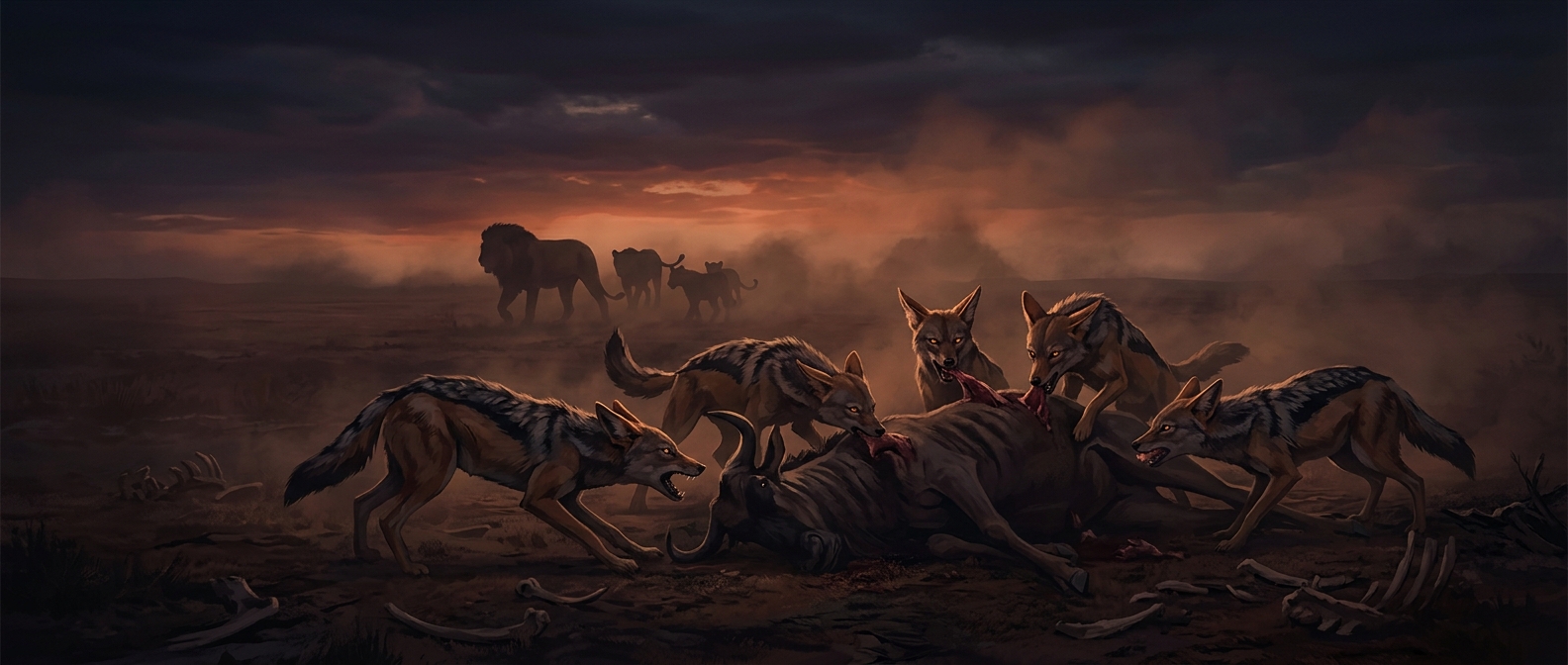
A lion kill is not simply food left unattended. Lions often feed close to the carcass, and their attention can shift between eating, watching one another, and scanning for threats. A jackal has to read those changes from a distance. It may edge closer while a lion is occupied, seize a piece, and retreat before the cats turn toward it.
That approach-and-withdraw strategy is a form of risk management. The jackal cannot overpower a lion, so its chance depends on speed, distance, and timing—not on holding the carcass. One mistake can cost far more than the meal is worth.
Why take the chance?
A large carcass can offer a concentrated meal that would be difficult for a small hunter to obtain on its own. Even a brief opening may provide useful food. Jackals also eat many other things, so scavenging at a lion kill is an opportunity, not a dependable feeding arrangement.
The presence of a lion does not make the remains safe or available. Other scavengers may compete for them, and the lion can return its attention to the carcass at any moment. The jackal’s advantage is that it can make a quick attempt and leave; the lion’s advantage is that one lunge can end the contest.
Not a cleanup crew
Scavenging moves food through an ecosystem, but it is not a tidy handoff from predator to helper. A jackal’s visit is a risky bid for calories amid competing animals. The striking part is how little time separates a free meal from a fatal mistake.