The windshield began as a tradeoff
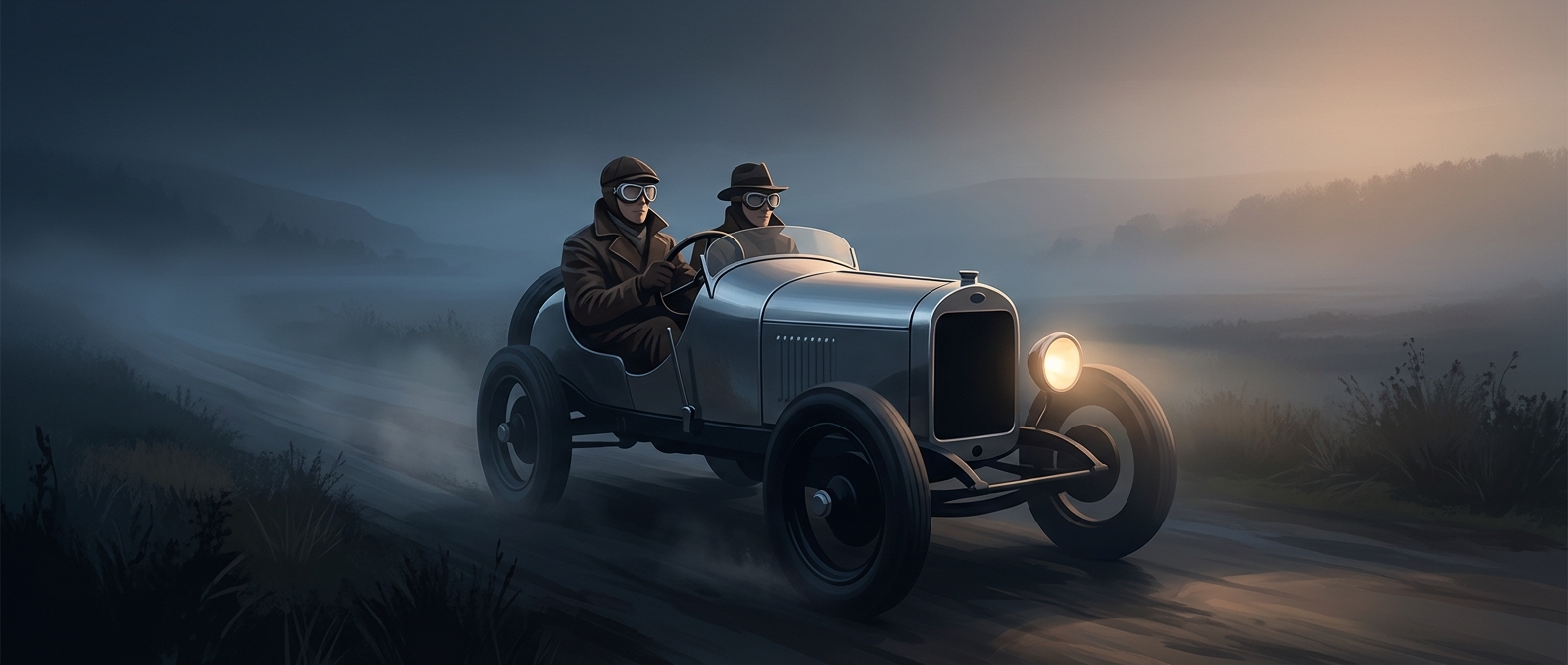
Early car bodies drew heavily on the carriage: an open seat, little protection from the elements, and no built-in barrier between the driver and the road ahead. A windshield was not an obvious necessity when cars traveled slowly and their engines had limited power. It added weight and caught the air, creating drag—the force that pushes against a moving vehicle and makes its engine work harder.
Drivers could tolerate the exposure, often relying on goggles or simply bracing against the wind. The open layout also kept the vehicle mechanically simple: there was no glass to mount, clean, or replace.
Speed changed what the driver could see
As cars became faster, airflow became a practical hazard rather than a minor discomfort. Wind pressed against the driver’s face and eyes, making it harder to keep them open and focused on the road. Dust, insects, and small bits of debris could strike as well. The problem was not just comfort: a driver who could not see clearly could not react reliably.
A windshield redirects much of that airflow around the occupants, giving the driver a steadier view. But it also introduces new demands: the glass must stay in place, avoid obstructing sightlines, and cope with weather and road impacts. Early screens could be fitted as accessories, letting owners weigh protection against cost and the drag of extra equipment.
An open carriage became a road vehicle
The shift toward windshields followed a broader change in what cars were expected to do. Once automobiles were routinely moving fast enough for wind to interfere with driving, protection became part of the vehicle’s function, not merely an optional comfort. The windshield marks the point where borrowing the carriage’s open-air layout stopped making sense at road speed.