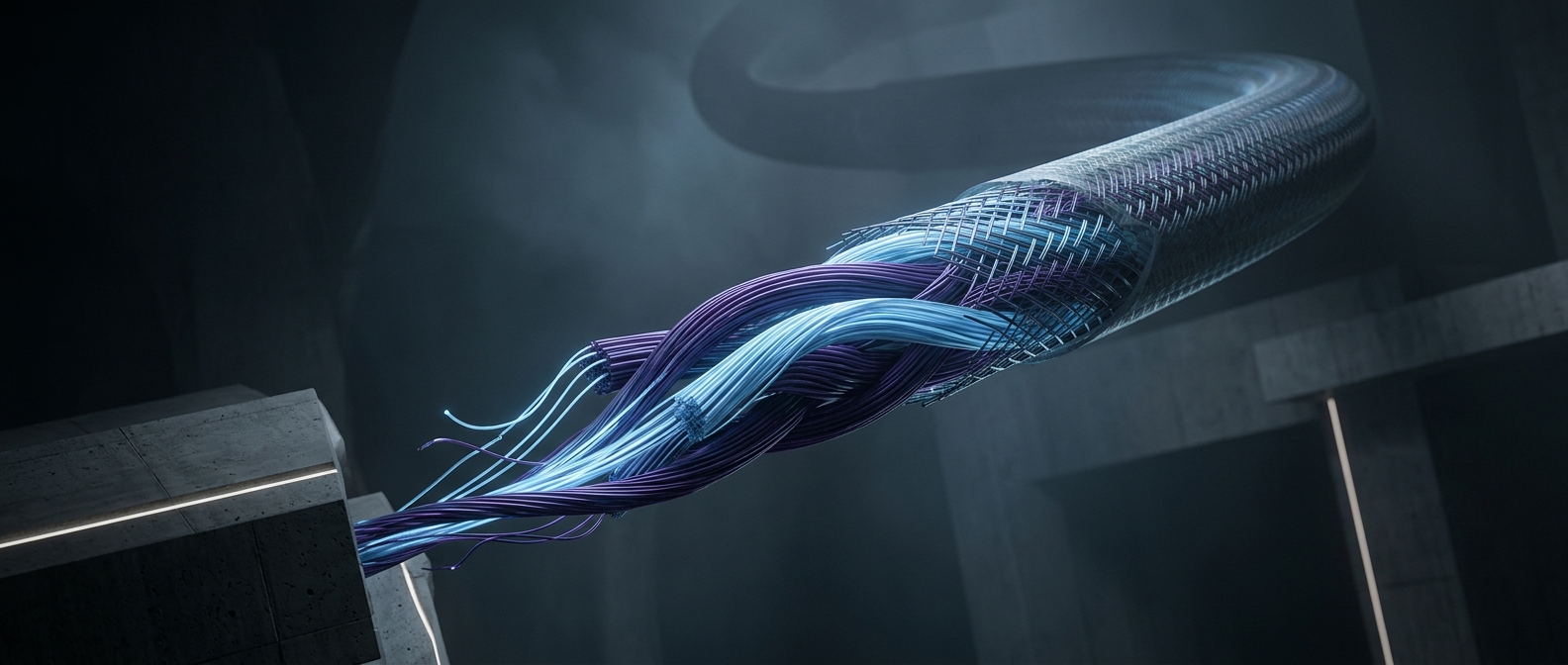
Why a Bungee Cord Is a Bundle, Not a Single Rubber Rope
Inside a bungee cord, many elastic strands run together beneath a woven fabric cover. When the cord is pulled, those strands lengthen and share the load; when the pull eases, they contract and help draw the cord back. The fabric sheath keeps the bundle together and provides a durable outer surface, while the elastic strands do the stretching.
That construction makes a compact cord possible: instead of relying on one thick piece of elastic, the design gathers many smaller elements into one flexible line. The strands’ combined response is what lets the cord stretch substantially while remaining connected to its load.
Stretching Stores Energy
As the strands lengthen, they store energy, much as a stretched spring does. Releasing tension lets them recoil, returning some of that energy as motion. In a bungee jump, this gives the cord a way to slow the jumper after the fall begins and then pull upward as it contracts.
The woven cover is not just decoration: it contains the working bundle and helps shield it from wear. But the cord’s defining action comes from the hidden threads—many small elastic elements stretching together rather than one solid rope behaving as a single piece.