How pressure becomes current
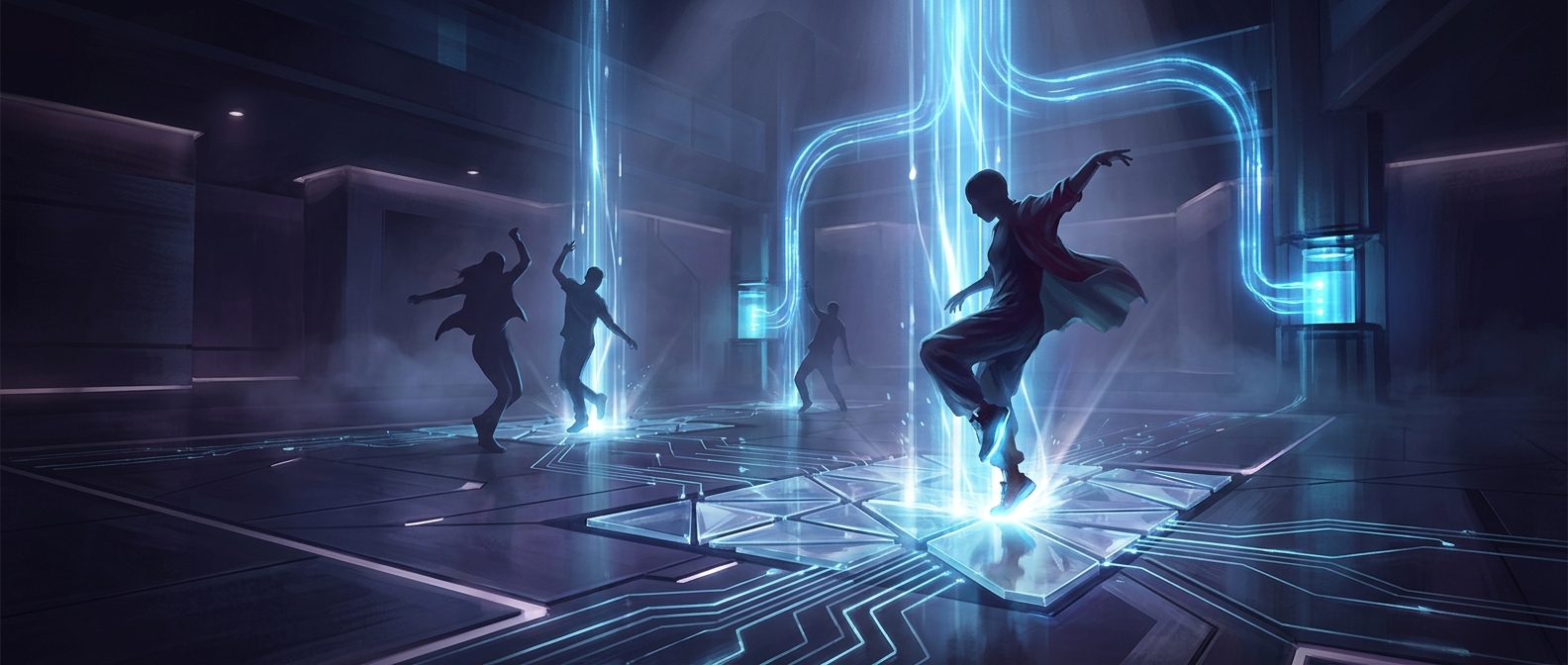
The effect depends on piezoelectricity: in certain materials, squeezing or bending shifts tiny electrical charges inside the material. Specialized crystals beneath a dance floor are arranged so that a footstep presses on them. That pressure produces a brief electrical output; when the pressure lifts, the material returns toward its original shape, ready for another step.
A single step yields only a small amount of energy. The useful contribution comes from many compressions over time, so a busy floor can produce more than a quiet one. The electricity can be routed through power electronics, which condition the irregular pulses into a form suitable for a small load, such as part of a lighting system.
The floor has to do two jobs
Unlike a generator that spins continuously, a footstep system receives energy in scattered bursts. Its hardware must capture those pulses and manage the supply so lights do not simply flicker with each dancer’s movement. The floor also has to remain stable and comfortable underfoot while flexing enough to transmit pressure to the crystals.
That makes the installation a way to recover a little energy from movement that would otherwise dissipate into the floor as heat and vibration—not a replacement for the club’s main power supply. The striking part is the scale of the conversion: a dance step can become a tiny electrical pulse, and a crowded floor can turn those pulses into useful light.