How a Silent Body Could Tell a Story
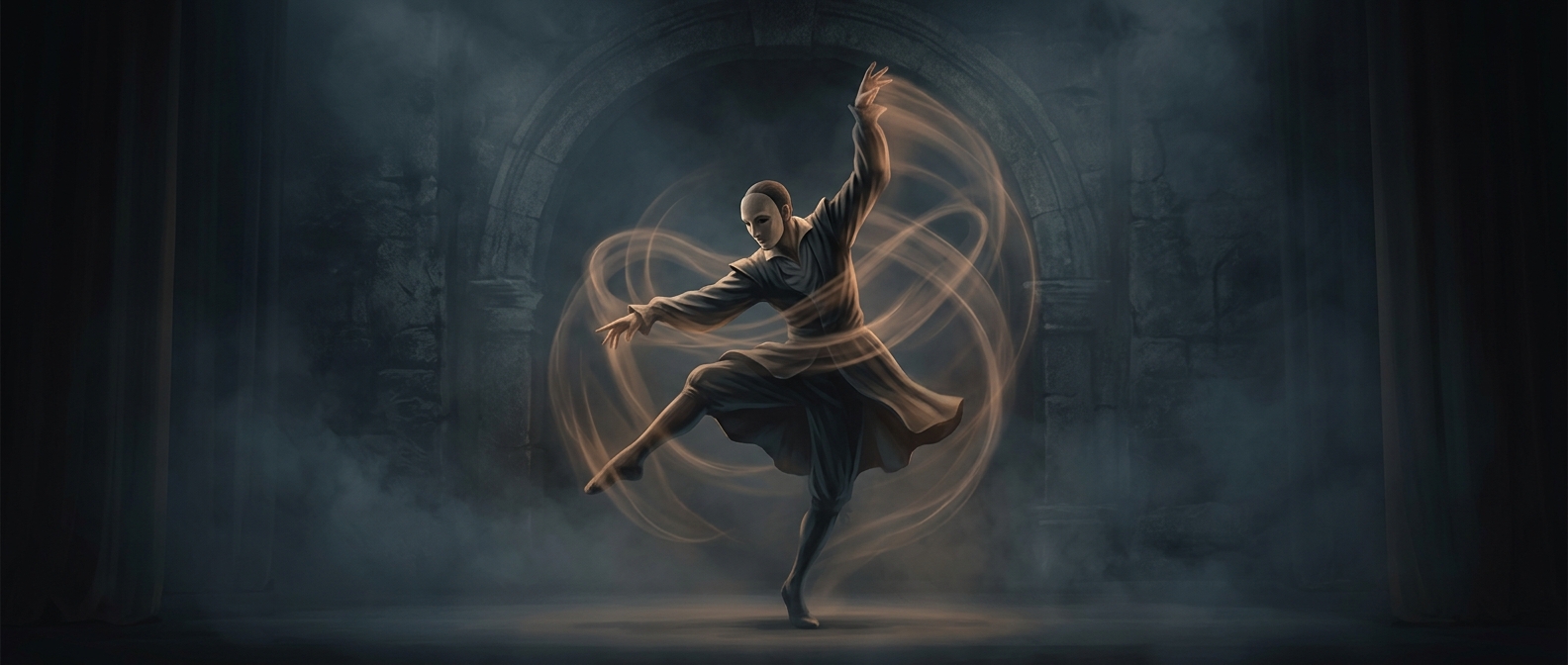
Before spoken dialogue became part of the act, pantomime had to make action visible. A performer could show a character sneaking, falling, or reacting to a surprise through posture and movement alone. Limbs were not decoration: a sharply raised arm or a frantic scramble could carry the beat that words otherwise might have supplied.
Why the Movement Had to Be Exaggerated
Onstage, a small gesture can disappear at a distance. Broad, emphatic motions made the action easier for an audience to read, especially in a lively scene moving quickly from one mishap to the next. The aim was not random flailing, but movement clear enough to function as dialogue: the audience watched a physical action and inferred what the character was doing or feeling.
That constraint shaped the comedy. Without speech to explain a misunderstanding, performers had to make confusion legible through their bodies—turning a simple stumble or startled reaction into an event the whole room could follow.