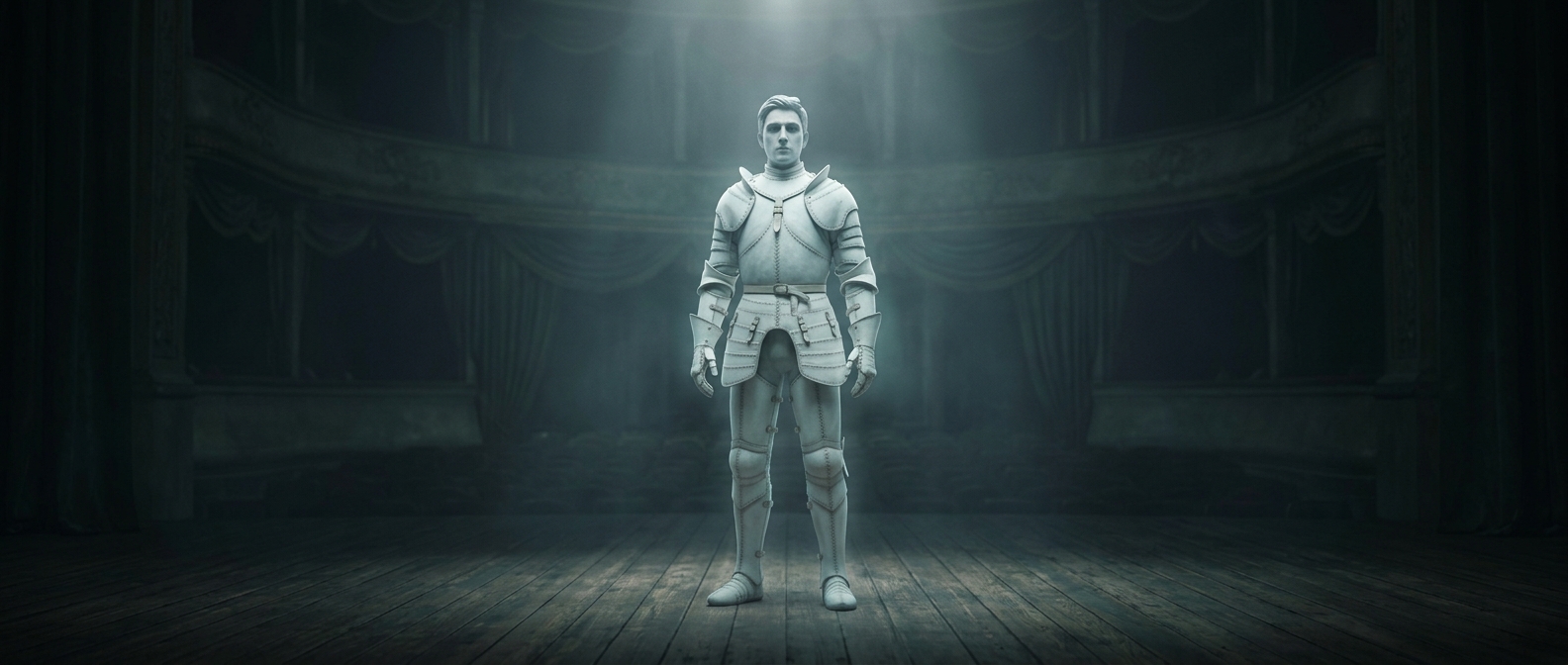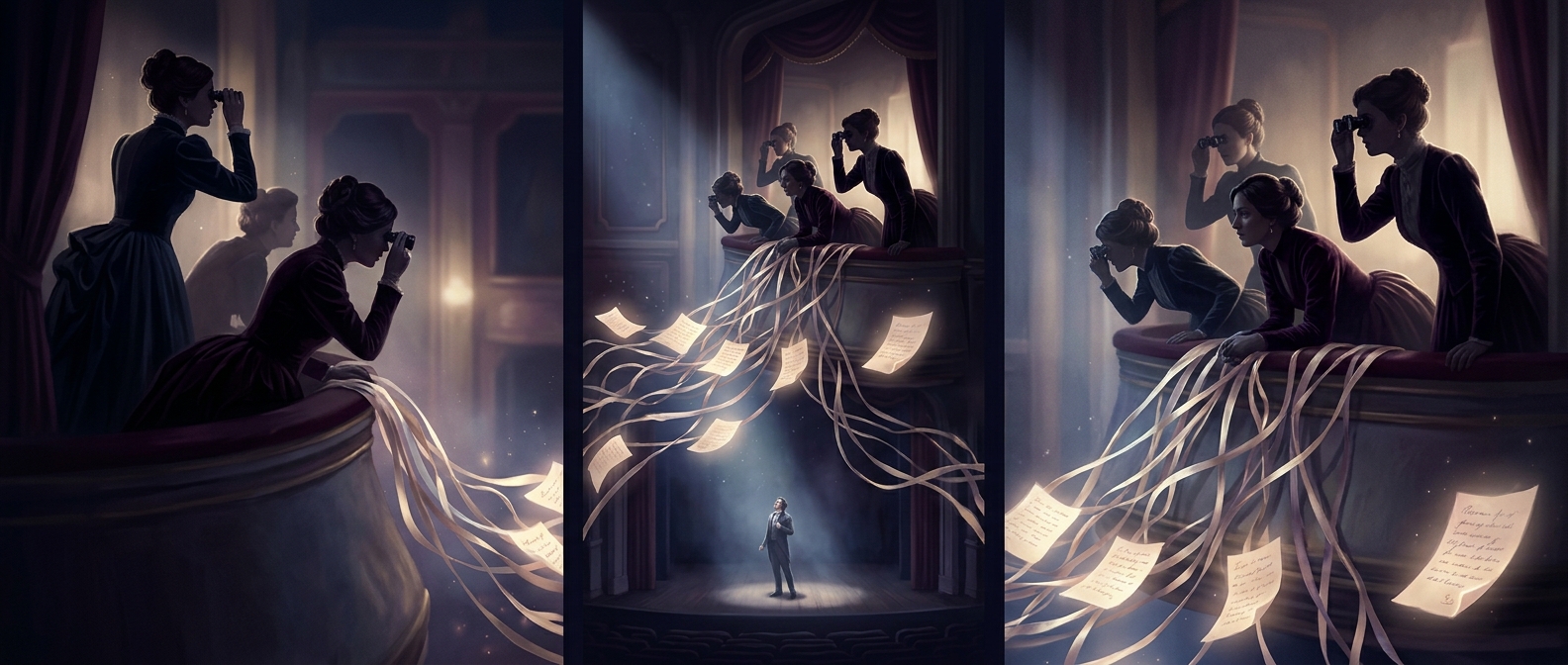
The stage once included the audience
For much of theater history, actors did not have to behave as though the audience were invisible. A performer might address spectators directly, explain what was happening, or share a thought that other characters supposedly could not hear. In plays by Shakespeare, for example, soliloquies let a character speak private thoughts aloud to the audience. The convention made spectators participants in the story’s telling, not merely observers of a sealed-off world.
Realistic rooms changed the rules
As theater increasingly aimed to make everyday life look convincing, the performance style changed with it. Plays set in recognizable homes and furnished rooms invited audiences to watch characters behave as if they were alone together. Actors were expected to keep their attention within the scene and avoid acknowledging the crowd.
This convention is often described as an invisible fourth wall: the three visible walls of a room are joined by an imagined one between the actors and the spectators. The audience can see through it, but the characters act as though it is there. It is not a literal stage barrier; it is a shared agreement about how the performance should feel.
A convention, not a permanent rule
The shift did not erase direct address from theater. It made one approach—sustained illusion—especially important in realistic drama, while other plays continued to speak openly to their audiences. And because the wall is imaginary, a playwright can deliberately break it: a character turns outward, and the spectators suddenly become part of the scene again.
That contrast is the wall’s dramatic power. A glance toward the house can feel startling precisely because the rest of the performance has taught the audience to pretend it is not there.