Why a beach’s color can change a war scene
On screen, sand is not just scenery. A pale beach can make a landing look clean and open; a dark one can give the same shoreline a harsher, more weighty appearance. When a film is recreating an event documented in photographs, that difference can matter as much as the shape of a landing craft or the cut of a uniform. Viewers may not consciously compare colors, but an inaccurate landscape can make a carefully staged scene feel wrong.
The camera sees more than the location provides
A beach that looks convincing to the eye may not match the reference once it is framed, lit, and filmed. Light sand reflects more light than dark volcanic material, so changing the ground can affect the image’s overall contrast and the way people and equipment stand out against it. Adding dark rock gives the crew a physical surface to compose against, rather than asking lighting or post-production alone to make a white beach look black.
The material also has to work as a setting. It must cover enough of the visible ground to read as a shoreline, while actors, vehicles, and equipment move across it. The color is therefore part of the production design—the planned arrangement of the scene’s physical surroundings—not a last-minute decorative detail.
A historical match becomes a logistics problem
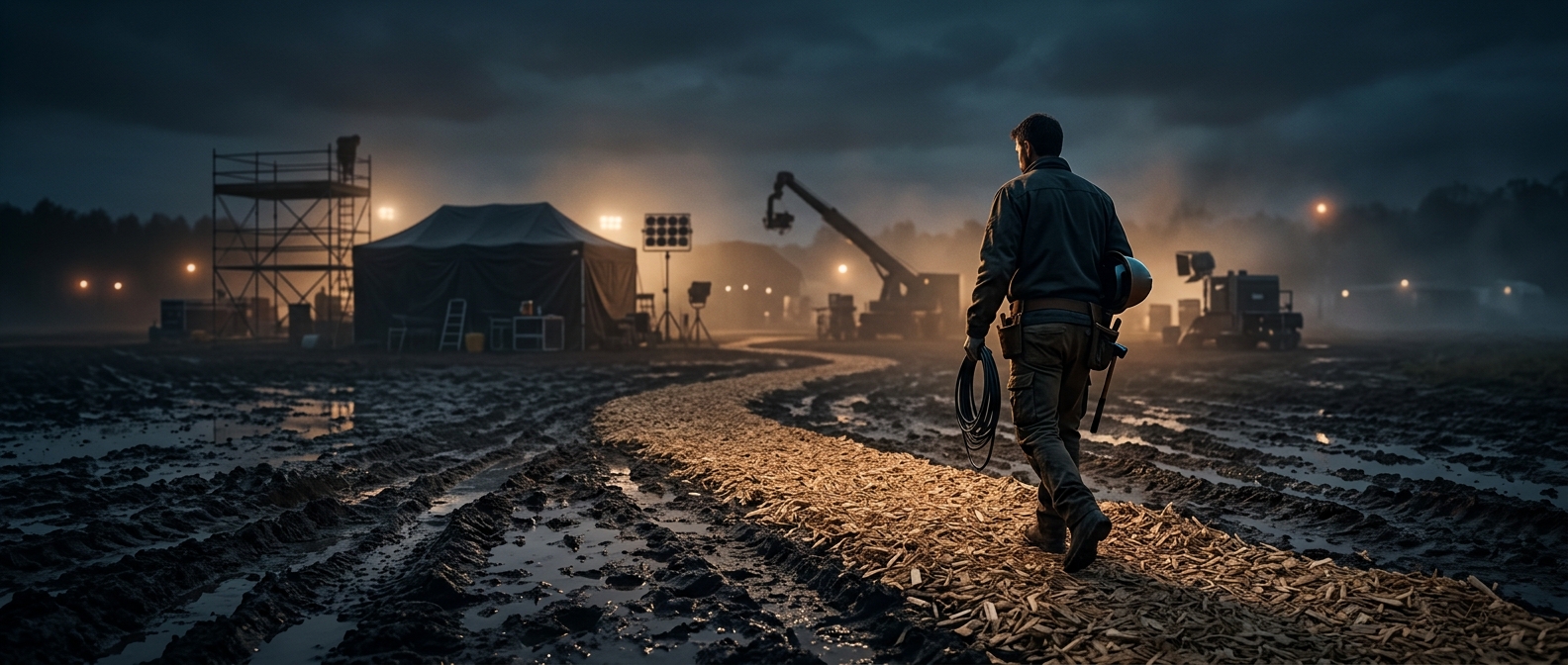
Transporting heavy material turns a visual choice into a practical one. It has to reach the location, be spread where the cameras will see it, and coexist with the real beach beneath it. The more of the shoreline a production wants in frame, the less a small patch can do to sell the setting.
That effort reveals how historical filmmaking often works: instead of changing the camera to suit the landscape, a production may change the landscape to suit the image. For a few minutes of screen time, the ground itself can become part of the set.