A family argument over Crazy Eights
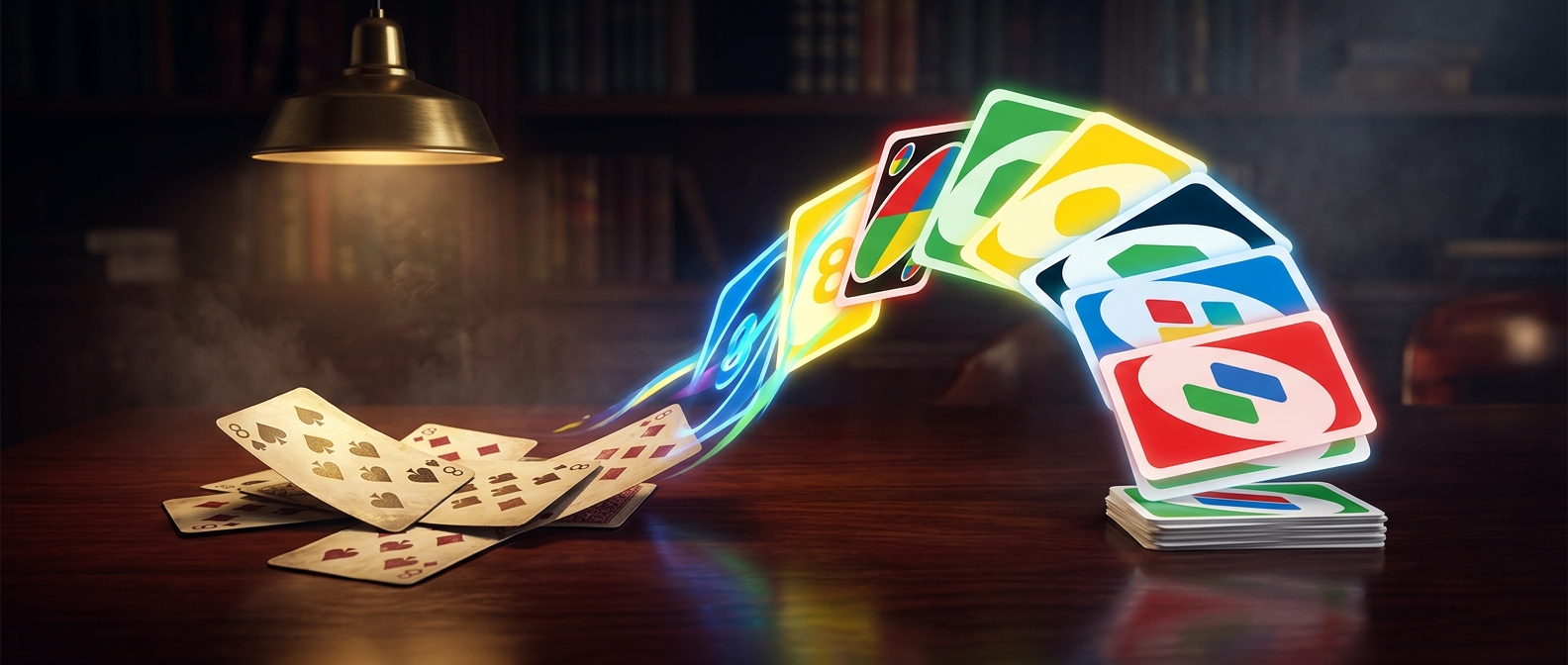
UNO began with a familiar kind of game-night snag: Merle Robbins and his family disagreed about the rules of Crazy Eights, a card game in which players try to get rid of their hands by matching cards. Rather than keep debating which house rules to use, Robbins set out to make a new game with rules his family could agree on.
That practical goal shaped the design. UNO kept the easy-to-grasp idea of matching cards, but gave the deck its own colors, numbers, and action cards. The result was a game that didn’t require players to settle the same rule dispute before they could start.
From a home solution to a family business
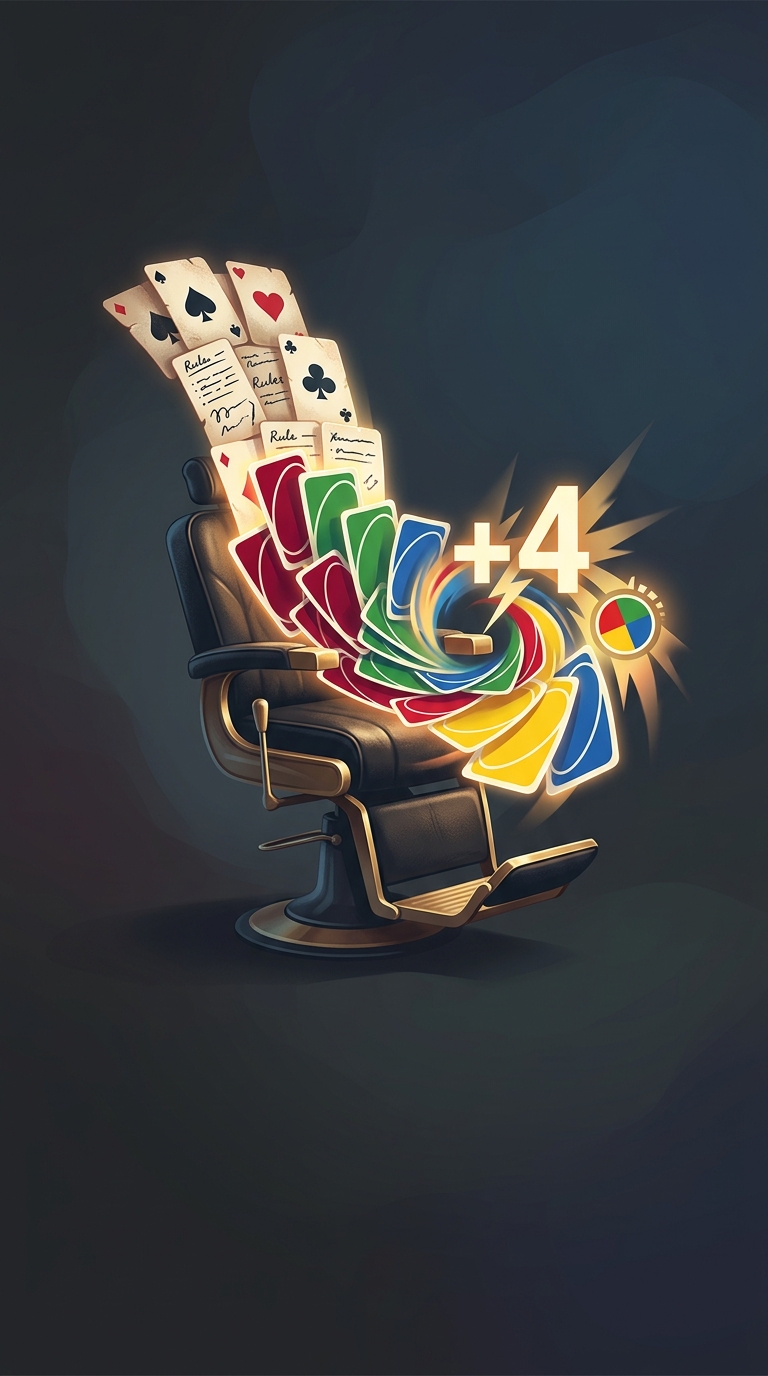
Robbins was a barber in Reading, Ohio, and the game first caught on among people around him. His family helped produce and sell decks, turning a homemade answer to a disagreement into a product. The name “UNO” also gives players a clear final instruction: when you have one card left, announce it.
The small domestic problem behind the game helps explain its lasting appeal. UNO doesn’t ask players to learn a complicated system before competing; its central move—match a color or number—is immediately visible. A family’s argument over how to play an existing game became the reason to make one that was easier to agree on.