A turning circle built for a hotel entrance
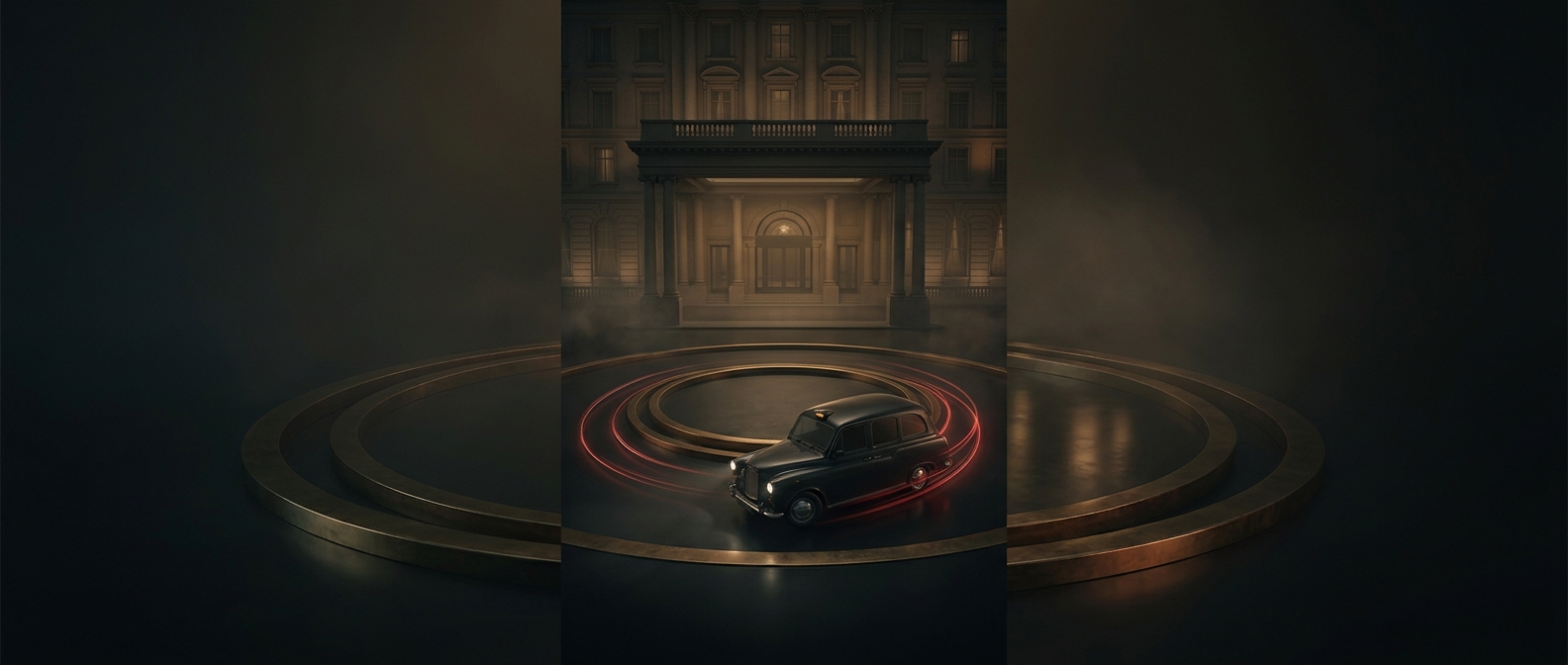
London’s black cabs are designed to turn within a circle about 25 feet across. That compact turning radius is more than a handy feature in crowded streets: it lets a cab negotiate the tight bend around the small roundabout at the entrance to the Savoy Hotel.
The roundabout is an unusually visible test of a broader urban problem. London’s older streets and courtyards were laid out long before modern vehicles, leaving drivers with little room to swing wide. A car that needs a large arc may have to reverse, make several corrections, or risk clipping a curb or another vehicle.
How a tighter turn is engineered
A vehicle turns because its front wheels pivot and guide it along a curve. The tighter those wheels can steer, the smaller the space the vehicle needs—though the cab’s wheelbase, or distance between its axles, also affects how sharply it can bend around a corner.
The cab’s distinctive shape and maneuverability are therefore practical choices, not just styling. The design has to balance a narrow turning path with the stability and passenger space expected of a working taxi. At the Savoy, that balance becomes easy to see: the cab can follow the roundabout’s curve instead of treating the entrance as a three-point-turn challenge.
That ability matters beyond one hotel. In a city of tight junctions and constrained entrances, a few feet of turning room can decide whether a taxi flows through a space or blocks it while trying to get around.