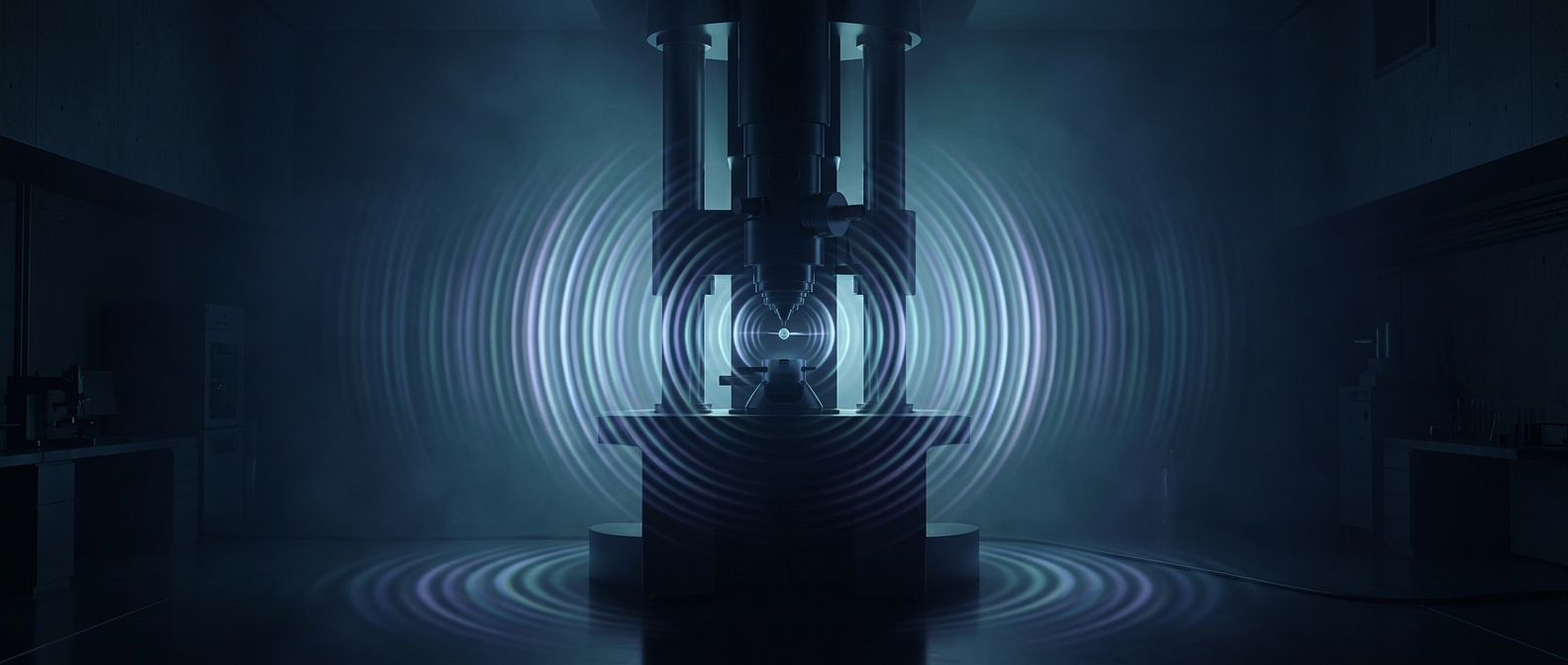
How Cesium Atoms Keep a Clock on Track
A cesium clock starts with a microwave oscillator, an electronic source that produces a rapidly repeating signal. The clock sends that signal through cesium-133 atoms and checks whether the microwaves are driving atoms between two closely spaced energy states. When the signal is tuned to the transition’s resonance, the atoms respond most strongly.
That response gives the clock a reference more dependable than the oscillator alone. A control system nudges the oscillator’s frequency toward the atomic resonance, correcting small drifts. The clock then uses the stabilized signal to mark time. In many precision clocks, atoms are allowed to travel through the microwave field before their state is measured, so the instrument can compare the oscillator against the atoms’ response rather than relying on a single atom to emit a continuous signal.
Why This Particular Number Defines a Second
The transition corresponds to a frequency of exactly 9,192,631,770 cycles per second. Since 1967, the international definition of the second has fixed that number for the unperturbed cesium-133 transition. “Unperturbed” means the reference frequency without shifts caused by outside influences such as magnetic fields; real clocks must manage or account for such effects.
This turns an atomic property into a shared unit of time. A clock’s job is not to make cesium change its behavior, but to reproduce and track the frequency associated with that transition as accurately as possible. The resulting time standard helps synchronize systems that depend on precise timing, including telecommunications and satellite navigation. A tiny error in a clock’s frequency can accumulate into a larger timing error, so the atomic reference matters even when nobody is watching the clock’s display.