Why Tillich called God the “ground of being”
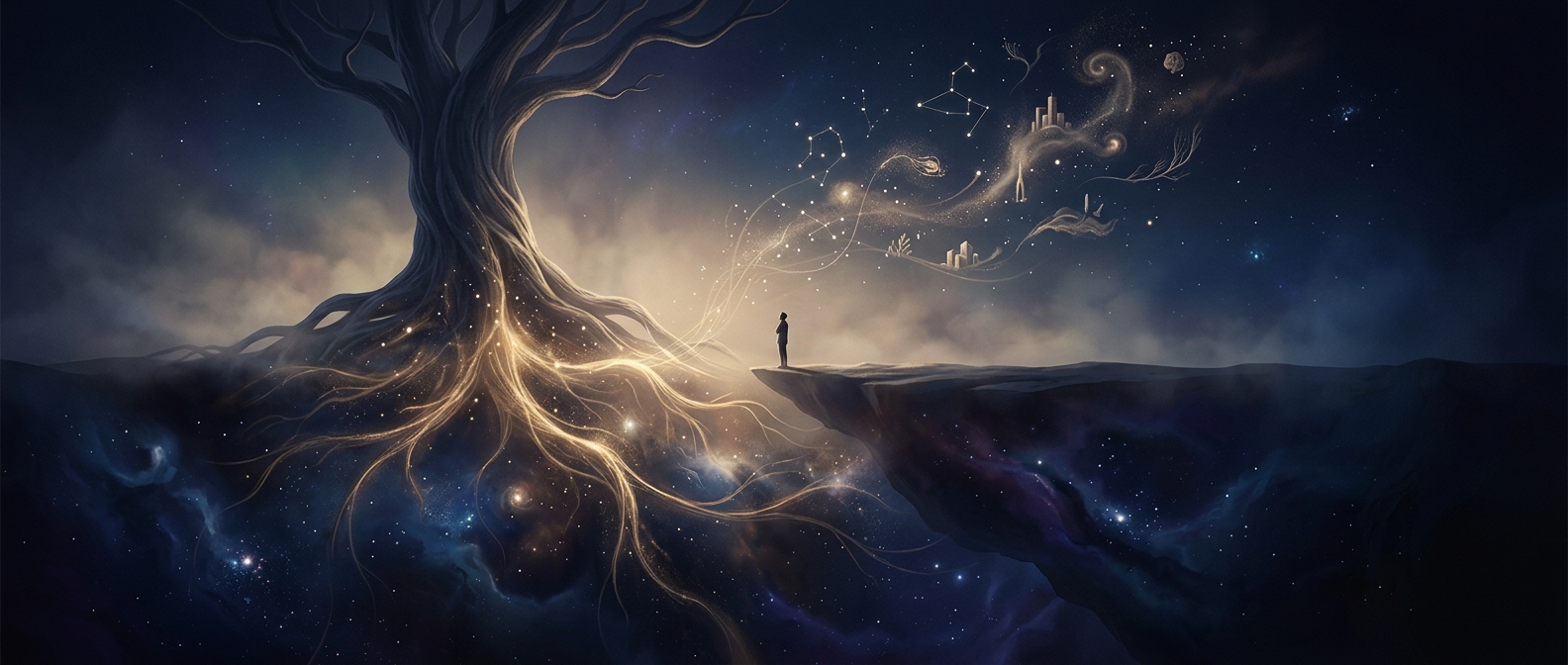
If God were simply a very powerful person somewhere in the universe, God would still be one being among others: distinct from the stars, people, and forces of nature, but belonging to the same general category. Paul Tillich’s phrase “ground of being” points to a different idea. It describes the underlying reality that makes there be anything at all—not an object hidden behind the universe, but the condition on which every existing thing depends.
The distinction is like the difference between a particular wave and the sea that makes waves possible, though Tillich’s idea is more abstract than that image. The ground is not another thing alongside the world; it is what “being” itself rests on.
What the idea changes
This language shifts religious questions away from locating God or treating God as a supernatural character with a place in the cosmos. It also helps explain why Tillich could call God “being-itself”: God is not one item that happens to exist, but the depth or source of existence as such.
That does not mean that every object is simply God. The claim is that finite things rely on a deeper ground, not that a tree, a person, and God are interchangeable. For Tillich, religious language about God is therefore an attempt to speak about the ultimate basis of reality, even though ordinary descriptions of persons and objects cannot capture it fully.
The practical consequence is a different kind of question: not merely “Where is God?” but “What makes anything exist—and what, if anything, can give existence its ultimate meaning?”