Turning animal recordings into alien voices
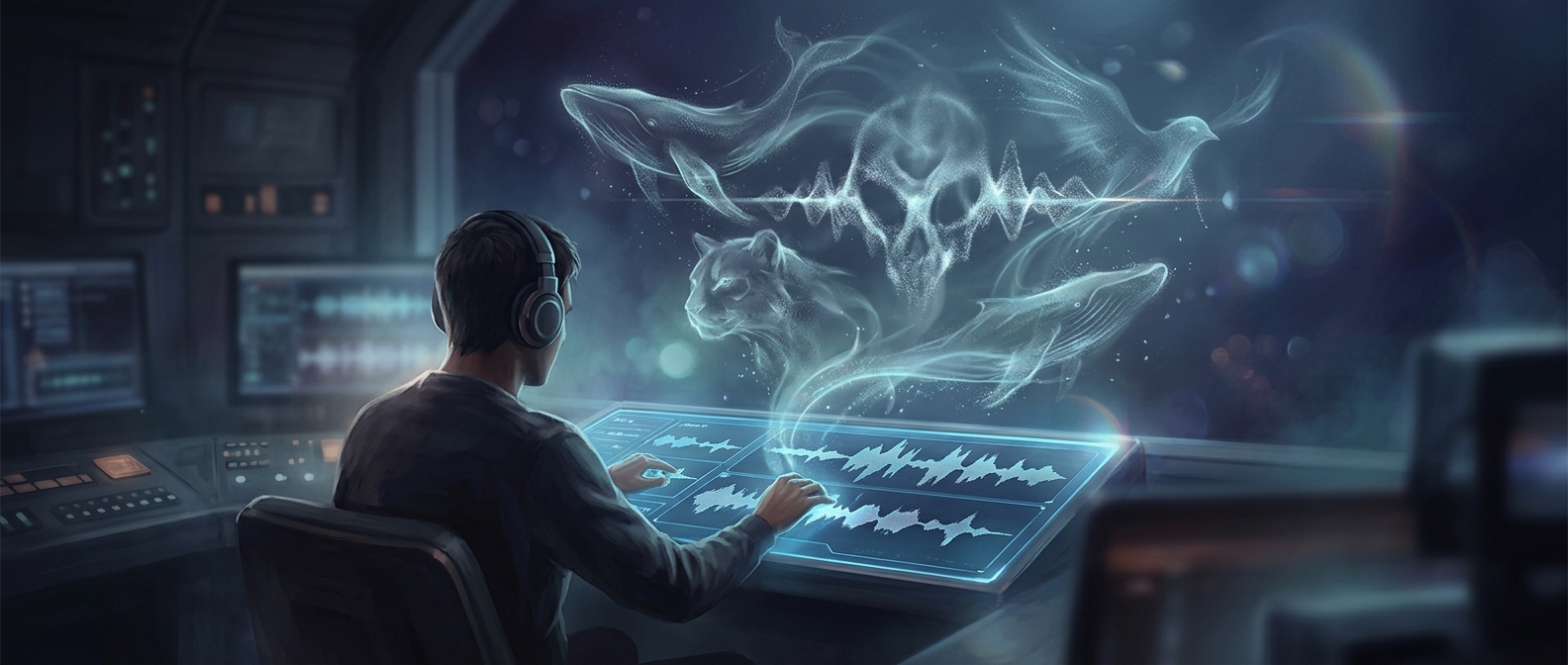
An alien voice has to solve a tricky sound-design problem: it should feel unlike a human voice, yet still work as dialogue. For Mass Effect, the designers started with recordings of raccoons, bears, and insects, then altered the sounds to build character voices. The animals supplied raw material with textures that ordinary speech recordings would not: cries, rasping tones, and other nonhuman vocal sounds.
The recordings were not used simply as recognizable animal calls. They were ingredients to reshape. Changing the source material let the team draw on its unusual qualities while making sounds that could serve as voices for fictional characters. That distinction matters: the goal was not to make an alien sound like a bear or a bug, but to create a voice that felt unfamiliar without losing its place in a scene of spoken conversation.
Why start with real sounds?
A stock recording gives a designer a concrete sound to work from. Instead of building every voice from a clean human performance, the team could transform material already marked by animal timbres. The result links the characters’ voices to sounds from the natural world, but the alterations make them part of the game’s imagined one.
That approach also shows how game audio can help establish a species before a player knows anything about it: a voice can signal “not human” through its sound alone, while still functioning as dialogue the player can follow.