Why Feather-Shaped Muscles Can Pull So Hard
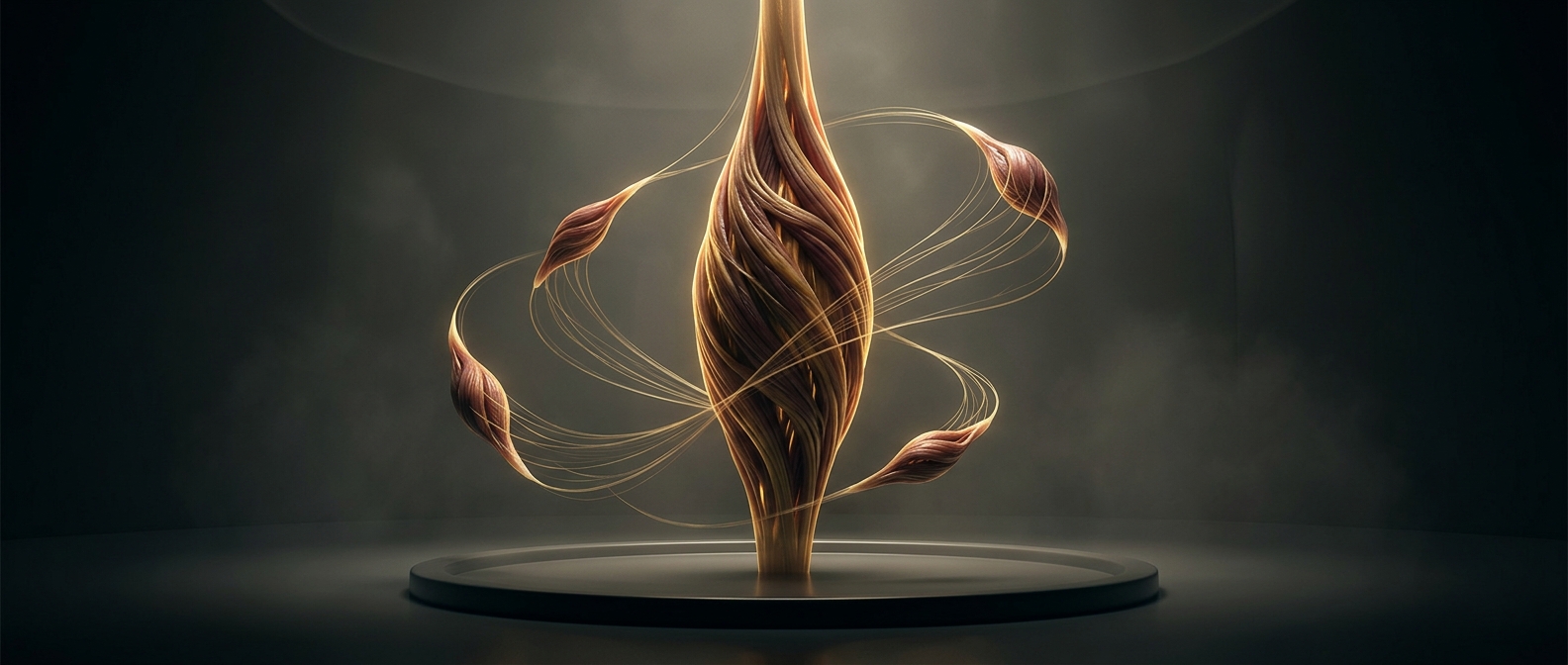
In a feather-shaped, or pennate, muscle, bundles of muscle fibers attach diagonally to a tendon instead of running straight along it. Imagine fitting straws side by side at an angle: more can fit into a given muscle volume than if every straw had to span the full length of the muscle. That lets the muscle pack more fibers in parallel.
When muscle fibers contract, they generate tension. Their pulls combine at the tendon, so a muscle with more fibers working in parallel can generally produce greater force. The diagonal layout does redirect some of each fiber’s pull away from the tendon’s line, but the added number of fibers can more than compensate. The result is a design that favors force within a limited space.
The Tradeoff: Force for Shortening Distance
The same packing strategy limits how far the whole muscle can shorten. Pennate fibers are relatively short, and they pull at an angle rather than directly along the tendon. As they contract, they shorten and rotate toward the tendon, changing their angle; only part of each fiber’s shortening moves the tendon along its length.
That makes pennate architecture useful where a compact muscle needs to generate substantial pulling force, but less suited to producing a large movement through a long range. Muscles with fibers aligned more nearly with their tendons tend to allow greater shortening, though they fit fewer fibers into the same volume.
So the feather-like pattern is not simply a stronger arrangement in every respect: it is a space-for-force tradeoff. The muscle can pull hard without being long, while the angle and shortness of its fibers constrain how far it can move the tendon.