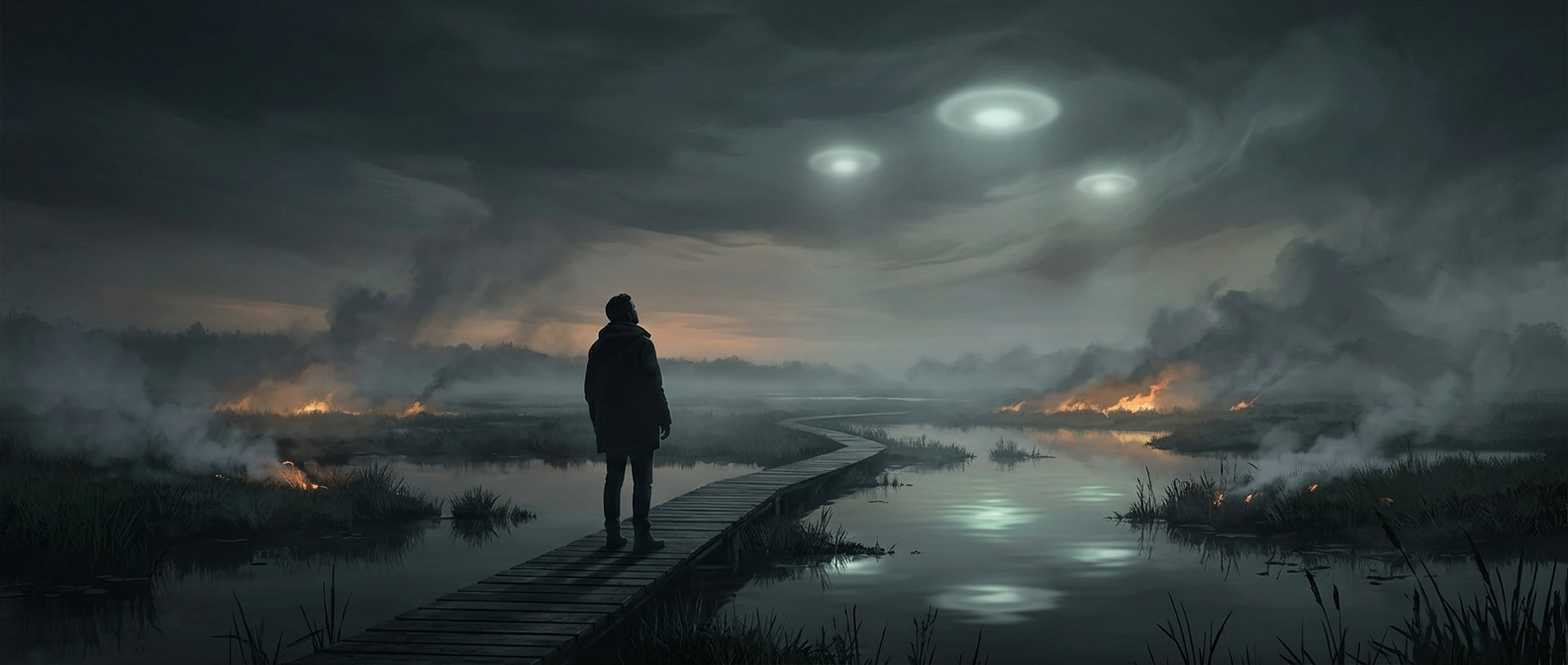
Why Wetlands Can Seem to Glow
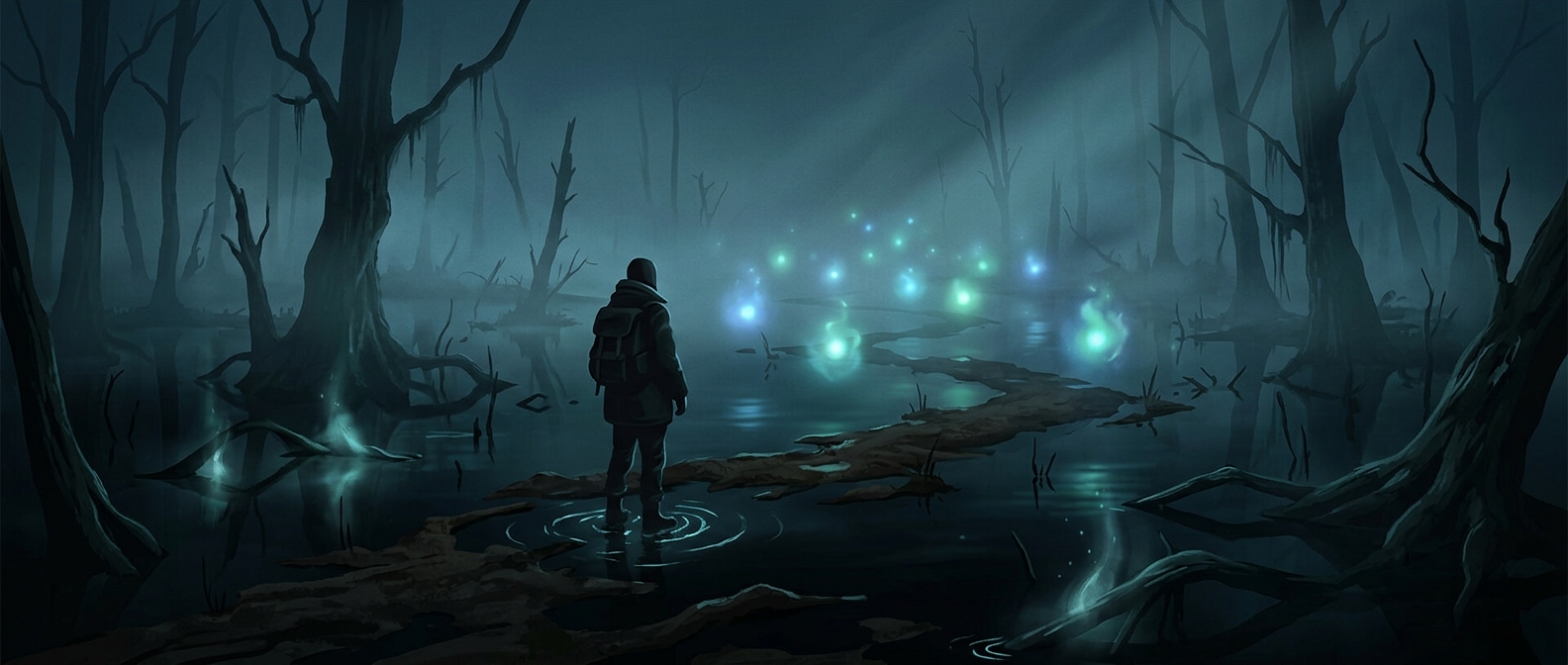
As plant matter decays in waterlogged soil, microbes produce methane, a flammable gas that can seep out through mud or standing water. If it meets an ignition source, it can burn briefly. A small, flickering flame in a dark, feature-poor marsh can be difficult to judge for size or distance, making it seem to drift or hover.
A Flame Needs More Than Gas
Methane does not normally ignite just because it reaches the air. It must mix with air in the right proportions and encounter enough heat or a spark. That makes “swamp gas” a possible explanation for some isolated lights, not a reliable account of every marshland sighting. The precise cause of a particular glow can be hard to establish after it has vanished.
From Marsh Light to UFO Report
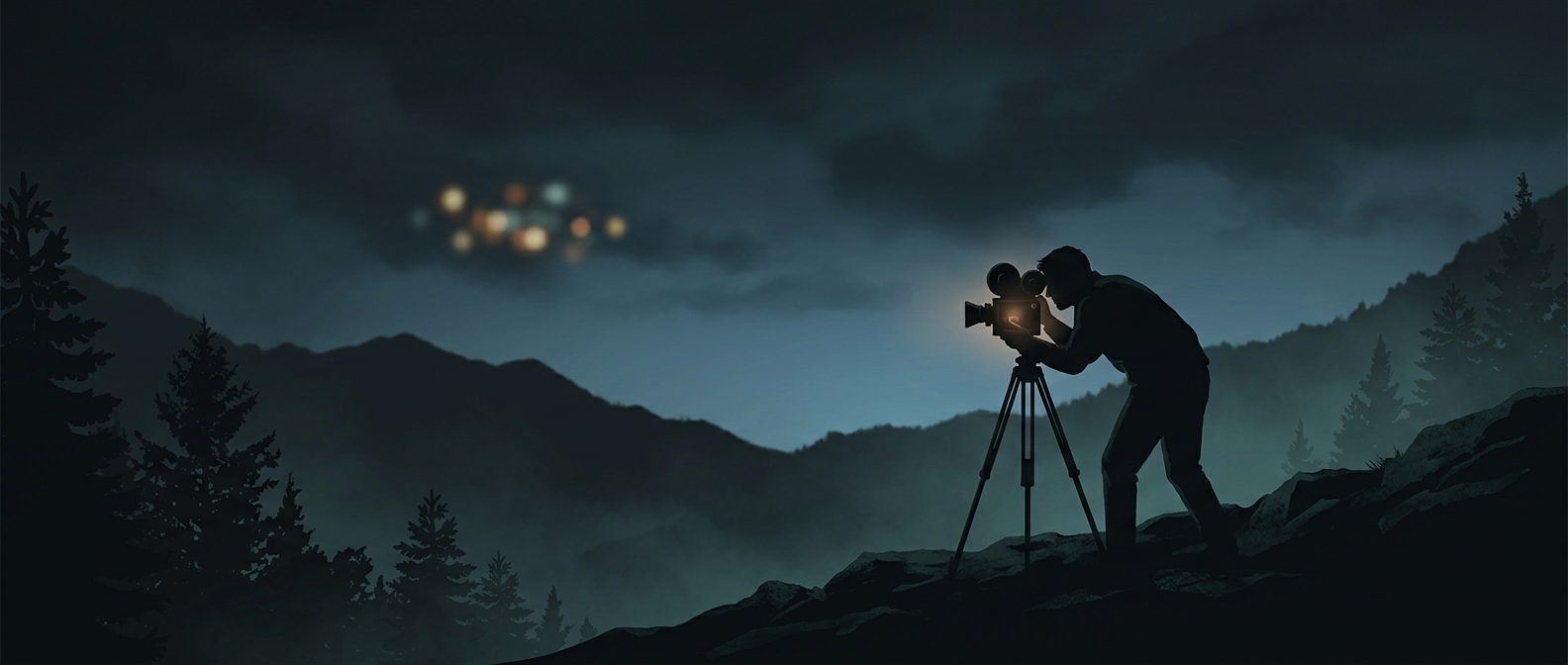
For an observer who sees an unexplained light over wetlands, a brief flare can look like an object moving across the landscape. With no clear landmarks or visible source, ordinary changes in the flame or the observer’s viewpoint may be mistaken for motion. That gap between what is seen and what can be identified helped make marsh lights part of the folklore around mysterious aerial sightings.
The memorable detail is also the practical one: a short-lived flame can disappear before anyone reaches the spot, leaving a striking sight but little evidence to identify its cause.