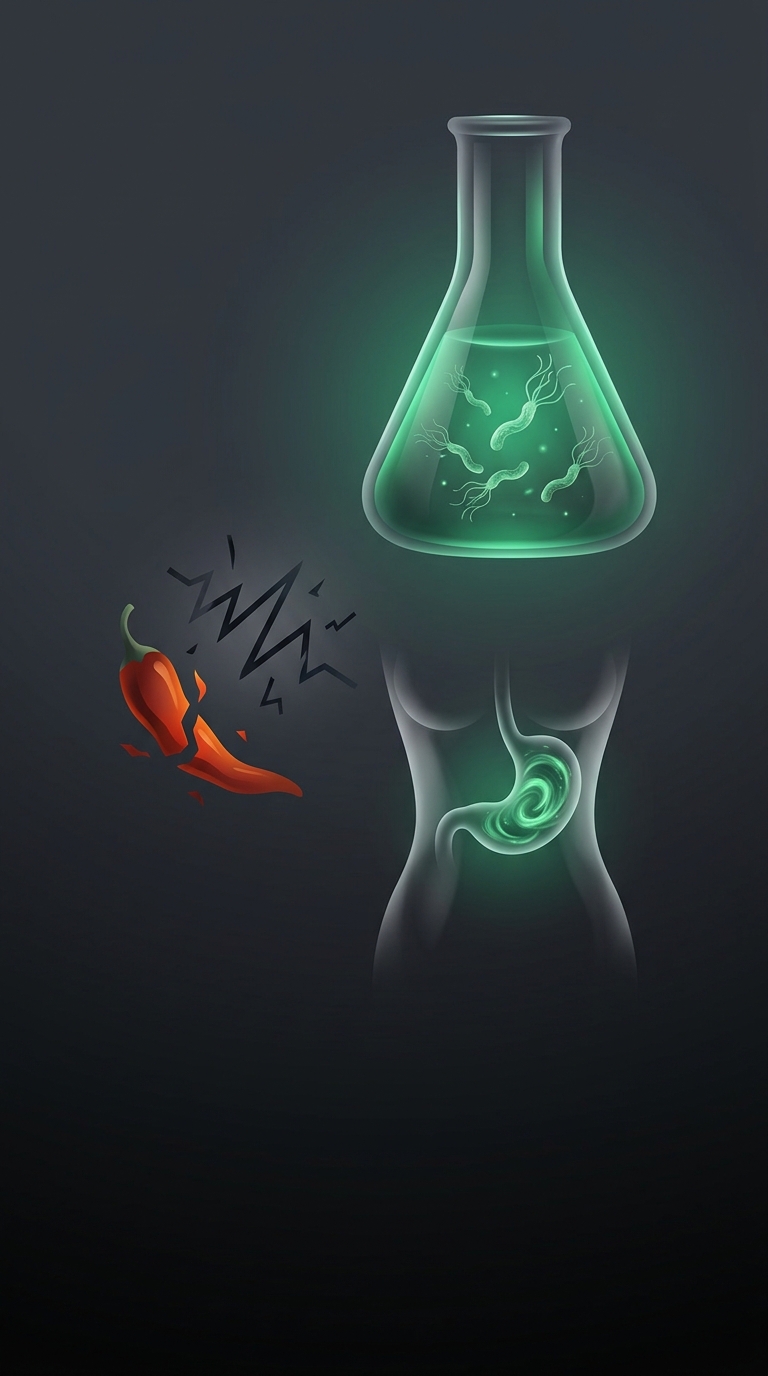
How H. pylori weakens the stomach’s defenses
The stomach’s acid is powerful enough to break down food, so its surface depends on a protective layer of mucus and other chemicals. Helicobacter pylori—usually shortened to H. pylori—can live in that mucus. It produces substances that help it survive the acidic environment, while the infection triggers inflammation in the nearby tissue.
That combination can weaken the lining’s protection. Acid and digestive enzymes can then injure the exposed tissue, creating an ulcer: an open sore in the stomach or the first part of the small intestine. The bacterium does not literally eat a hole through the stomach; it helps make the tissue vulnerable to damage.
Why treatment targets the infection
An ulcer may improve when acid is reduced, but that alone does not necessarily remove H. pylori. If the infection remains, the injury can recur. Treatment therefore commonly combines antibiotics to clear the bacterium with medicine that lowers stomach acid, giving the lining a chance to heal. Some ulcers have a different cause, including frequent use of certain pain relievers, so the right treatment depends on what is driving the damage.
The shift toward treating an infection changed the practical question from “What food or feeling caused this sore?” to “Is a bacterium sustaining it?” Spicy food may aggravate symptoms for some people, but it is not the same thing as the underlying injury that forms an ulcer.
A cause that could be tested
The idea that a microbe could cause ulcers was difficult to accept when the condition was commonly attributed to stress and diet. A scientist’s deliberate infection of himself helped make the proposal testable: if the bacterium caused illness, treating the infection should matter. Antibiotic treatment became a way to act on that causal explanation—not merely to soothe the symptoms.
That distinction is why identifying the cause matters: relieving acid can help an ulcer heal, while clearing the infection can prevent the same cause from continuing to damage the lining.