A cushion that removes the usual brake
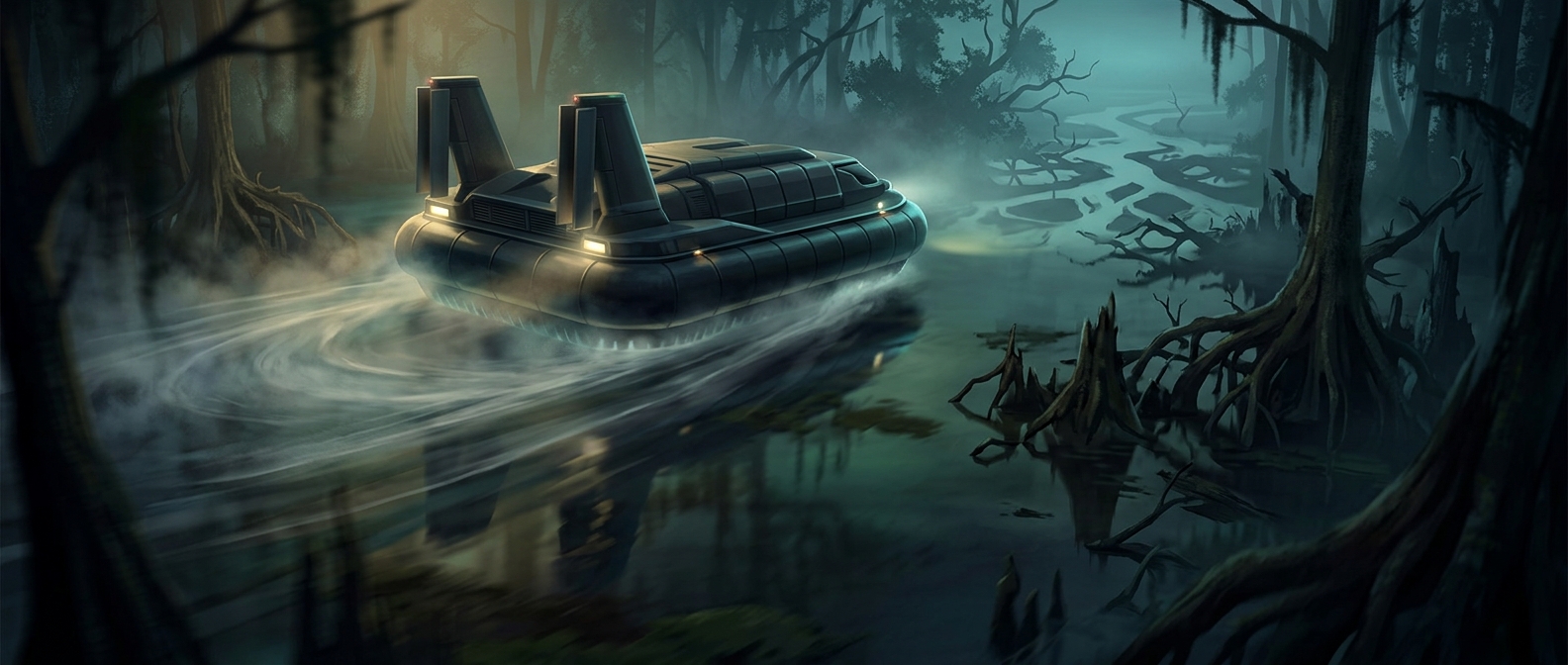
A hovercraft rides on a pocket of pressurized air trapped beneath its hull by a flexible skirt. Because the craft barely touches the ground or water, there is little rubbing force to bleed away its forward motion. A car can use tire contact to brake; a hovercraft has no comparable grip beneath it.
That does not mean it cannot slow down. It means the surface beneath it cannot do much of the work. Once the craft is moving, its momentum carries it onward even after the pilot reduces the forward thrust.
Slowing down takes room
Hovercraft propulsion and lift are separate jobs: fans keep air under the hull, while thrust pushes the craft ahead. Cutting that thrust reduces acceleration, but it does not instantly cancel speed. Depending on the design, the pilot may also be able to use reverse thrust or other controls to help slow the craft; those measures still need time and space to take effect.
Steering also works differently from turning a car. With little surface contact, the craft cannot simply rely on tire grip to pivot sharply. Pilots have to account for its momentum and begin slowing or turning before reaching the spot where they want to stop.
The route is part of the maneuver
On water, a hovercraft may continue gliding after its thrust is reduced; on land, the ground’s roughness can add some resistance, but it does not provide the dependable braking grip of tires. Stopping is therefore a matter of managing momentum in advance, not waiting until the last moment to brake. A landing area or shoreline that looks close can demand a much longer approach than a driver might expect.