Three principles, not three ordinary ingredients
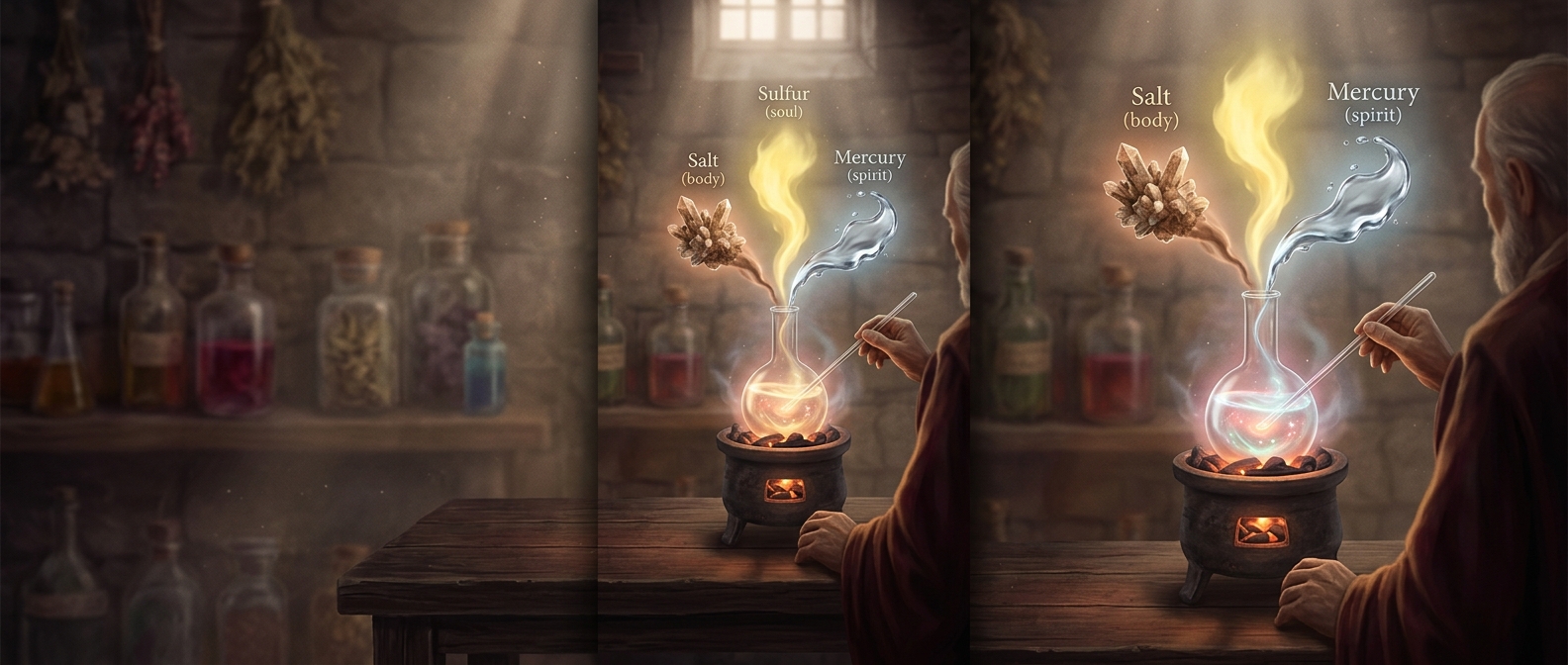
In spagyric practice, salt, sulfur, and mercury are names for three aspects of a material, not simply the kitchen substances or chemical elements those words suggest. In an herbal preparation, practitioners commonly associate salt with the plant’s fixed mineral content, sulfur with its aromatic or oily compounds, and mercury with its volatile, spirit-like part—often represented by alcohol.
The framework comes from alchemical ways of describing how matter is organized. It gives the maker a reason to separate a plant into parts, work on each part, and bring them back together rather than treating the plant as one undifferentiated substance.
Separation, purification, recombination
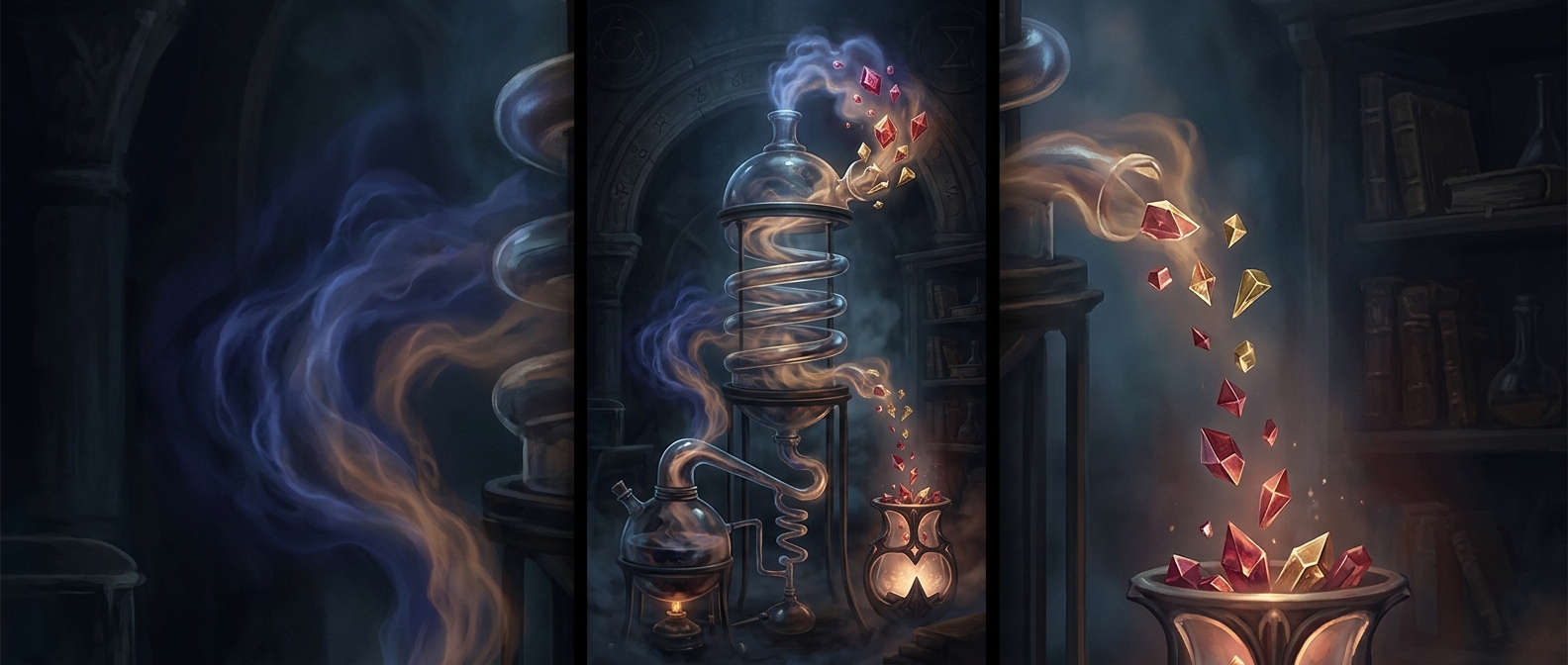
A typical spagyric sequence begins by extracting a plant’s soluble compounds, often into alcohol. The remaining plant matter may be dried and burned to ash; that ash can be processed to obtain mineral salts. The spirit and aromatic fractions are handled separately, then combined with the salts in a finished tincture. Specific procedures vary among practitioners and traditions.
The steps give the three principles a practical role: the liquid carries extracted material, the aromatic fraction represents the plant’s volatile character, and the recovered salts return the mineral component. In the tradition’s own language, the aim is to reunite what was separated in a more purified form.
Why the method matters to practitioners
A spagyric tincture is therefore defined not just by what plant it contains, but by how the plant is treated. Separation and recombination turn preparation into part of the tradition’s meaning: the finished liquid stands for a whole restored from its distinct parts. That makes the method an alchemical practice as much as a recipe, even though its symbolic account of the plant is not the same thing as a modern chemical analysis.