When a Virtuoso Became a Public Obsession
Franz Liszt’s fame grew beyond admiration for his music. In the 1840s, the Hungarian pianist toured Europe to audiences who treated his performances as major social events. His dramatic stage presence—intense playing, sweeping gestures, and a powerful command of the piano—made the performer himself part of the spectacle. Admirers wanted not only to hear him but to carry away some trace of having been near him.
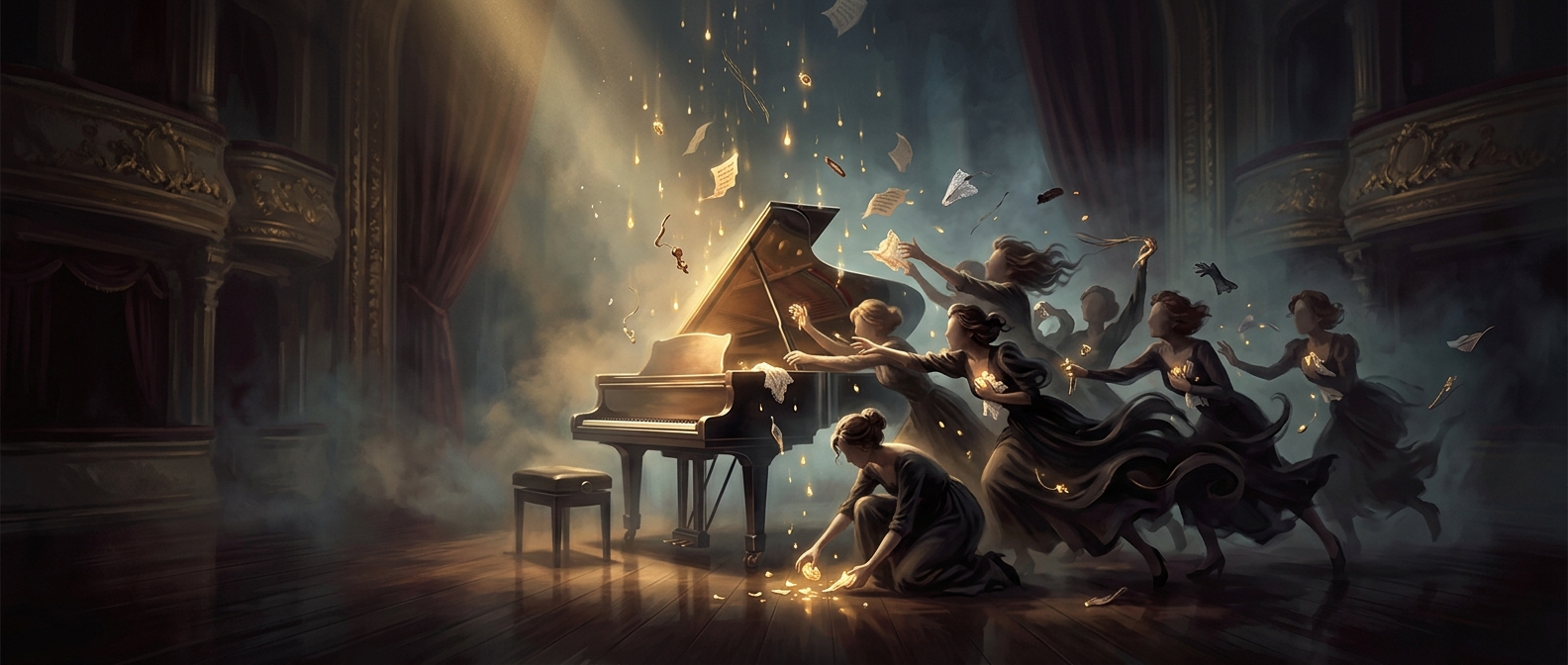
That frenzy later acquired a name: Lisztomania. The term captures how audiences could turn a concert into a display of collective excitement, with women in particular described as clamoring for mementos. Broken strings and discarded cigar ends became valuable not for their material worth, but because they had been touched or used by Liszt. A keepsake could make an otherwise fleeting encounter feel personal and lasting.
The Appeal of a Physical Trace
Lockets offered a way to turn that excitement into something private and portable. A fragment worn close to the body linked its owner to a celebrated figure even after the concert crowd had dispersed. This was a form of celebrity relic-making: the same impulse that prizes a famous person’s autograph or a piece of costume, but focused on humble objects left behind.
The striking detail is what it reveals about fame before recordings and mass media. Liszt’s performances could create a sensation in the room, but a broken string or cigar butt could travel home with an admirer. His presence became a souvenir.