Why a Grease Mark Lets Light Through
A sheet of paper is not a solid, uniform wall. Its tangled cellulose fibers form a maze of microscopic spaces, and light changes direction whenever it crosses from one material into another. In dry paper, the contrast between fiber and air is large enough that light gets bounced around repeatedly instead of traveling straight through. That scattered light is what makes the sheet look white and opaque.
Grease changes the optical contrast at those boundaries. Its refractive index—a measure of how much a material bends light—is closer to that of cellulose than air’s is. When grease occupies some of the spaces, light encounters less of an abrupt change as it moves through the sheet. Fewer deflections mean more light can cross the paper rather than being sent back toward the viewer.
See-Through, but Not Like Glass
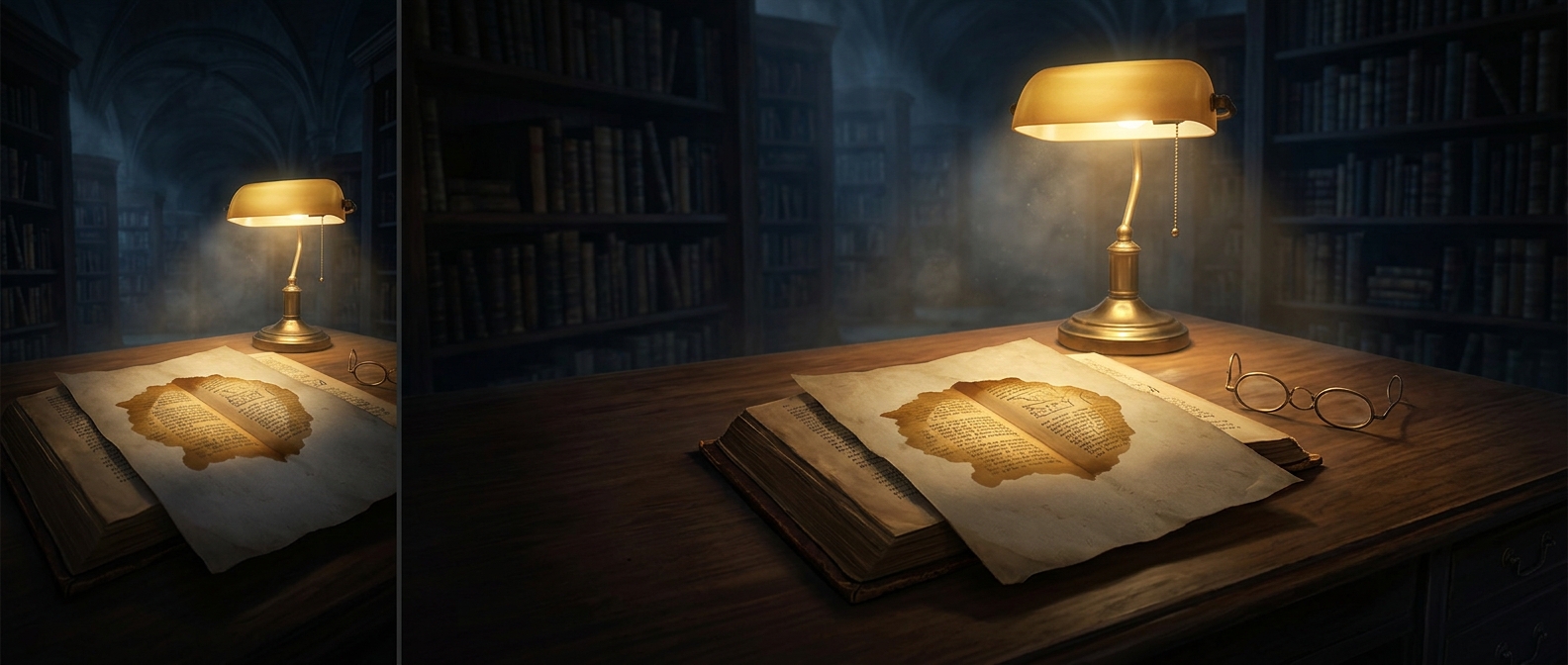
The stain can make paper look transparent, but it does not turn the fibers into a smooth, clear pane. The sheet still has an irregular structure, and some light is still scattered or absorbed. As a result, shapes viewed through a greasy patch may appear blurred rather than sharply defined.
That difference explains why greasy paper can reveal the outline of something behind it while remaining a poor window: the grease reduces the paper’s light-scrambling effect without removing the fiber maze itself. The visible stain is therefore a change in how light travels through the sheet, not a hole or a disappearance of the paper.