The engineering problem was carrying a power plant
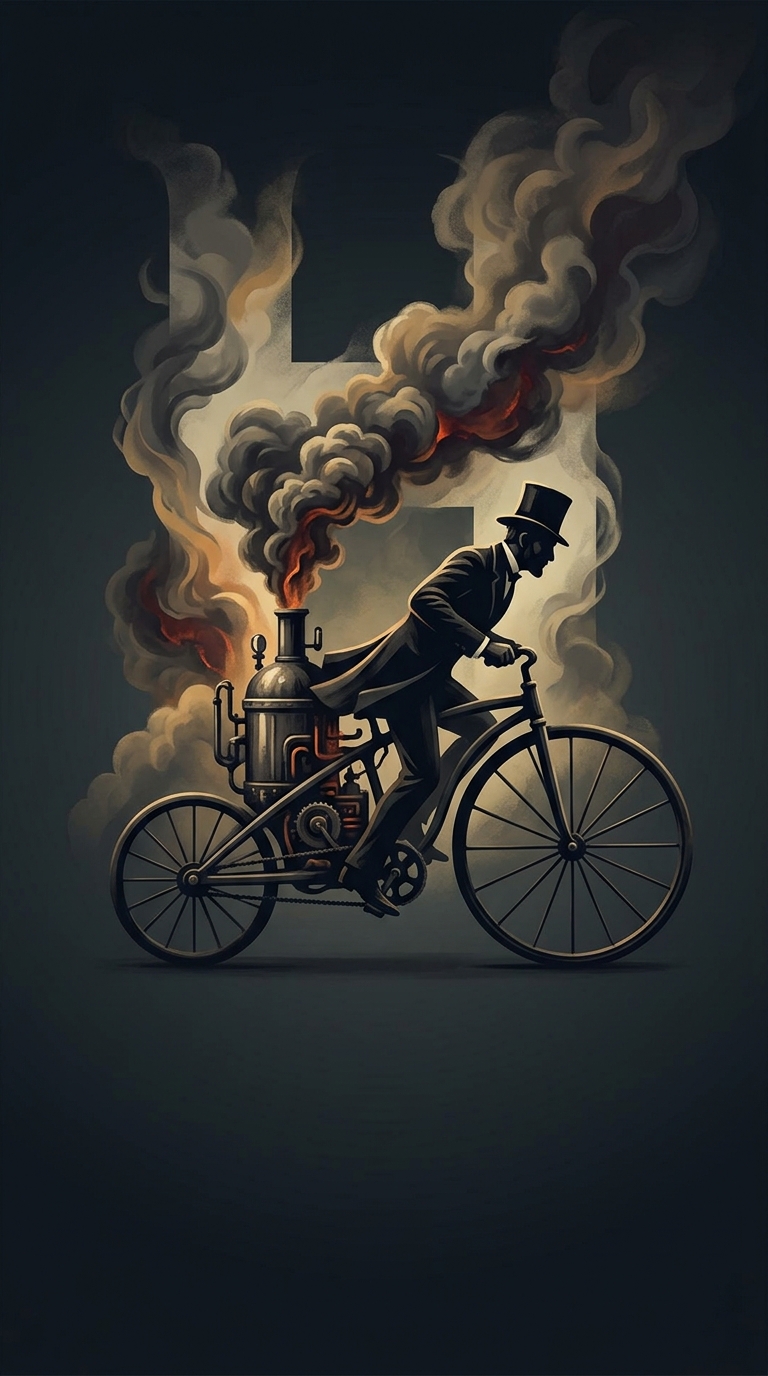
A steam bicycle had to bring its own heat source, water supply and pressure vessel along with the rider. The boiler heated water until it produced pressurized steam; that pressure pushed a piston, whose motion could be transferred to the wheel. The principle was familiar from larger steam engines, but shrinking the machinery enough to fit a bicycle made every part a compromise.
A boiler could not deliver power simply because the rider wanted to go. It needed fuel and time to build pressure, and its water and metal added weight to a frame designed to be light. The machine therefore carried much more than a modern cyclist’s legs—or a later motorcycle’s engine. The challenge was not just making a piston move; it was making the whole steam system practical to ride.
Why combustion engines changed the ride
A gasoline engine burns fuel inside its cylinder, producing force without first heating a separate boiler full of water. That arrangement made it possible to build a more compact power source and avoid hauling the steam system’s water and boiler. It also changed how quickly a rider could use the engine’s power.
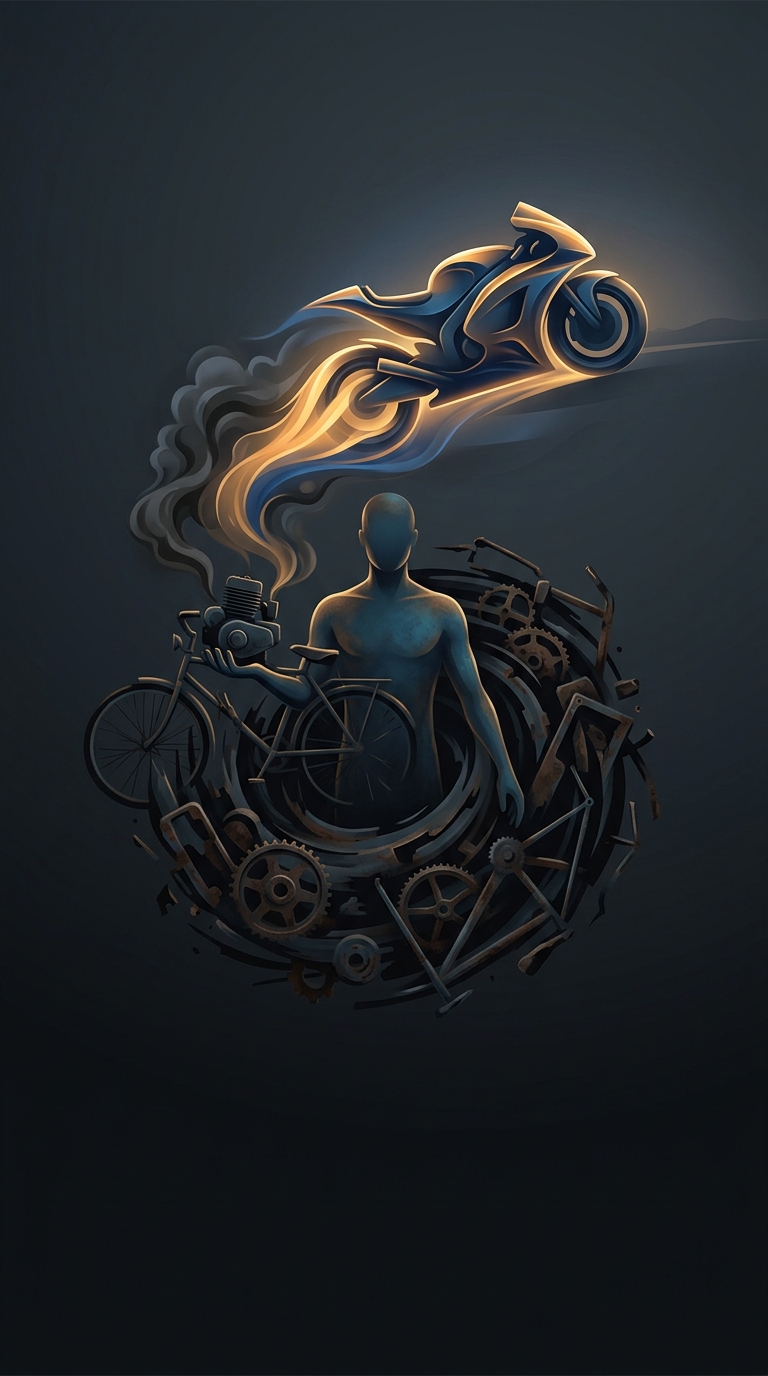
The transition was not simply from quiet to loud. It was a shift in what the vehicle had to carry and how it made energy: early steam machines brought a miniature heat-and-pressure plant on board, while later motorcycles made the engine itself the more direct source of motion. The wooden frame and boiler belong to an era when putting powered transport on two wheels meant adapting a steam engine to a bicycle—not yet designing an engine around the bicycle.