A one-way broadcast, answered one letter at a time
Television sends the same program to many homes at once. A child watching Mister Rogers’ Neighborhood, by contrast, could write to Fred Rogers about a worry, a question, or something happening in their life—and receive a reply. Rogers answered more than half a million fan letters himself, making correspondence a personal extension of a program built around speaking directly to young viewers.
That distinction mattered. A letter gave a child a way to address the person on screen as if he were listening, while a handwritten response turned that feeling of attention into something tangible. The exchange did not replace the show; it carried its close, reassuring style beyond the television.
The work behind the warmth
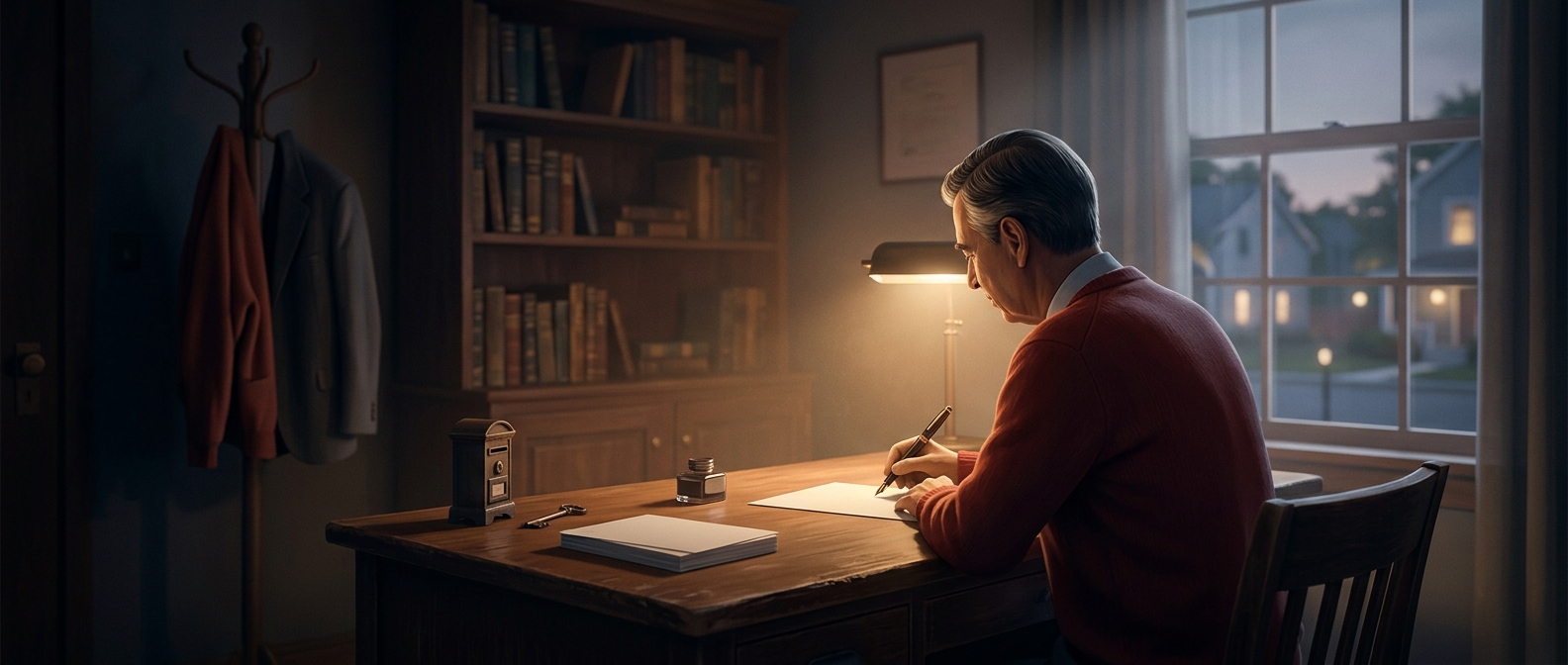
Answering that volume of mail required more than a quick gesture between tapings. Rogers reportedly got up at 5 a.m. to read and respond to letters himself. The early start points to the practical cost of making a mass-audience medium feel individual: each letter had to be taken in as a message from a person, not just counted as a measure of popularity.
The striking detail is not simply that a famous television host received an enormous amount of mail. It is that he treated replying as part of the relationship with his audience. For the child who opened a response, a program watched by millions could suddenly feel as though it had reached one person.