A garden surface made into a field of attention
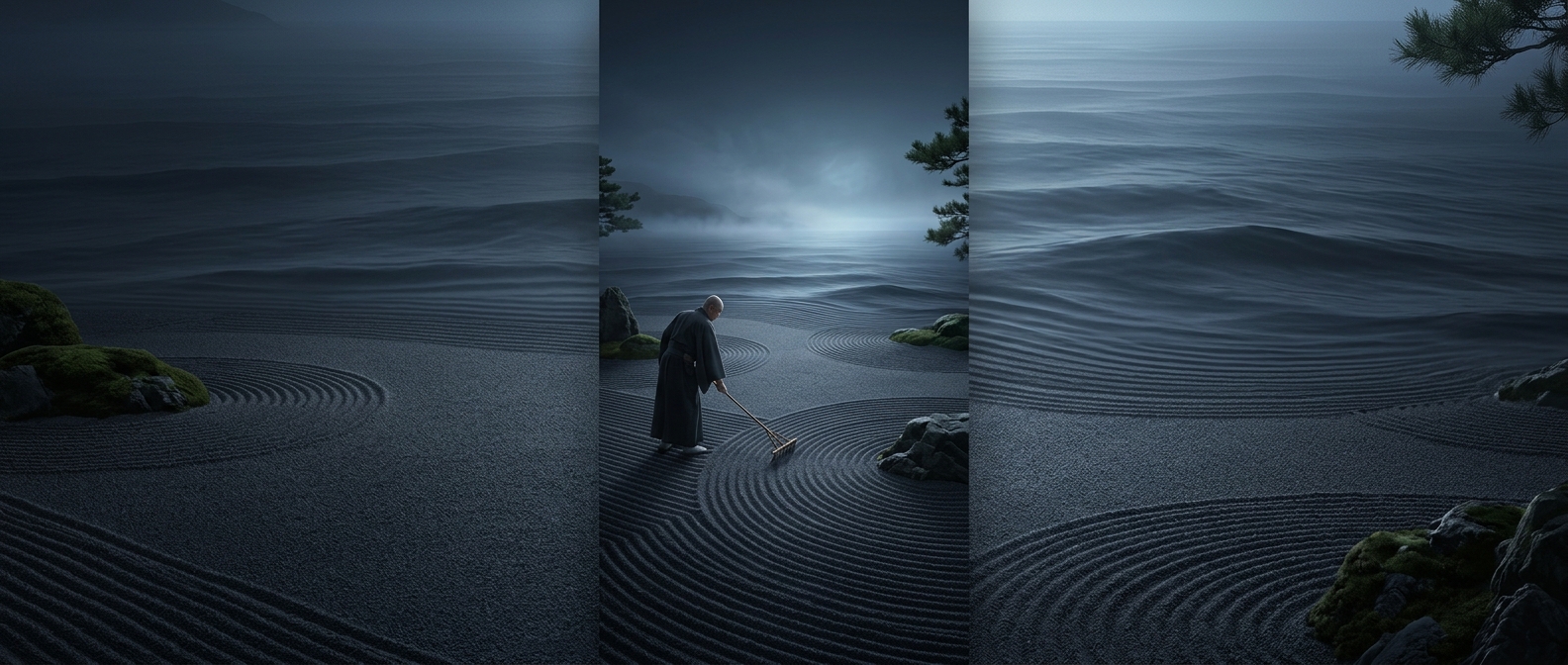
In a Japanese dry garden, raked gravel is not simply decoration. The pale surface can stand in for water, while stones suggest islands, shorelines, or other features of a landscape. A rake draws parallel grooves and curved bands through it, giving the otherwise still ground a sense of movement.
The resemblance is deliberately spare: no actual water, waves, or painted scene is needed. Viewers supply the motion in their minds, reading the pattern as a suggestion rather than a literal picture.
Repeating a simple motion
Raking also gives the person tending the garden a concrete task. The practitioner guides the rake through the gravel, attending to the direction and spacing of each line. That repeated, controlled movement can anchor concentration: instead of letting attention wander, the gardener returns it to the work at hand.
The pattern is temporary. Footsteps, wind, or the next round of maintenance can disrupt it, so the surface is smoothed and drawn again. The garden’s appearance therefore depends on an ongoing practice, not just a finished design.
Stillness that suggests change
The contrast is part of the effect: the gravel remains dry and fixed, yet its grooves evoke water in motion. Raking joins visual interpretation with physical repetition—one person makes the lines, and another may pause to imagine what they represent. A small shift of the rake can turn a blank bed into a scene of ripples without pouring a drop.