The visible tooth is only the exposed portion
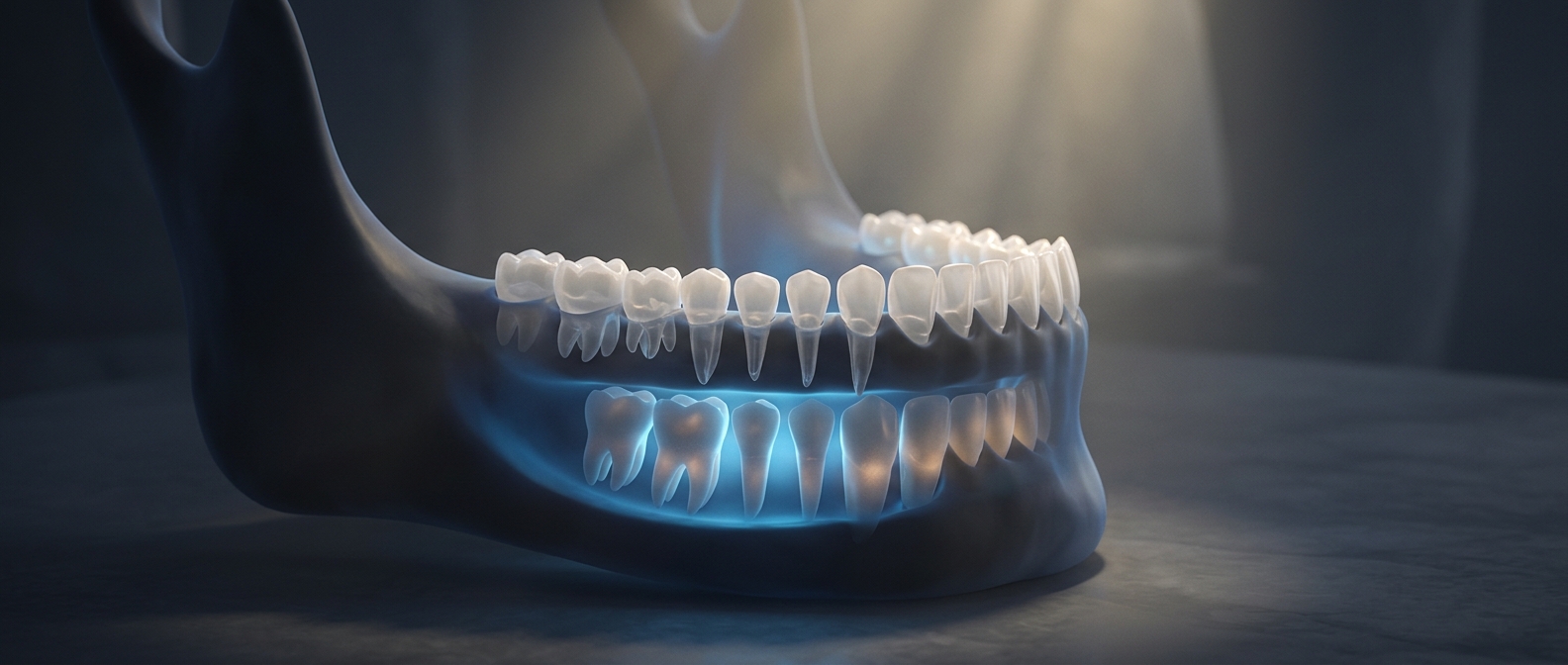
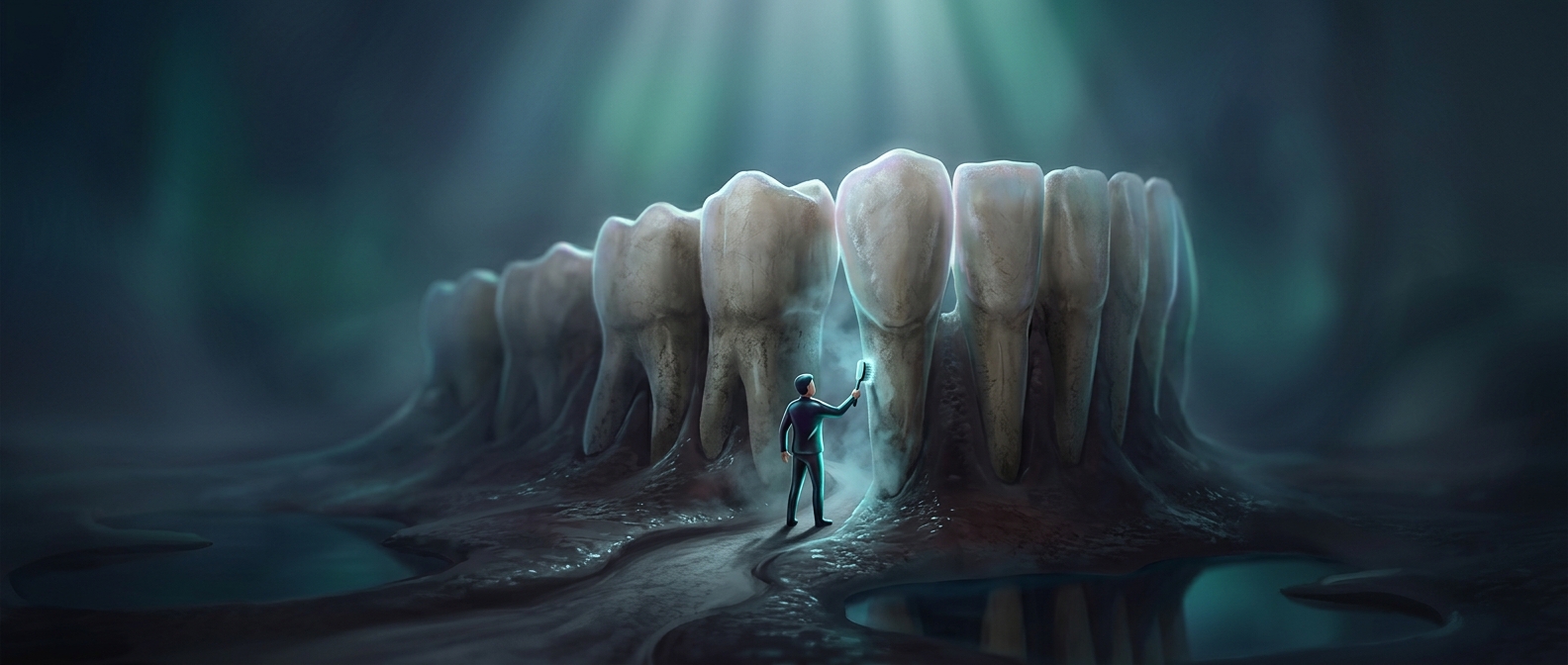
A tooth is built to work as one unit, but its parts sit in very different places. The crown is the portion above the gumline—the part that meets food and shows when you smile. Below the gum, one or more roots anchor the tooth in the jaw. The gum tissue covers the transition, making the crown seem like the whole tooth even though much of its structure is hidden.
How the hidden parts keep a tooth working
The crown’s outer enamel is the hard, protective surface that takes the friction of biting and chewing. Under it, dentin forms most of the tooth’s body. At the center is the pulp, which contains nerves and blood vessels. These layers continue beneath the gum into the root, where the root’s outer covering helps attach it to the surrounding bone through a thin, flexible ligament.
That attachment is firm but not rigid. It holds the tooth under the force of chewing while allowing a tiny amount of movement. The roots also keep the tooth positioned in the jaw; their shape and number vary with the tooth’s job and location.
Why the gumline matters
The gum covers and protects the area around the roots, while the visible crown handles contact with food. Because the boundary is concealed, changes near it can be easy to miss: a tooth may look intact above the gum even as supporting tissues below it are affected. A healthy-looking smile, in other words, shows the working surface—not the full structure that keeps each tooth in place.