A creature designed to keep wealth in
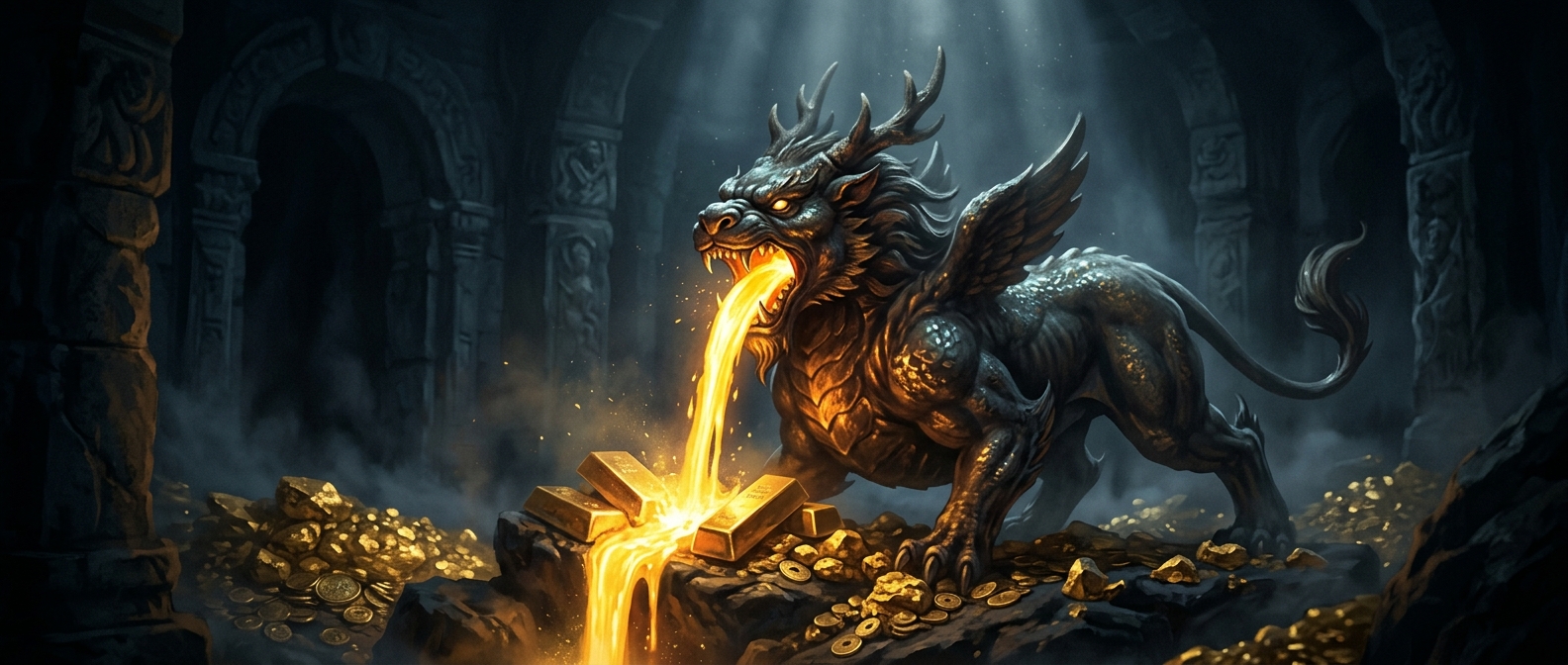
Pixiu’s strange anatomy is the point of the legend. It consumes precious things but cannot let them out, turning a familiar bodily function into a vivid image of wealth that stays put. The beast is not simply a symbol of riches; it represents riches being gathered and retained.
That makes Pixiu’s appeal easy to grasp: a guardian with a treasure-filled belly seems to promise protection against loss. The image expresses a wish, not a claim about how wealth—or the creature’s body—works in the real world.
From folklore to good-luck emblem
In Chinese tradition, Pixiu appears in decorative and auspicious imagery associated with prosperity and protection. Its lionlike, winged form gives that promise a formidable shape, while its sealed body supplies the memorable logic behind it: treasure can enter, but it cannot escape.
The legend’s odd detail is therefore also its mnemonic. Even after the creature disappears from view, the idea remains: prosperity is not only something to acquire, but something to hold on to.