A Case Turned into a Picture
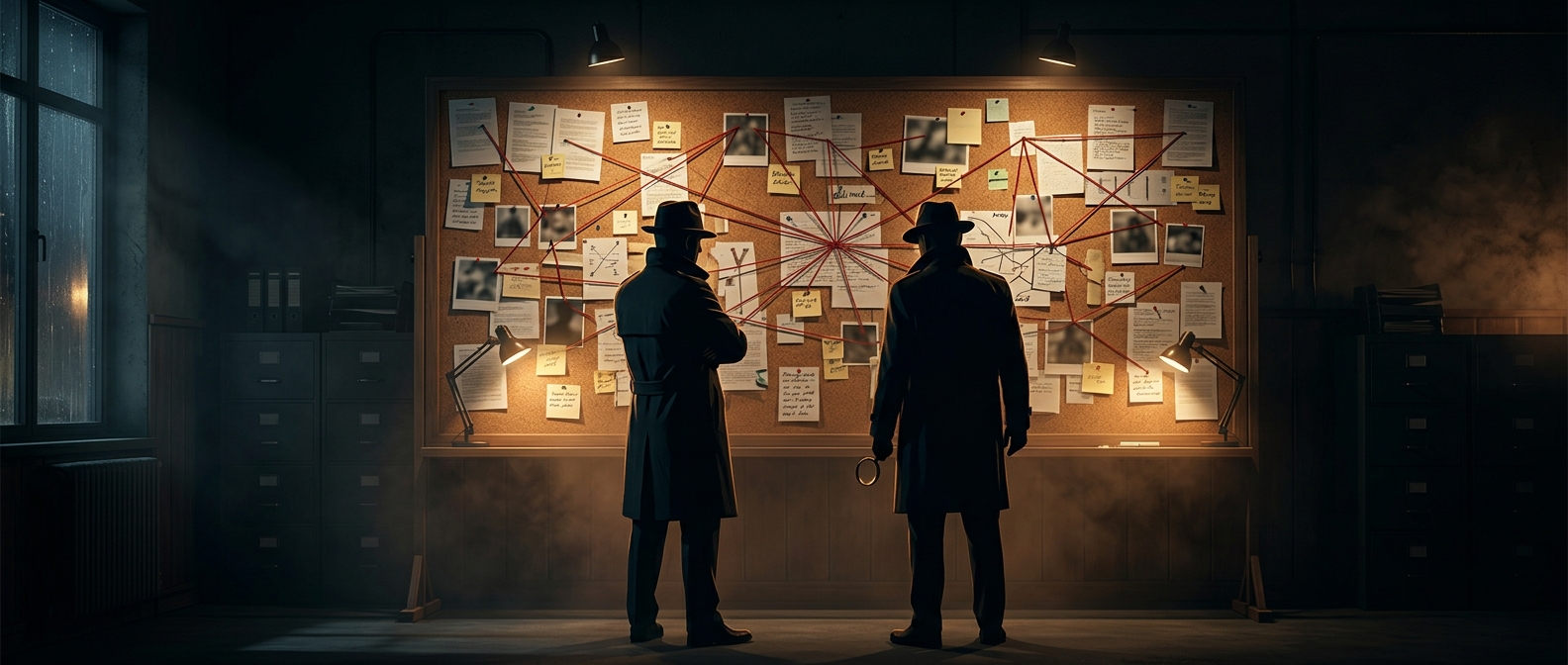
A corkboard makes a sprawling investigation visible at a glance. A photograph can stand for a person, a note for an interview, and a date for a point in the timeline. Lines between them suggest that two details may belong together. Instead of asking viewers to remember a long list of names and events, a crime story gives them a picture to scan.
That picture also changes as the case develops. Investigators add details, move them, or draw new connections; the board becomes a record of what they currently suspect, not proof that the pieces fit. Its visual logic is powerful precisely because a line can represent a question as easily as an answer.
Why the Red Yarn Endures
The yarn turns an abstract relationship into something viewers can follow across the frame. It can lead from a victim to a suspect, or from an apparently minor clue to a larger pattern. A crowded board can signal that the case has become tangled; a newly noticed connection can make the image—and the story—snap into focus.
In actual work, organizing evidence can help people compare details and keep track of open questions. But the board does not discover a connection on its own: people decide what to put up and how to interpret it. Crime fiction compresses that slow, uncertain process into a striking image, where one look at the wall can make a hidden theory feel suddenly visible.