How the Woods Become a Crime Scene
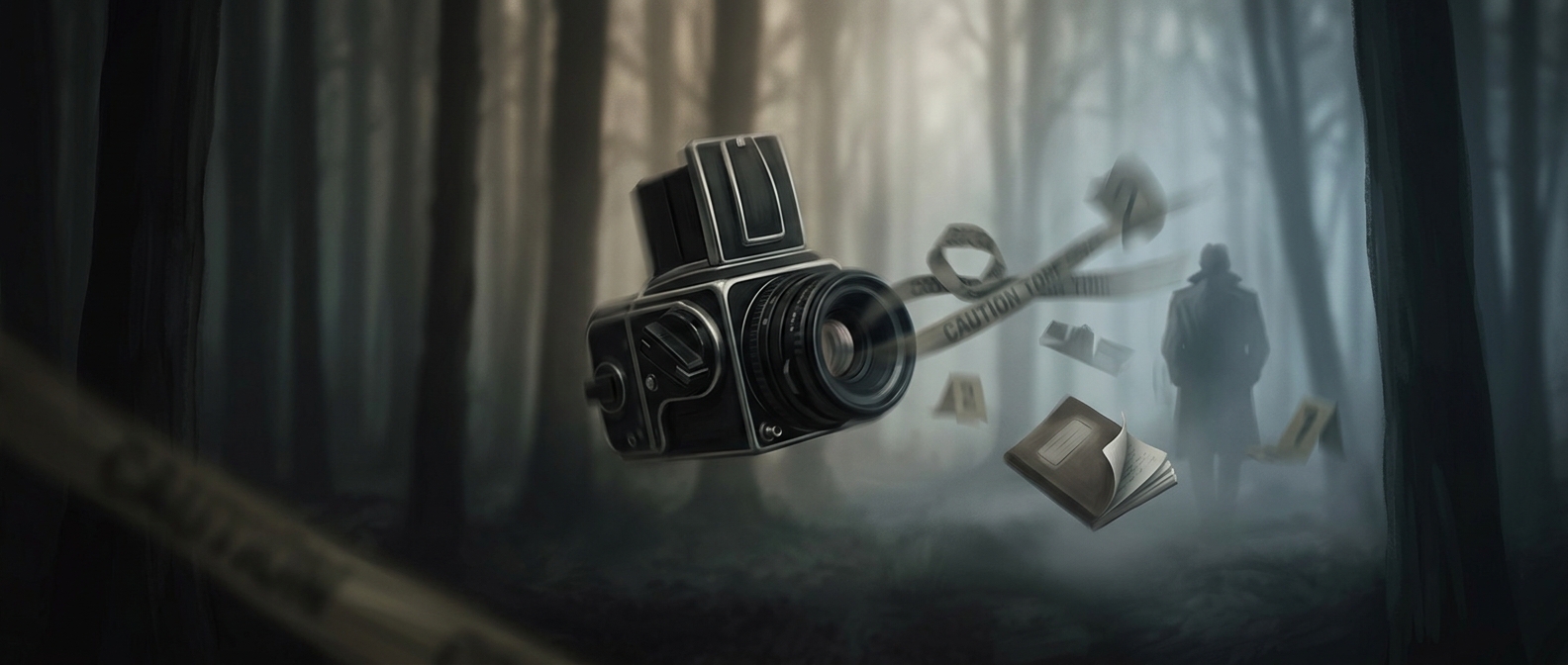
A forest does not look suspicious on its own. The effect comes from pairing a familiar landscape with visual cues audiences have learned to associate with old evidence: faded color, unstable camera movement, and indistinct detail. Those choices make an image feel less like a clear view of the present and more like a fragment recovered after something went wrong.
Isolation Does Part of the Storytelling
Woods also carry a practical narrative implication: trees block sightlines, and distance from roads or buildings can make a place feel difficult to witness or reach. That does not mean a forest is inherently dangerous. It means a scene set among trees can suggest concealment before the story supplies any evidence of a crime.
The style compresses several ideas into one glance. The viewer sees a place where a person could disappear, then reads the rough image as a clue that something has already happened—or is about to. The suspicion is created by the visual language, not by the trees themselves.
A Shortcut With a Cost
For filmmakers and image-makers, this shorthand quickly establishes a crime-story mood without showing violence or explaining the plot. But it can also make an ordinary landscape seem incriminating. Once the cues are familiar, even a harmless view of trees can feel like evidence waiting to be found.