A conservatory inside a charitable home
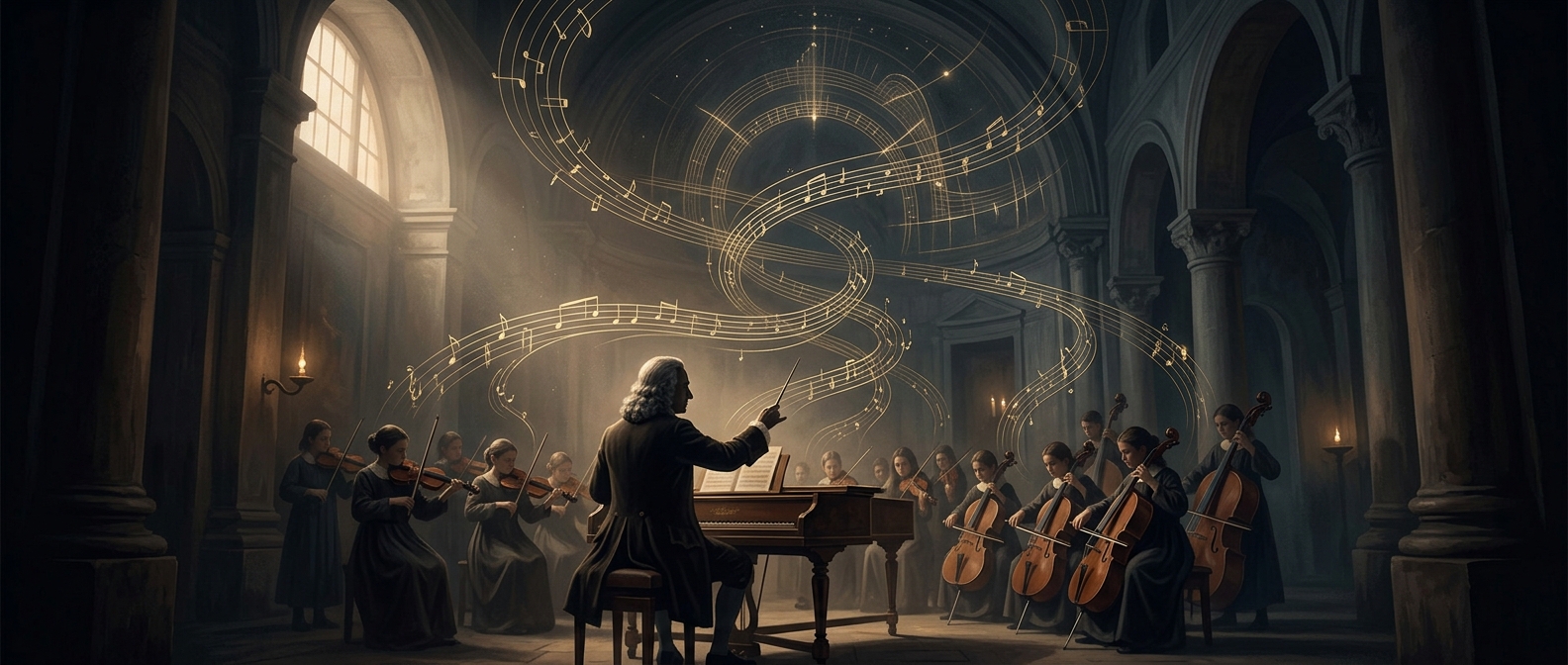
The Venetian institution known as the Ospedale della Pietà was more than a refuge for abandoned and orphaned girls. It educated some of its residents in music, and its performances became a celebrated part of Venice’s cultural life. Antonio Vivaldi, an ordained priest and violinist, worked there in a series of musical posts, teaching and composing for its players.
That setting shaped the music. The girls were not a generic choir: the Pietà trained instrumentalists capable of playing demanding parts. Vivaldi could write with particular performers and the ensemble’s abilities in mind, giving young musicians chances to lead as soloists as well as play together.
Concertos built for performers
A concerto sets a solo instrument against an orchestra. Vivaldi often made that contrast vivid: a soloist’s quick, intricate passage might break away from a forceful ensemble refrain, then return to it. The format let listeners hear both the player’s individual skill and the group’s precision—and gave accomplished musicians room to shine.
Vivaldi wrote hundreds of concertos over his career; not all were written for the Pietà. But his close, recurring connection to the institution meant its musicians were an important part of the world for which he composed. His music could serve practical purposes there: teaching, performance, and the public concerts that helped make the Pietà known.
The remarkable consequence is that a charitable home became a serious musical institution. Its young players were not simply recipients of Vivaldi’s compositions; their skill helped make music demanding enough to showcase them.