A pipeline with two temperatures to manage
Crude oil can become too thick to move easily when it cools. On a route crossing frozen tundra, operators therefore had to keep the oil warm enough to flow. But the ground presented the opposite requirement: permafrost—soil that remains frozen for years—had to stay frozen.
That made heat a structural problem, not just a question of keeping the cargo moving. If warmth from the pipe seeped into the ground, it could thaw ice-rich soil. Thawed ground can soften and shift, changing the support beneath a heavy pipeline and putting stress on the line itself.
Raising the line helped protect the ground
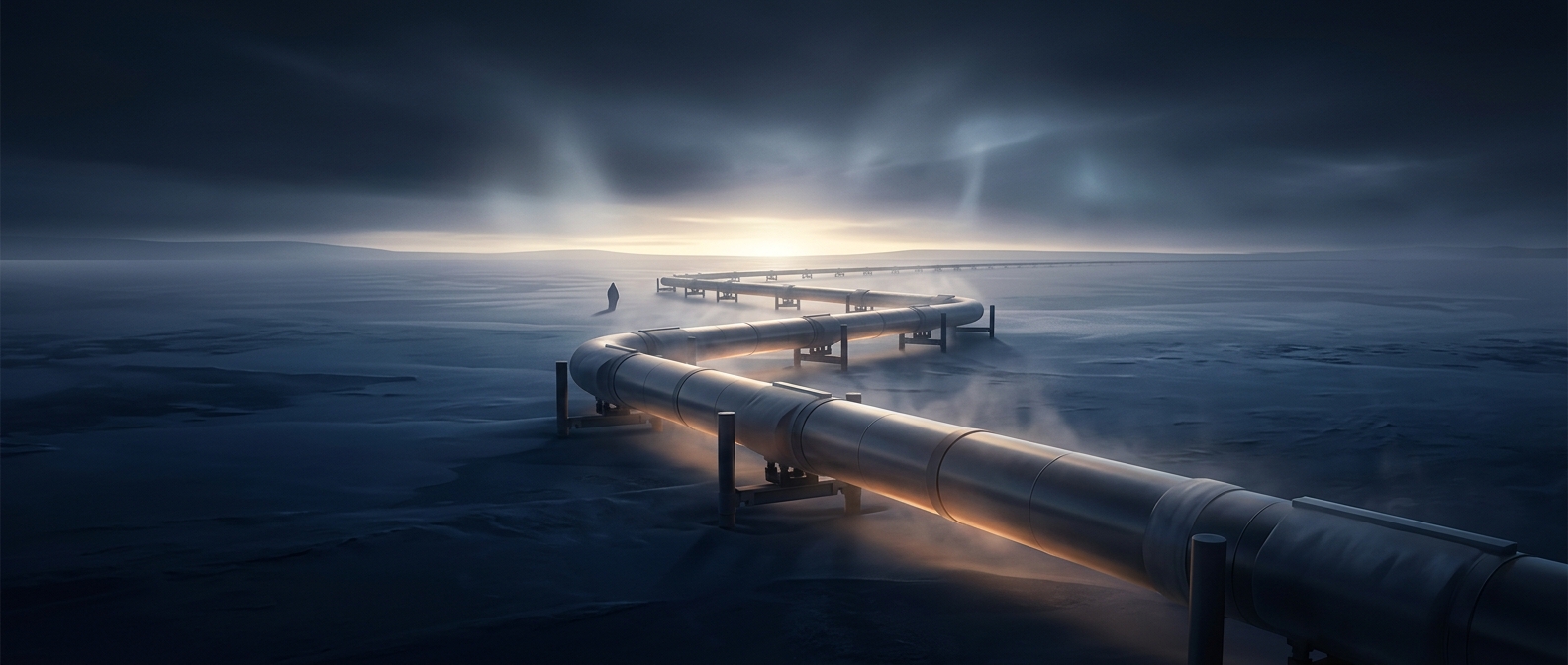
Elevated supports separated the pipe from the tundra and let air circulate beneath it, limiting the direct transfer of heat into the soil. The supports also had to carry the pipeline while accommodating ground that could move as conditions changed. In other words, the route could not simply rest on the frozen surface and rely on the cold to keep it stable.
The design had to balance competing needs along the same stretch of land: warm oil above, frozen ground below. Keeping the crude flowing depended in part on preventing the pipeline from changing the ground that held it up.