How a Dream Can Stage a Second Morning
A false awakening is a dream in which you seem to wake up, often in your own bedroom, and begin ordinary morning routines. The room may look right, and familiar actions—checking the time, getting dressed, or walking down the hall—can unfold with convincing detail. But the brain has not actually shifted into wakefulness; it is generating a scene of waking while sleep continues.
Why It Can Feel So Real
Dreams draw on memories, expectations, and sensory impressions. Because waking up is a well-practiced routine, the brain can assemble a plausible version of it without the outside world supplying the scene. Details may be slightly off, but while dreaming, the experience can still carry the feeling that everything is normal.
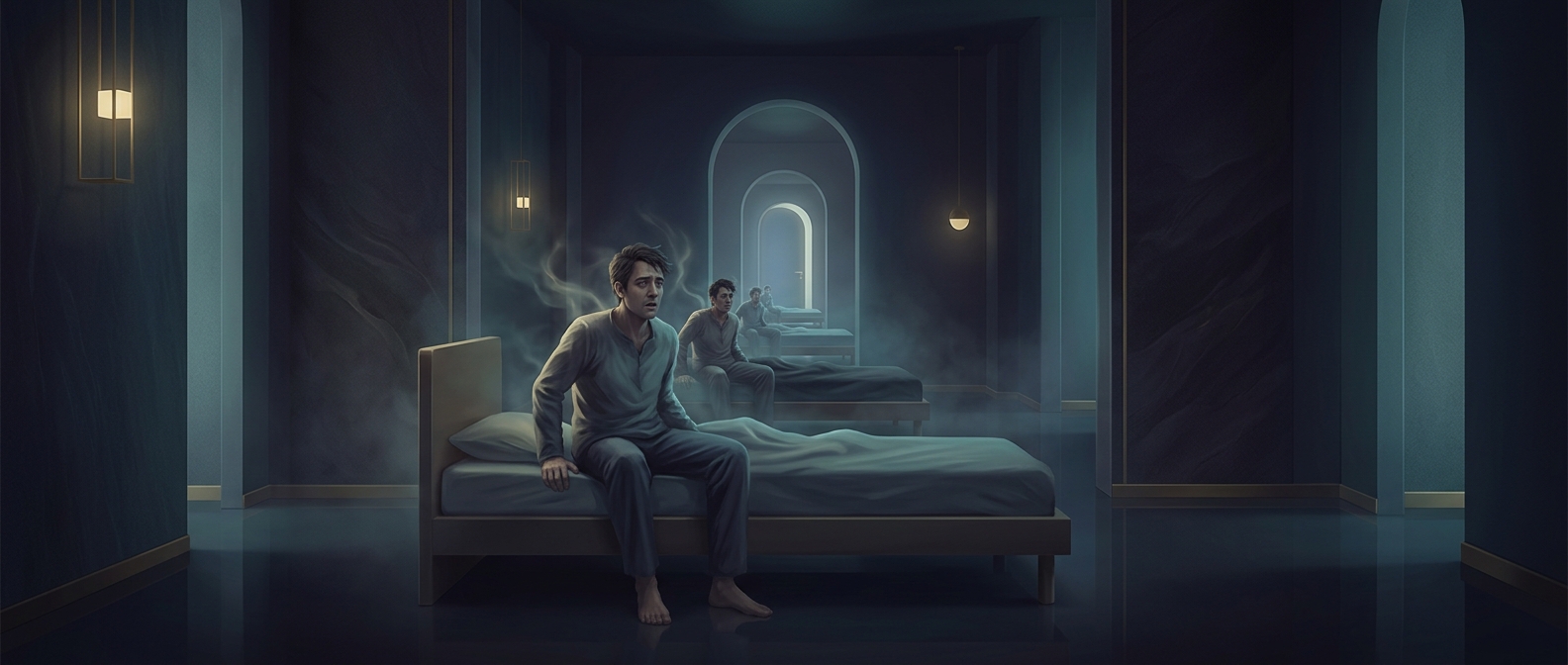
A second apparent bedtime can extend the illusion. In the dream, you might decide you are still tired, return to bed, and then seem to wake again. That new scene borrows the same familiar setting and habits, so each apparent awakening can feel like confirmation that the previous dream has ended. In reality, the changes are happening within one continuing dream.
The Dream’s Built-In Test
False awakenings can be unsettling because the usual evidence of being awake—recognizing your room and following a routine—is itself part of the dream. The reliable dividing line is not how ordinary the scene feels, but whether the brain has actually entered wakefulness. The striking twist is that a dream can use the act of waking as its own convincing plot device, then reuse it when the dream seems to begin again.