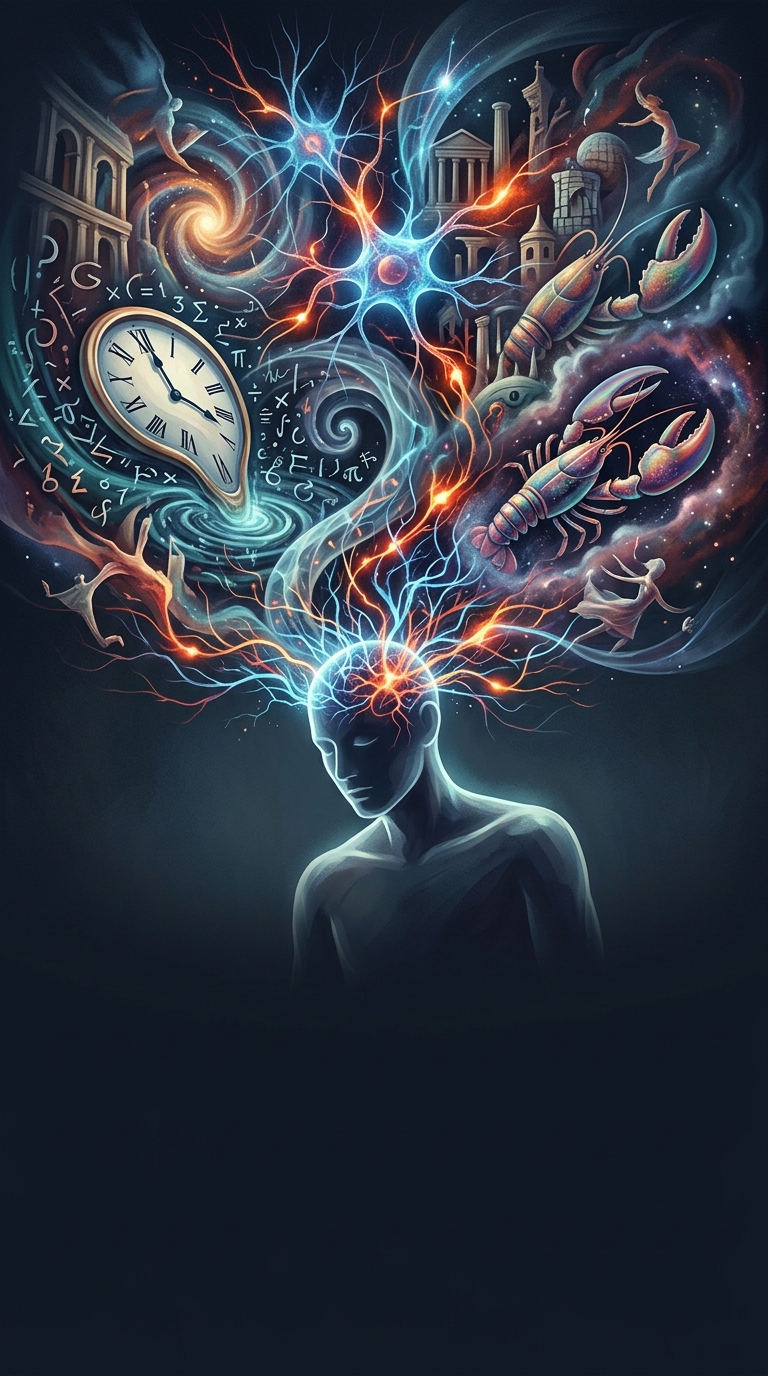
Why REM Sleep Can Feel So Intense
During rapid eye movement (REM) sleep, the brain is not simply switching off for the night. Activity rises in networks involved in imagery, emotion, and memory, helping produce dreams that can feel vivid and immediate. The brain draws on fragments of experience and association, but it does not have to arrange them into the consistent story we expect while awake. That is why a familiar classroom can suddenly turn into the setting for an impossible chase.
The Brain Is Active; the Body Is Held Still
As REM begins, circuits in the brainstem send signals that inhibit most of the muscles used for deliberate movement. This temporary loss of muscle tone, called REM atonia, helps keep the body from acting out a dream. Breathing and eye movements continue, and the body is not literally switched off; the stillness mainly affects voluntary muscles.
The vivid dream and the temporary paralysis are parts of the same sleep state, but one does not mean the body is in danger. In ordinary REM sleep, the brain’s activation is concentrated in particular systems rather than representing a simple, whole-brain surge beyond waking capacity.
Why Dreams Can Be Strange but Convincing
Some brain systems that support emotion and visual imagery are highly engaged during REM, while the systems used for careful judgment and monitoring are less active than they are during wakefulness. With less scrutiny, abrupt changes can pass without explanation: a test becomes a chase, and a lobster can seem perfectly at home in it. The dream feels real in the moment because the brain is generating a convincing experience without the usual waking checks.
When REM ends, muscle tone returns and the dream may fade quickly. Its oddest detail can be easier to remember than its logic—because, in the dream, there may never have been a reason to ask for one.