A spacecraft computer built around tiny instructions
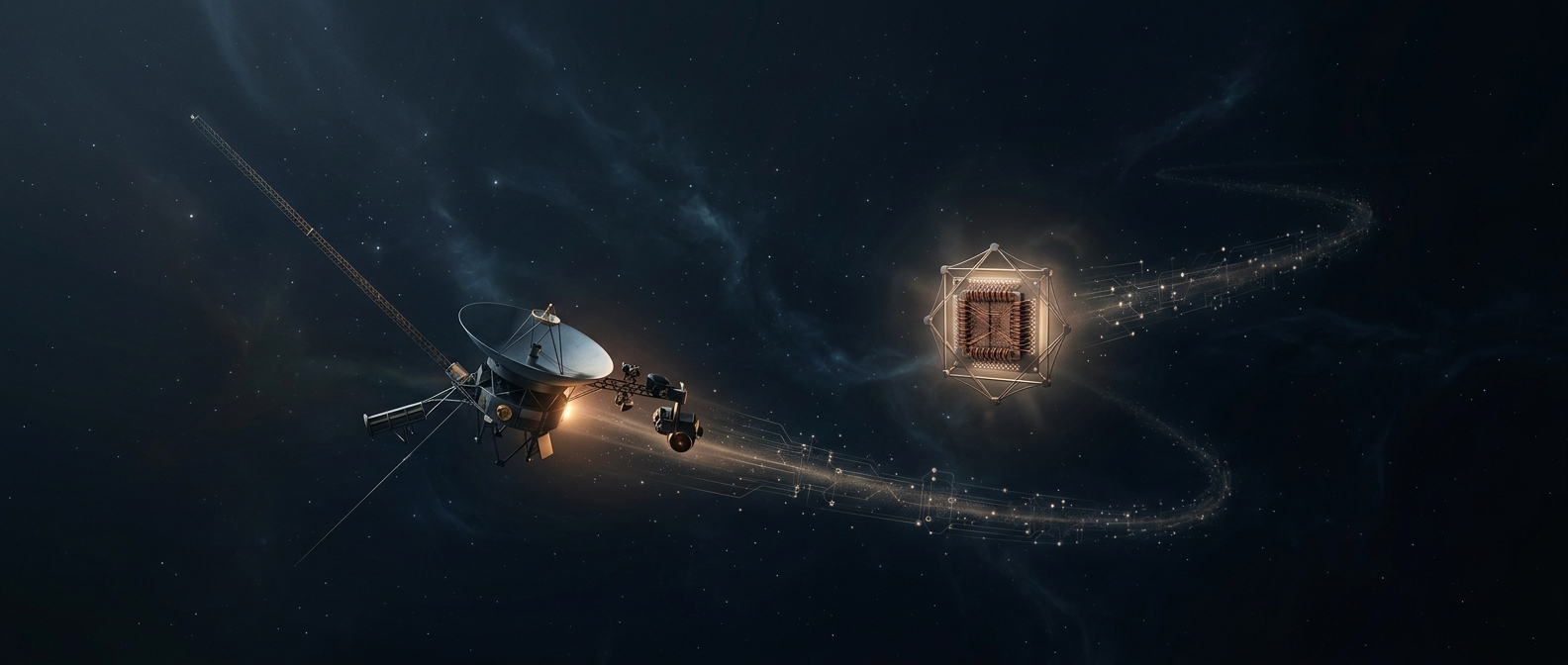
Voyager 1’s often-cited 69 kilobytes of memory is not one modern-style pool of RAM. Its computing system is divided among specialized machines: one handles commands from Earth, another organizes science and engineering data, and a third helps control the spacecraft’s orientation. Each has a narrow job, and each operates with far less memory than even a basic modern device.
That division reflects the engineering of the 1970s. The computers were designed to do a defined set of tasks reliably, not to run many programs at once. Their memory stores instructions and working data, so a new procedure may require engineers to replace material already there rather than simply add another application.
Updating a probe across the solar system
A command sent from Earth is more than a request to “take a picture.” It must be translated into a sequence the spacecraft can execute: for example, point an instrument, collect measurements, and prepare the results for transmission. The limited onboard space makes those sequences something engineers must plan and manage carefully.
Voyager also has a separate way to hold some recorded data: a magnetic-tape recorder. That distinction matters. Memory is where the computers keep the instructions and information they need to work; the recorder can preserve data for later playback. Neither provides the roomy, instant storage people expect from a current computer.
Why the constraint still matters
Because Voyager is so distant, commands and replies take many hours to cross the gap. Engineers cannot intervene in real time if a sequence goes wrong. They must send compact, carefully checked instructions and rely on the spacecraft’s own systems to carry them out.
The striking consequence is that Voyager’s longevity depends not on having room for every possible task, but on making a small amount of memory serve a tightly organized mission—one instruction set at a time.