Why moon rock changes where portals can go
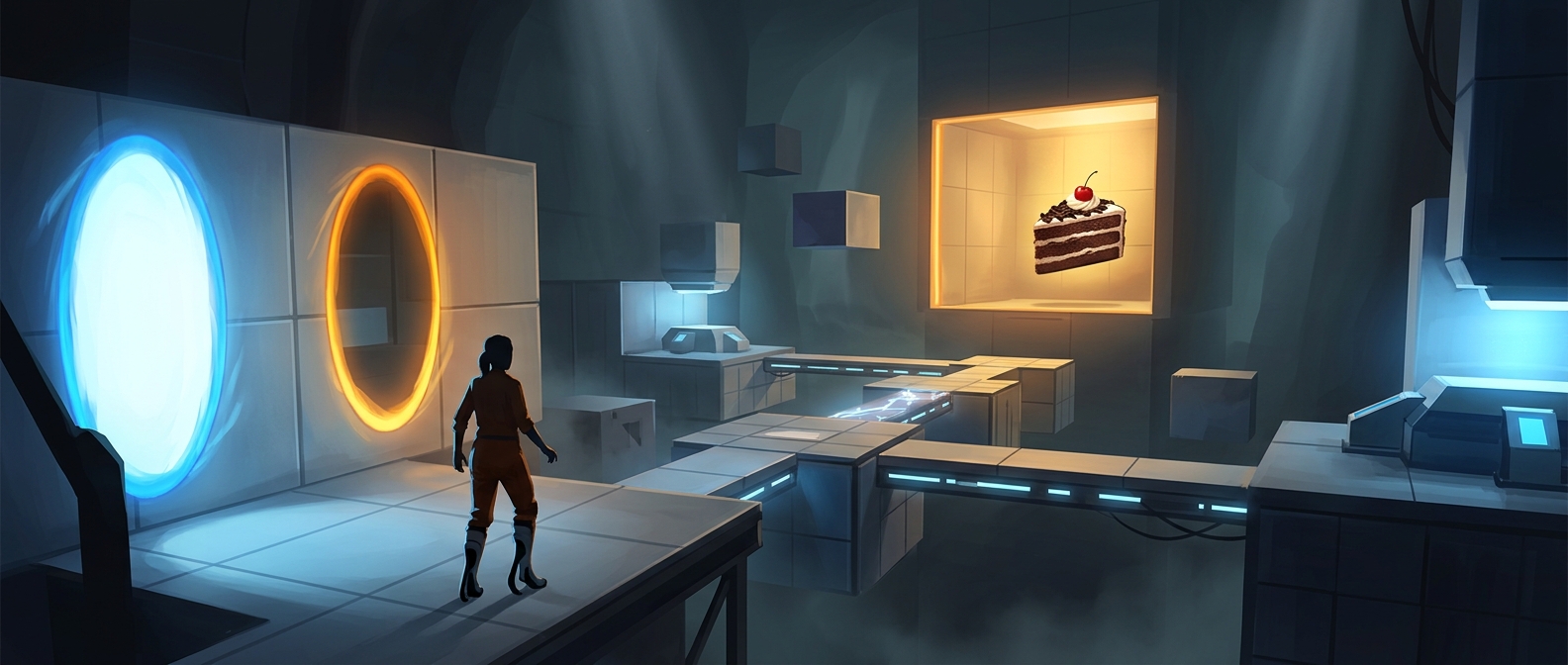
Most surfaces in Portal 2 are useless for portal travel: the game’s portals only connect through surfaces that can accept them. Conversion gel solves that puzzle. Made with ground-up moon rock, it coats a surface so a portal can be placed there, turning an otherwise ordinary wall or floor into part of the test’s route.
That makes the gel more than another laboratory substance. It changes the player’s choices: a portal can be aimed at a patch of coated surface, opening paths that the room’s original architecture would not allow. The moon-rock ingredient also gives the mechanic a distinctive limit—there has to be a surface the gel can reach and transform.
A useful invention with a dangerous cost
The story ties this practical shortcut to Cave Johnson’s declining health. The rock that makes the gel useful is toxic, and exposure to its dust helps explain why Johnson becomes gravely ill. His company’s drive to turn an unusual material into a testable product carries a personal cost: the same ingredient that expands the facility’s portal puzzles harms the man pushing the project forward.
The connection makes the game’s engineering feel character-driven. Moon rock is not just a convenient way to unlock new surfaces; it links a gameplay breakthrough to the reckless ambition behind it. A material that lets the player escape the limits of a room also marks the limits Johnson ignored.